
SSDI Denial Letter Codes In 2026 And What Each Means
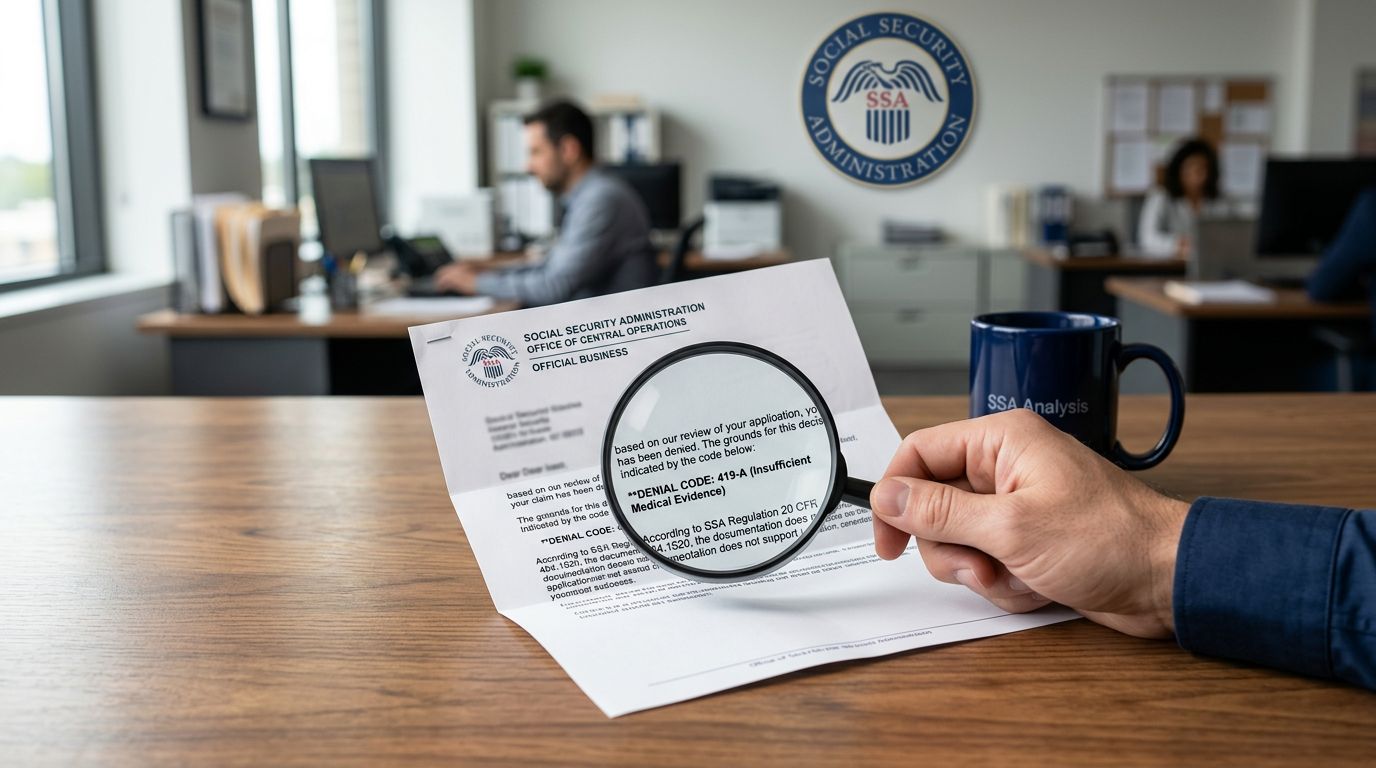
Getting an SSDI denial letter can feel like opening a book to the wrong page. You see official language, a few clipped phrases, and sometimes a short “code” that looks like it should explain everything. Instead, it raises more questions.
Here’s the bottom line: most SSDI denial codes people talk about in 2026 aren’t medical diagnosis codes. They’re usually notice phrases, internal template identifiers, or shorthand for the type of denial. Once you know what you’re looking at, you can respond the right way and avoid missing your appeal deadline.
Where “SSDI denial codes” come from (and why many letters don’t show a code)
SSA denial notices are built from standard paragraphs. Many claimants call the reason label a “code,” even when the letter never lists a code number. In other cases, the notice or the file may reference an internal identifier tied to a specific denial paragraph.
In 2026, SSA still divides denials into two big buckets:
- Technical denials (non-medical): You didn’t meet a rule like insured status, work credits, income limits, or cooperation requirements.
- Medical denials: SSA reviewed your medical file and decided you’re not disabled under their rules.
SSA’s internal policy explains the basic concept of a formal denial and when SSA must deny a claim in its manual guidance, see SSA policy on claim denials.
A practical tip: don’t get stuck on the label. The reason matters because it controls what evidence you need on appeal. For example, a medical denial often needs stronger treatment notes and functional limits. A technical denial may need wage records, work history fixes, or proof you’re insured.
If you want a Florida-focused breakdown of patterns that show up often, start with frequent causes of SSDI claim denials. It helps you spot the same issues in your own notice.
If you treat every denial like a medical denial, you can waste weeks. First confirm whether SSA denied you for eligibility rules or for medical reasons.
Common SSDI denial letter “codes” and plain-English meanings (2026)
Even when your notice doesn’t include a literal code, it often uses recurring decision phrases. The table below translates the most common ones into everyday language, plus the best next move.
Here’s a quick reference for what these denial labels usually mean.
| Denial letter wording (often treated like a “code”) | What SSA is really saying | What usually helps on appeal |
|---|---|---|
| “Not disabled under our rules” | SSA reviewed the file and found you can work at some level. | Updated records, detailed limits from treating doctors, consistent symptoms documentation. |
| “Your condition is not severe” | SSA thinks your impairment doesn’t limit basic work activities enough. | Evidence of day-to-day limits, exams showing reduced function, mental health notes if relevant. |
| “Does not meet or equal a listing” | Your condition doesn’t match SSA’s strict listing criteria. | Argue residual functional capacity (RFC), show why full-time work isn’t possible. |
| “You can do your past work” | SSA believes you can still perform a prior job you did recently. | Clarify real job demands, correct job titles, show why you can’t sustain those tasks. |
| “You can do other work” | SSA thinks you can adjust to other jobs based on age and skills. | Strong RFC evidence, limits on standing, sitting, pace, attendance, and concentration. |
| “Insufficient evidence” | SSA didn’t have enough medical proof to decide in your favor. | Fill record gaps, submit missing test results, get treating source statements. |
| “Not insured for SSDI” | You don’t have enough recent work credits for SSDI. | Confirm earnings record, check insured date, consider SSI if appropriate. |
| “Working at substantial levels” or “Earnings too high” | Your current work activity suggests you can do substantial work. | Correct wage reports, explain unsuccessful work attempts, document special accommodations. |
One common mistake is assuming SSA “didn’t read the records.” Sometimes they didn’t have them. Hospitals and clinics often don’t send full notes unless requested, and DDS may only receive partial records. On appeal, a complete, recent medical timeline can change the picture.
For step-by-step guidance after a denial, including what to file and when, see what to do next if your SSD claim is denied.
“DDD” codes in 2026: disability date denials tied to prior claims
A smaller group of denials involve what SSA describes as “Disability Date Denials,” sometimes referred to as DDD paragraphs. These aren’t about whether you have a diagnosis. They’re often about timing, prior decisions, and when SSA says you were last insured.
SSA’s template guidance for these appears in its notice language references, see SSA DDD disability date denials.
Two examples you may see referenced in records or in the structure of the denial explanation:
DDD004: same issue as a previously denied disability claim
This usually means SSA believes your new filing raises the same disability issue as a past denial, with no new and material evidence. In plain terms, they’re saying, “We already decided this, and nothing changed.”
What helps most is showing a real change since the last denial, such as:
- A new diagnosis, surgery, or complication.
- Objective testing that wasn’t previously available.
- Clear proof your functional limits worsened.
DDD005: alleging disability onset after insured status last met
This is a timing problem. SSDI requires you to be “insured” based on work credits, and that insured status can expire. If SSA says you became disabled after your insured date, they can deny SSDI even with serious medical conditions.
In these cases, the appeal often turns on:
- Proving disability began earlier (with records close to the date last insured).
- Building a timeline that matches treatment notes, imaging, and documented symptoms.
- Considering whether SSI might fit if SSDI is blocked by insured status.
A DDD-type denial can be frustrating because the medical story may be strong. The dispute is often about dates, not diagnosis.
What Florida applicants should do next after an SSDI denial “code” shows up
First, protect your deadline. Most SSDI denials must be appealed within 60 days (plus mailing time). If you miss it, SSA may make you start over.
Next, match your evidence to the denial type:
- If it’s technical, fix the rule problem fast (work credits, earnings reporting, insured status, paperwork).
- If it’s medical, focus on function. SSA decides disability based on what you can still do, not the name of your condition.
Also, gather records like you’re building a timeline for a judge, because you might be. Updated treatment notes, imaging, medication lists, and therapy records matter. So do statements from doctors that describe specific limits (lifting, standing, reaching, pace, missed workdays).
When questions come up about forms, deadlines, and what SSA looks for, the firm’s SSDI denial FAQs answered can help you get grounded before you file.
Conclusion
In 2026, SSDI denial codes usually point to a standard denial reason, not a hidden diagnosis code. Once you translate the letter into plain English, you can target the real problem, whether it’s eligibility rules, missing proof, or how SSA viewed your ability to work. Act quickly, build the right evidence for the denial type, and don’t let the “code” distract you from the deadline. The right appeal can turn a confusing denial into a clear plan forward.