
Wrong-Way Driver Crashes In Florida: Proving Fault As A Victim
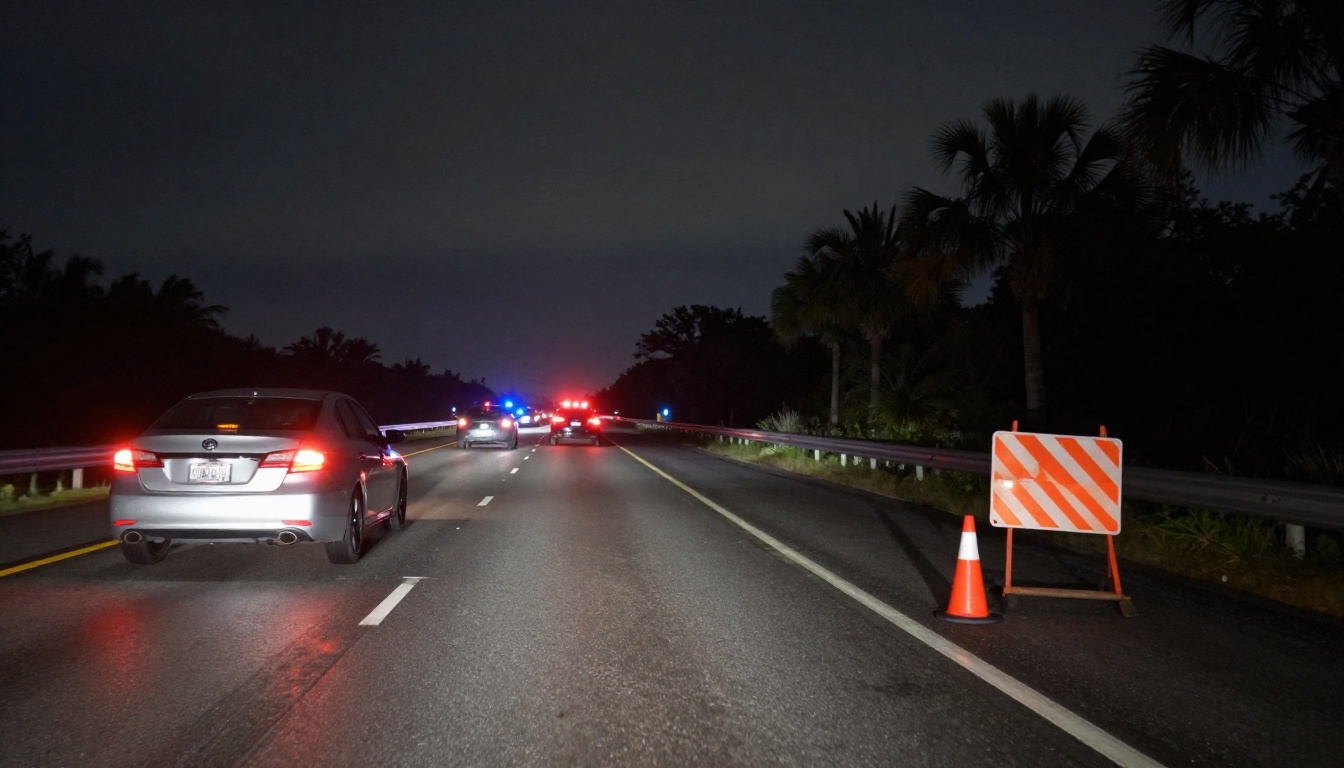
Seeing headlights coming straight at you in your lane doesn’t feel like a normal crash risk. It feels like the rules of the road suddenly stopped working.
After a florida wrong-way accident, many victims assume fault is automatic. It often is, but “obvious” isn’t the same as “proven.” Insurance companies still look for gaps, and they move fast to shape the story.
This guide explains how wrong-way crashes happen, what fault proof really means in Florida, and what evidence helps victims protect their claim.
Why wrong-way crashes happen, and why fault is usually clear
Wrong-way crashes tend to start in seconds and end in life-changing damage. In Florida, they often happen near highway ramps, complex interchanges, construction zones, or poorly lit areas. Some drivers enter an off-ramp by mistake. Others ignore signs entirely.
Impairment is a common factor. Alcohol, drugs, and even some prescription medications can slow reaction time and distort judgment. Fatigue can do the same. In other cases, a driver panics after missing an exit and tries to “fix” it by turning around.
Florida has put real effort into prevention, including ramp signage, pavement markings, and detection systems. If you want context on statewide efforts, FDOT summarizes current countermeasures in FDOT’s Wrong-Way Driving program. FDOT also studied patterns and risk areas across the state in the Statewide Wrong Way Crash Study (Final Report).
From a fault standpoint, wrong-way collisions are different from most two-car crashes. The lane directions are fixed. Entry points are mapped. Skid marks, debris fields, and impact angles often tell a consistent story. As a result, liability is frequently clearer than in a “he said, she said” intersection wreck.
Still, clarity doesn’t end the fight. Insurers may accept the other driver caused the crash, then argue your injuries aren’t related, your treatment wasn’t necessary, or your losses are overstated. That’s where proof matters.
What you must prove to recover money after a florida wrong-way accident
Even when the other driver went the wrong way, your claim still has to meet the legal basics. In plain terms, you’re building a chain: the driver acted unreasonably, that act caused the crash, and the crash caused measurable harm.
Most cases come down to these points:
- Duty and breach: Drivers must follow traffic control devices and drive on the correct side. Wrong-way driving usually violates that duty.
- Causation: The wrong-way conduct must be the reason the collision happened.
- Damages: You must show real losses, like medical bills, lost income, and reduced quality of life.
Florida also adds an extra layer because of no-fault insurance. Your own Personal Injury Protection (PIP) typically pays first for medical care and some lost wages, regardless of fault. That system has deadlines and limits, and serious injuries can push your case beyond PIP quickly. For a clear explanation of how this works, read understanding Florida’s no-fault law after a car accident in Cape Coral.
Florida follows a modified comparative negligence rule. That means your compensation can drop if you share blame, and you can be barred if you’re more than 50 percent at fault. In a wrong-way crash, victim blame is less common, but insurers may still argue speed, distraction, or failure to avoid impact.
Fault can look settled on day one, but damages are where many claims get cut down. Treat your medical proof like the foundation, not an afterthought.
Building a strong proof package: evidence, records, and next steps
The goal is simple: lock down the wrong-way facts, then connect every dollar of harm back to the crash. Strong cases feel consistent from start to finish, like the same story told by different sources.
Evidence that helps prove the other driver went the wrong way
Start with the official documents, then add independent proof. Key evidence often includes:
- Law enforcement crash report: Officers document lanes, vehicle positions, citations, and statements. You can also find where to request reports through FLHSMV crash and citation resources.
- Scene photos and video: Ramp signs, “Do Not Enter” markers, gouge marks, debris trails, and final rest positions matter.
- Witness statements: Neutral witnesses can confirm direction of travel and driver behavior.
- Dashcam or nearby camera footage: Gas stations, toll areas, and commercial buildings sometimes capture the approach.
- Vehicle data: Some vehicles store speed, braking, and steering inputs, which can support reconstruction.
For a deeper breakdown of what insurers and courts look for, see proving fault in a Cape Coral car accident.
Here’s a quick way to think about common evidence and what it can show:
| Evidence type | What it can prove | Why it matters |
|---|---|---|
| Crash report and citations | Wrong-way entry, lane use, violations | Creates an early baseline for liability |
| Photos of signage and ramp layout | The driver had clear warnings | Helps defeat “confusing ramp” excuses |
| Video (dashcam, surveillance) | Direction of travel, timing, impact | Objective proof insurers struggle to dispute |
| Medical records and imaging | Injury timing and severity | Connects harm to the crash, not “old problems” |
The takeaway is that no single item has to do all the work. Several solid pieces together are harder to attack.
Defenses insurers raise (even when the driver was clearly wrong)
If liability is strong, the adjuster may pivot to damages. A common move is blaming your symptoms on prior conditions, then offering a low settlement.
If you’ve had earlier back, neck, or shoulder issues, don’t assume that ruins your claim. The key is clean wording in records and consistent reporting. This helps explain why documentation matters: handling preexisting conditions in Florida car crash claims.
Insurers may also argue:
- You delayed treatment, so the injuries “must not be serious.”
- Your care was excessive, or the provider “overtreated.”
- You could’ve avoided the crash, even at highway speeds.
You can’t control their tactics, but you can control your paper trail.
What to do after a wrong-way crash to protect your claim
In the moment, safety comes first. After that, think like someone building a file that has to survive scrutiny months later.
- Call 911 and get medical help. Follow up quickly, because Florida PIP rules can depend on timely treatment.
- Photograph everything you safely can, including ramp signage and lane markings.
- Get witness names and numbers before people leave.
- Preserve video (dashcam, phone clips, nearby businesses), since many systems overwrite fast.
- Avoid detailed recorded statements to the other driver’s insurer until you’ve gotten advice.
- Track losses (work time missed, mileage to appointments, out-of-pocket costs).
A step-by-step overview of the claim process is here: filing a car accident claim in Cape Coral.
One of the easiest ways to hurt a strong case is to give a confident statement before you know the full medical picture. Keep it factual, and don’t guess.
Conclusion
A wrong-way crash isn’t a normal traffic mistake, it’s a high-risk act that often makes fault easier to show. Still, the strongest florida wrong-way accident claims don’t rely on assumptions. They rely on clear evidence and tight medical documentation. If you’re dealing with serious injuries, push early to preserve video, lock down the crash facts, and protect your damages proof. The story should be simple: the driver went the wrong way, and your losses flow from that choice.