
VA Secondary Service Connection in 2026: Proof Checklist That Works
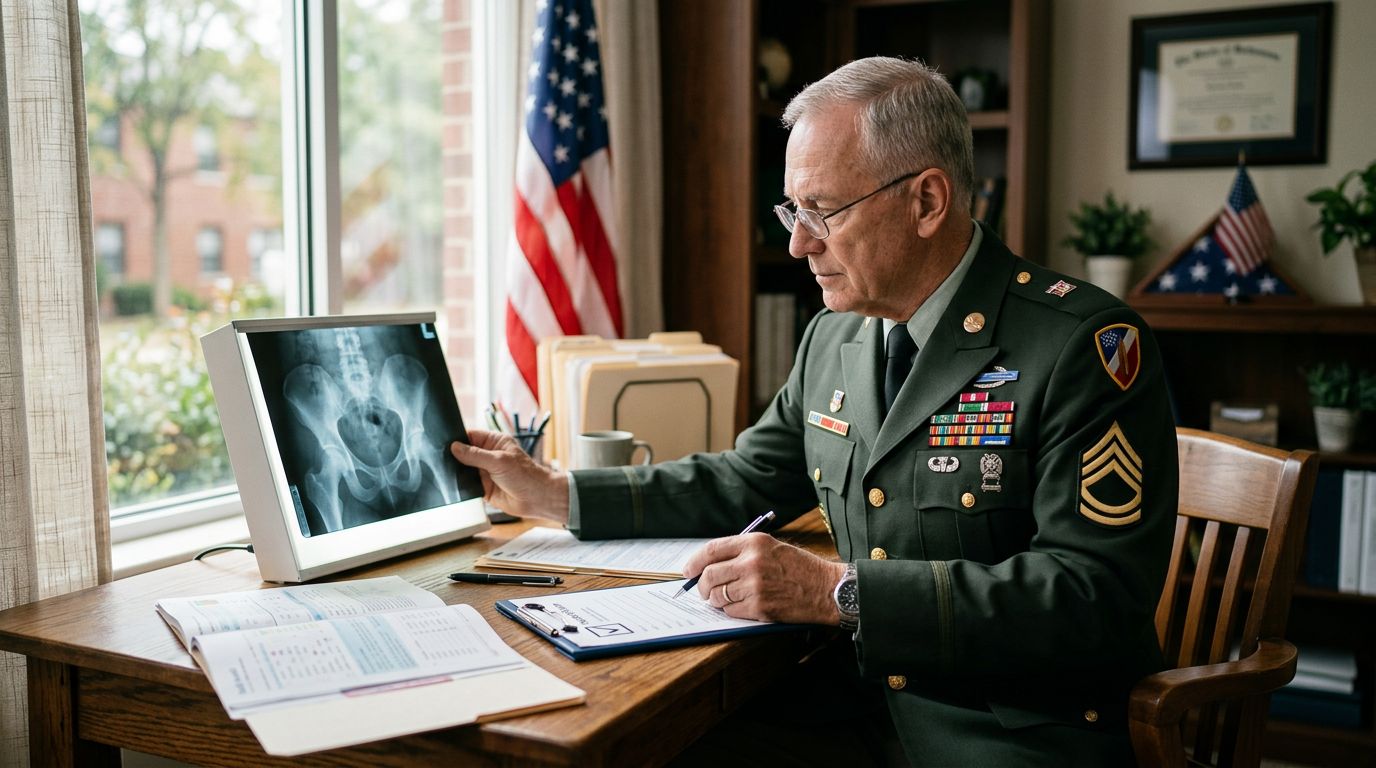
A secondary VA claim can feel like trying to connect two dots that the VA insists aren’t related. You already have a service-connected disability, yet the VA still wants solid proof that the new condition didn’t just “happen over time.”
Here’s the bottom line: VA secondary service connection in 2026 still comes down to clear medical evidence and a strong nexus. When you build it the right way, secondary claims are often more winnable than veterans expect, because the primary condition is already conceded.
If you’re in Florida and looking for help, the process is the same nationwide. What changes is how well your file tells the story.
What the VA is really looking for in a secondary claim (2026 standard)
In 2026, there hasn’t been a big rule overhaul for secondary service connection. The VA still focuses on three core elements:
First, you need a current secondary disability. That can be physical or mental. Think “diagnosis plus ongoing symptoms,” backed by treatment notes, testing, or both.
Second, you must already have a service-connected primary disability. In practice, that means the VA has granted service connection and issued a rating decision.
Third, you need a medical link showing the primary disability caused the secondary one, or made it worse over time (aggravation). This is where most claims fail, because the VA often sees “two diagnoses” and says, “So what?”
If you want a deeper primer on the building blocks the VA expects, start with Avard Law’s guide on proving service connection for VA disability claims. Secondary claims use the same foundation, just with a different link in the chain.
One more point: don’t confuse a secondary claim with an increased rating. If your knee got worse, that’s often an increase. If your knee changed your gait and you developed hip or back issues, that can be secondary.
The proof checklist that holds up in 2026
Think of your secondary claim like a three-legged stool. If one leg is weak, the whole thing tips. Build each leg with documents that match what the VA weighs the most.
Before you submit, it helps to compare your file to the VA’s own list of acceptable evidence. Use VA evidence needed for a disability claim as a reality check, then tailor it to secondary service connection.
Here’s a practical way to assemble the proof.
| Proof item | What it should show | What “good” looks like |
|---|---|---|
| Current diagnosis and treatment | The condition exists now and isn’t just history | Recent records, testing, medication list, ongoing complaints |
| Proof of the primary service-connected condition | The VA has already granted it | Rating decision letter, code sheet if you have it |
| Nexus opinion (cause or aggravation) | The primary disability caused or worsened the secondary | Provider explains “why,” cites records, uses VA-friendly language |
| Timeline evidence | Symptoms make sense over time | Treatment notes, PT records, symptom logs, family statements |
A strong nexus is usually the separator between approval and denial. The best opinions don’t just state a conclusion. They explain the mechanism, timing, and medical support.
If a doctor writes one sentence with no reasoning, the VA can discount it. A persuasive nexus reads like a short, clear explanation, not a slogan.
Also, make sure the opinion addresses the right legal idea. “Cause” and “aggravation” are different paths. If your secondary condition existed before, or could have happened anyway, your provider may need to explain how the primary condition worsened it beyond natural progression, and when that worsening began.
Real-world examples can help you see how the VA analyzes the chain. For instance, Avard Law discusses a Board grant involving PTSD leading to post-service tobacco use and then COPD in secondary service connection for smoking-related disabilities. You don’t need the same facts, but you do need the same clarity in the cause-and-effect story.
Filing in 2026: forms, C&P exams, and avoiding the common traps
Once your evidence is in place, filing is the easy part. Still, small choices can affect your timeline, your stress level, and sometimes your effective date.
Most veterans file a secondary condition on VA Form 21-526EZ (new or additional disability claimed). If you were denied before and now you’re coming back with new and relevant evidence, you may need a Supplemental Claim on VA Form 20-0995.
After you file, the VA may schedule a C&P exam. Treat this exam like a recorded snapshot of your worst days and your average days, not your best day. Be consistent with what’s in your medical notes. If your records say daily headaches and you tell the examiner “once in a while,” the VA will usually side with the exam report.
Two traps show up again and again:
- The file has diagnoses but no link. The VA won’t connect dots for you.
- The claim argues the wrong theory. Some cases are “caused by,” others are “made worse by.” Your evidence has to match.
If you’re worried you’re already in a denial cycle, review the patterns in common VA disability claim challenges. Many secondary denials come down to fixable gaps, like an exam that never addressed aggravation.
Don’t let a denial letter be the last word. In many secondary claims, one well-built medical opinion changes the outcome.
When the VA gets it wrong, appeals can keep your claim alive, but deadlines matter. If you need that roadmap, Avard Law lays out options for appealing denied VA disability claims.
Conclusion
In 2026, winning VA secondary service connection still comes down to three things: a real current diagnosis, proof of the primary service-connected disability, and a well-explained nexus that covers causation or aggravation. When your records tell a clean story, the VA has less room to dismiss the link.
If your secondary condition is affecting daily life, don’t file on hope alone. Build the file like you’d build a case, with dates, medicine, and plain logic that holds up under review.