
Florida Red-Light Runner Crash Proof Checklist for Not-At-Fault Victims
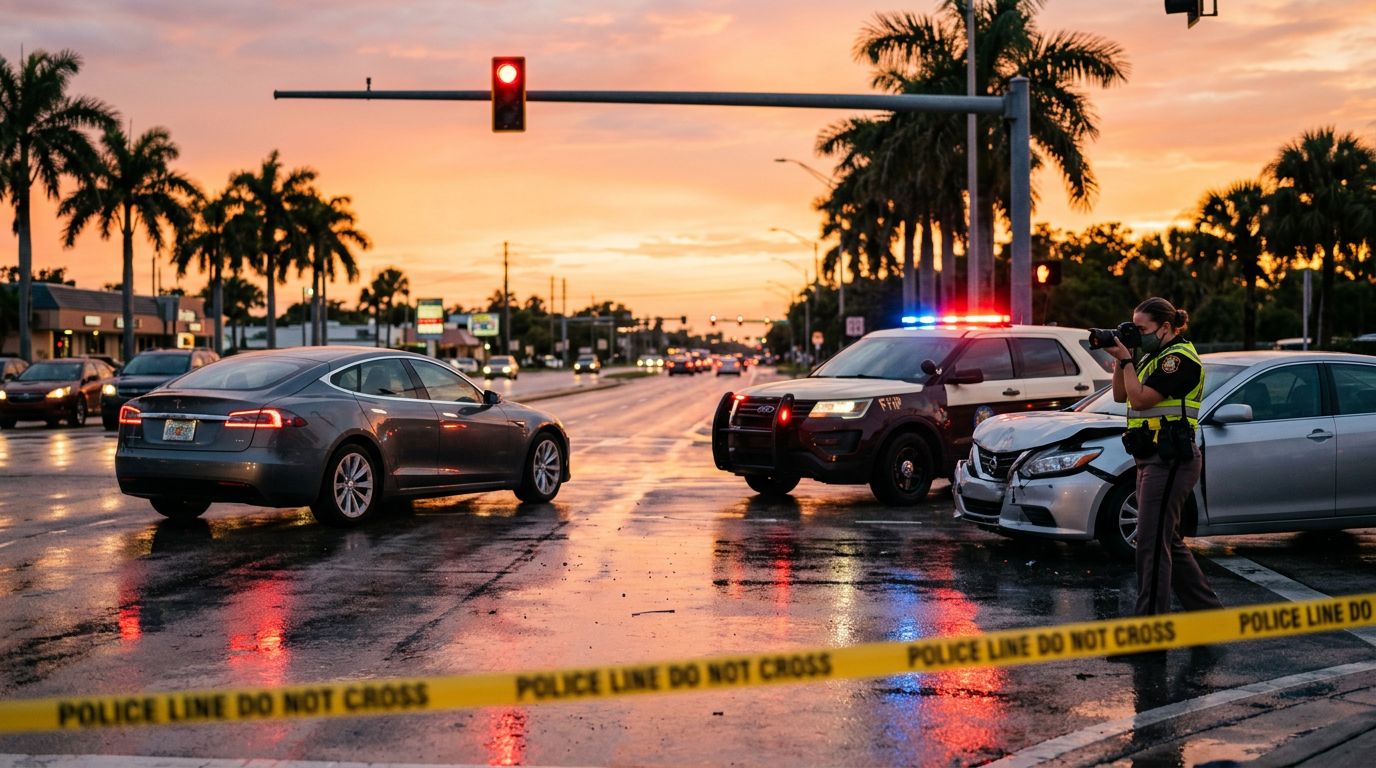
A red-light runner can turn a normal drive into a life-changing mess in seconds. After the impact, the facts start slipping away fast. Cars get towed, skid marks fade, and drivers “remember” things differently once insurance calls.
If you’re not at fault in a florida red light accident, your job is simple to say and harder to do: prove it. This checklist focuses on the proof that tends to matter most in Florida intersection crashes, from the first hour through the weeks that follow.
The first hour after a red-light crash: secure safety, then secure facts
Start with people, not paperwork. Call 911, get medical help, and move out of danger if you can do it safely. Once you’re safe, switch your mindset. Treat the crash scene like a sandcastle at the tide line. If you don’t capture it now, it may be gone by tonight.
A quick, calm plan helps.
- Ask for law enforcement and medical response. An officer’s report can anchor the timeline and location.
- Photograph wide, then close. Begin with wide shots from all approaches to the intersection. Then capture vehicle positions, lane arrows, and the traffic signal heads.
- Record a short video sweep. Walk a slow loop and narrate the date, time, weather, and what you see.
- Get witness names and numbers. Neutral witnesses often decide disputed red-light cases.
- Exchange required information only. Keep it polite and brief. Don’t argue, and don’t admit anything.
- Preserve your car if possible. If your vehicle is likely to be totaled, tell the tow yard you need to preserve it for an insurance claim.
The most common mistake is waiting until “tomorrow” for photos. Tomorrow is when the tow truck, rain, and traffic erase your best evidence.
Also, write down what you remember while it’s fresh. Use your phone’s notes app and keep it factual: direction of travel, your lane, your speed range, and the color of the light as you entered. Skip opinions like “they were flying.”
For more context on how insurers evaluate fault, it helps to understand patterns investigators see at busy junctions. Avard Law’s guide on common Cape Coral car accident causes explains the types of proof that tend to carry weight beyond a single driver’s statement.
Proving the light was red: the evidence that breaks the “my word vs. yours” tie
In many intersection crashes, both drivers claim they had the green. Your goal is to replace arguments with independent proof. Video is best, but it’s not the only path.
Video sources to request immediately
Start with anything that can show the signal phase and who entered on red:
- Dashcam footage (yours, a rideshare, or a nearby car)
- Nearby business cameras facing the road
- Doorbell cameras near the corner
- Traffic or red-light camera footage (where available)
Timing matters because many systems overwrite quickly. If your crash happened near Cape Coral, Avard Law outlines fast steps to obtain traffic camera footage and who to contact before the video disappears.
Florida also has a state program tied to red-light camera enforcement at certain intersections. For background on how red-light camera notices work in practice, see the City of Miami Springs summary of red-light camera legislation. That page highlights common notice options and deadlines in one place (always confirm what applies to your intersection and agency).
Evidence that supports your story even without video
When video doesn’t exist, you can still build a strong file. Use the evidence below to show who likely entered late and from where.
Here’s how the most useful proof often compares:
| Evidence type | What it can show | What to do now |
|---|---|---|
| Traffic or red-light camera footage | Signal timing, vehicle entry, lane | Request fast, ask about overwrite timelines |
| Dashcam video | Light color, speed, impact sequence | Save originals, don’t trim or edit |
| Witness statements | Who entered on red, who had green | Get contact info, ask for a short recorded statement if they agree |
| Vehicle damage patterns | Angle of impact, point of contact | Photograph both cars if possible, include license plates |
| Intersection layout photos | Lane arrows, sight lines, signal heads | Take approach shots from your driver’s view |
| 911 call logs (when available) | Near real-time statements | Ask your attorney about requesting records |
One more angle often gets overlooked: signal obstruction. A tree branch, sun glare, or a missing shield can explain why a driver “didn’t see it.” Photograph that too, because cities fix hazards.
The paperwork that wins the insurance fight: reports, medical proof, and loss records
A clean claim file reads like a timeline, not a pile of documents. After a florida red light accident, insurers often try to reduce payouts by disputing injuries, shifting partial blame, or claiming a gap in care. Strong paperwork closes those doors.
Police report and supplemental records
Request the crash report as soon as it’s available, then review it for basic accuracy (names, plates, location, insurance info). If the officer noted a red-light violation, witness names, or diagrammed the point of impact, that can help.
Still, don’t panic if the report feels thin. Many reports are brief. Your photos, video, and witness list can fill the gaps.
Medical proof that connects the crash to your injuries
Seek medical care promptly, then follow the plan. Keep every discharge sheet, imaging result, referral, prescription receipt, and work note. Consistency matters because adjusters love to point at missed appointments.
If you had prior pain or an old injury, don’t hide it. Instead, document how this crash changed things (new symptoms, higher pain, new limits). Honest records beat “perfect” stories.
Money losses: capture them in real time
Damages are easier to prove when you collect them as you go:
- Wage records (pay stubs, time-off emails, reduced-hours notes)
- Out-of-pocket costs (co-pays, braces, rides to appointments)
- Repair estimates, towing, storage, and rental receipts
- A short weekly log of what you can’t do (sleep, lifting, childcare, driving)
Florida fault rules also matter. In many cases, the other side may argue you share blame (yellow-light timing, speed, distraction). Since Florida uses a modified comparative negligence system in most negligence cases, protecting your “not-at-fault” position early can affect what you can recover.
For added context on where red-light cameras are used and how intersections are studied, you can review the Florida Highway Safety and Motor Vehicles report, Red Light Camera Summary Report FY 2022 to 2023 (PDF). It’s a helpful reminder that camera data, vendors, and local programs vary by area.
Conclusion: treat proof like it expires
A red-light crash can look obvious, until the other driver denies it. The best protection is early, boring documentation: wide photos, witness contacts, preserved video, steady medical care, and a clear record of losses. If you’re dealing with a florida red light accident, start building your file the same day, because that’s when the truth is easiest to capture. The stronger your proof, the harder it is for an insurer to rewrite what happened.