
Florida Truck Underride Crashes: Evidence Checklist for Not-At-Fault Victims
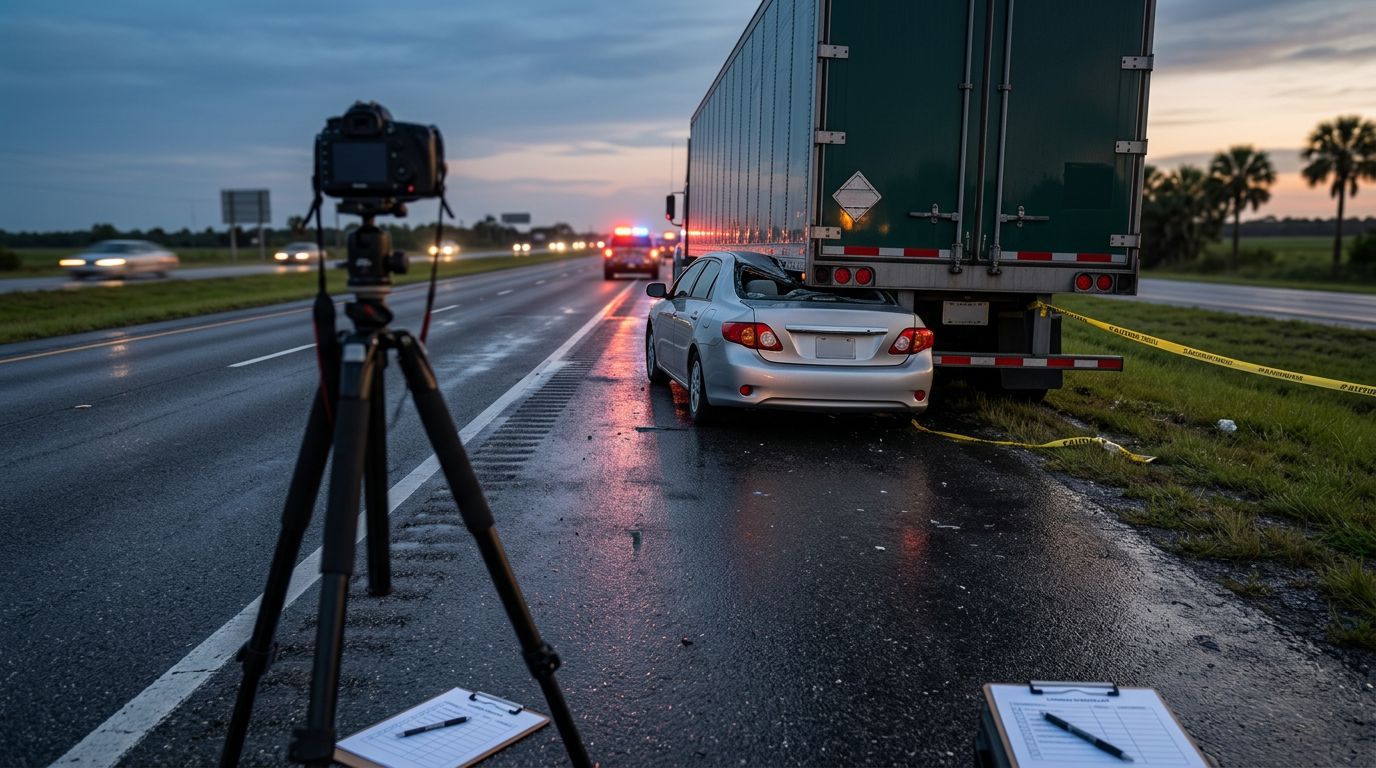
A truck underride crash can turn a normal drive into a catastrophe in seconds. When a car slides under a trailer, the roofline can take the impact, and the injuries are often severe. After that, the insurance battle starts fast.
The problem is simple: the best proof doesn’t wait around. Skid marks fade, vehicles get moved, and camera footage gets erased on a loop. If you’re not at fault, building strong Florida truck underride evidence early can protect your claim and your future care.
Below is a practical, victim-focused evidence checklist, with plain-language steps to help you preserve what matters most.
Why underride crashes demand early, aggressive evidence preservation
Underride cases are different from typical rear-end crashes. The damage pattern can look “obvious,” yet liability still gets disputed. A trucking company may argue you were speeding, following too closely, or that the trailer was “visible enough.” At the same time, your car’s most important evidence may sit in a tow yard, one release form away from being crushed.
Underride evidence also gets undercounted and mislabeled in reports, which can affect how insurers evaluate the claim. NHTSA has addressed the reporting problem directly, including how law enforcement should document underride events, see NHTSA’s underride crash reporting guidance. That’s a big deal because the initial narrative often frames the entire case.
Federal rules on rear underride guards have also changed over time, and the guard’s condition can become a core issue in your claim. For a plain explanation of what underride crashes are, and what prevention efforts look like, see NBC 6 South Florida’s overview of underride crashes.
The first week is where many underride claims are won or lost, because that’s when the physical proof either gets saved or disappears.
If you can, get legal help early. If you’re still in the hospital, a family member can start gathering records and making preservation requests.
What to gather in the first 48 hours (the evidence that disappears first)
Start with safety and care. Still, once you’re stable, treat the crash like a scene that won’t look the same tomorrow. Think of it like trying to rebuild a paper trail after it’s been shredded. You can’t fix missing pieces later.
If you need a broader step-by-step for the immediate aftermath, this guide on what to do after a Cape Coral truck accident lays out smart early moves that also apply statewide.
Here’s the underride-focused evidence to lock down right away:
| Evidence to preserve | Why it matters in underride cases | How to secure it fast |
|---|---|---|
| Scene photos and video | Shows lighting, trailer position, and impact angles | Use a phone, capture wide shots first, then close-ups |
| Trailer rear and side guard condition | Bent, missing, or weak guards can change the case | Photograph the guard, mounting points, and DOT markings |
| Vehicle resting positions and debris field | Helps prove lane position and timing | Photograph from multiple angles before vehicles move |
| Witness names and contact info | Witnesses disappear fast, memories shift | Ask for numbers, then write down what they saw |
| Nearby business and roadway camera sources | Footage often overwrites in days | Note addresses, ask the business to retain video |
| 911 call and CAD (dispatch) logs | Captures time stamps and early statements | Request through counsel or public records |
| Your vehicle’s electronic data (EDR) | Can show braking, speed, seat belt status | Don’t authorize disposal, preserve the vehicle as-is |
| The truck and trailer location (tow yard) | Access to inspect often depends on fast action | Get the yard name, address, and release procedures |
Keep your notes simple. Write down the time, weather, traffic, and what you remember seeing on the trailer (lights, reflective tape, hazard markers). Also save your ride-share receipts, towing paperwork, and any photos sent by friends.
Don’t repair, release, or sign away the vehicle until you’ve talked to counsel. Once it’s altered, the best physical proof can be gone for good.
The deeper records that prove fault, and the ones companies fight to keep
After the first wave of evidence, underride claims often turn on records controlled by the trucking company and its insurers. These documents can show whether the driver acted reasonably, and whether the company cut corners long before the crash.
Trucking records that often matter in underride cases
Several categories tend to come up again and again:
- Driver duty status and electronic logs (ELD): Shows hours of service, rest breaks, and whether fatigue may be in play.
- Dispatch and communications: Calls, texts, and load instructions can explain rushing or route choices.
- Maintenance and inspection files: Helps prove worn brakes, bad lights, or neglected trailer equipment.
- Trailer conspicuity and lighting: Missing reflective tape or non-working lights can affect visibility at night and in rain.
- Cargo and weight documents: Bills of lading and scale tickets can point to handling, stopping distance, and stability issues.
- Post-crash inspections and repairs: If the guard gets repaired right away, you want proof of what changed.
A serious underride claim also benefits from an expert inspection and reconstruction when facts get contested. This overview of Cape Coral crash reconstruction for trucks explains how physical evidence, measurements, and vehicle data can be used to test competing stories.
Records that strengthen your “not-at-fault” position
Even if you did everything right, insurers may try to shift blame. Evidence that usually helps includes:
- The full crash report and any diagrams, supplements, or citations
- Body-worn camera and dash camera footage from responding agencies (when available)
- Toxicology results if impairment is suspected (handled through proper channels)
- Medical records that link injuries to the mechanics of the underride impact
For broader context on how crash data is tracked nationally, you can review NHTSA’s Traffic Safety Facts compilation (2022). For underride research that discusses crash patterns and how underride happens in fatal truck crashes, see NHTSA’s heavy-vehicle underride analysis report.
When fault gets argued, it helps to understand how liability is assessed in real Florida truck cases. This article on determining liability in Cape Coral truck accidents explains how evidence ties into legal responsibility, including when more than one party may share blame.
Conclusion
Underride crashes don’t leave room for guesswork, and insurers know that missing proof helps them. Save the vehicle, secure video, document the trailer guard, and push for the records that live behind the trucking company’s doors. When you build strong Florida truck underride evidence early, you give your claim a fair shot.
If you’re dealing with serious injuries or disputed fault, talk with Florida truck accident attorneys as soon as you can. The right preservation steps taken now are often the difference between a denied claim and a recovery that covers long-term care.