
Florida Trampoline Park Injuries: A Proof Checklist for Broken Bone Claims
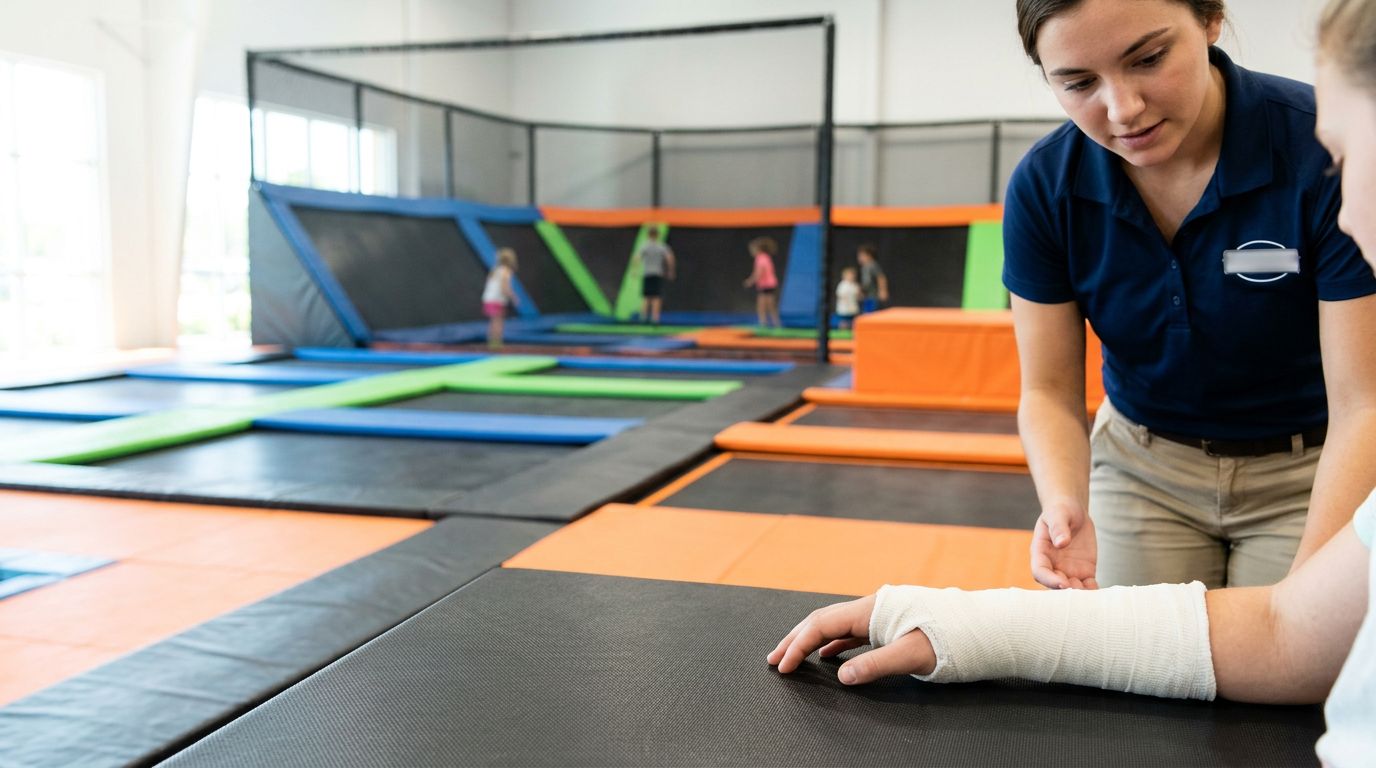
A trampoline park visit can turn into an ER trip in seconds. One bad landing, a collision, or a hard fall off the mat, and you’re dealing with a fracture, missed work, and a park that’s already moving on to the next group.
For trampoline park injuries Florida families report most often, broken bones sit near the top. They also trigger the biggest fights with insurance because fractures are expensive and easy to blame on “user error.” The good news is simple: strong claims usually start with strong proof, and most of that proof is available right away if you know what to save.
This guide lays out a practical evidence checklist for broken bone claims, from the moment it happens through the weeks that follow.
Why broken bone claims rise or fall on proof
Trampoline parks look like a single attraction, but they operate like a busy workplace. Staff rotate, hazards get covered, and video can disappear. Meanwhile, a fracture claim needs more than “I got hurt there.” It needs a clear, supported story.
Recent national injury research and news coverage continue to point to two themes: fractures are common, and multiple jumpers raise the risk. In other words, the same fact patterns show up again and again: crowding, poor separation by size, limited supervision, and risky zones (like dodgeball courts or foam pits).
Broken bone cases also trigger predictable defenses, such as:
- The park says you “assumed the risk” by jumping.
- The waiver gets waved around like a shield.
- The insurer argues the bone was already weak, or the injury happened later.
- The park claims it followed rules, and you caused your own fall.
So what’s the antidote? Evidence that answers four questions clearly: what happened, why it happened, how badly you were hurt, and what it cost you.
What to collect at the park (before the scene changes)
Start with safety and medical help. Then, if you can, document the scene like you’re taking pictures for a future you that won’t remember details. Think of the accident area like a sandcastle at the tide line. It looks solid for a moment, then it washes away.
Here’s a tight list of what matters most in the first 30 minutes:
- Photos and video: Get wide shots (showing the whole court) and close shots (torn padding, gaps, broken springs cover, missing netting, slick surfaces).
- The exact location: Write down the court name, nearest sign, and the time.
- Incident report details: Ask for the report number and the department that took it.
- Witness contacts: Names and numbers, even if they “didn’t see everything.”
- Your wristband and receipts: Keep them. They help prove timing and entry.
If the park has cameras, ask staff where they are, then request that footage be preserved. Many systems overwrite video on a routine schedule.
If you want a broader, guest-friendly approach to collecting proof at large attractions, the same principles apply in the Florida theme park injury evidence checklist, especially the parts about witness names and video preservation.
This quick table shows how each evidence type helps your fracture claim:
| Evidence you save | What it helps prove | Best way to get it |
|---|---|---|
| Scene photos and video | Hazard condition, crowding, missing padding | Your phone, taken right away |
| Report number and staff names | Park had notice and responded | Ask before you leave |
| Witness contact info | Independent support for your story | Collect on the spot |
| Wristband, tickets, app timestamps | You were there at a set time | Save and screenshot |
| Footwear and clothing photos | Stops “wrong shoes” arguments | Photograph before you change |
After you leave, don’t “clean up” the story. Keep the shoes and clothes in the same condition if possible, especially if they show scuffs, tears, or blood.
Medical proof that ties the fracture to the jump
A broken bone sounds self-proving, but insurers still challenge causation. They look for gaps in care, vague histories, and missing imaging. That’s why the medical paper trail matters as much as the X-ray.
First, get evaluated the same day when you can. If you wait, the insurer may argue the injury happened elsewhere. Next, tell every provider the same short description of what happened. Keep it plain and consistent, for example: “I landed awkwardly after another jumper bounced me, and my ankle twisted.”
Then, ask for copies of:
- X-ray, CT, or MRI images and the radiology reports
- ER or urgent care notes (including triage notes)
- Ortho visit notes, surgical notes, and physical therapy plans
- Work restrictions, crutches or boot orders, and disability notes
Also track the impact in a simple daily log for two weeks. One or two sentences per day is enough. Note pain, sleep problems, and what you couldn’t do (drive, lift a child, stand at work). This helps show the injury as a lived problem, not just a diagnosis code.
One more “quiet” issue comes up often with trampoline fractures: prior injuries. If you’ve broken the same wrist before, don’t hide it. Instead, make sure the records show what changed after this incident (new fracture, new displacement, new surgery, new limits). Clear medical language beats guessing later.
Waivers, fault arguments, and what makes a Florida claim stronger
Most trampoline parks require a signed waiver. Some are online, some happen at a kiosk. Either way, a waiver often becomes the first thing the park points to. Still, waivers don’t automatically erase responsibility in every situation, especially when the facts suggest more than an ordinary risk of jumping.
Florida’s approach to activity waivers, including children’s activities, has drawn continued attention as the legal framework evolves. For background context, see this February 2026 discussion of Florida liability waiver trends.
In real cases, liability usually turns on negligence, not the mere fact that someone fell. Common park-related issues include:
- Overcrowded courts, with poor control of jumpers
- No separation by size, age, or skill (small kids mixed with teens)
- Worn or missing padding over frames and springs
- Unsafe “attractions” (foam pits, dodgeball areas) with weak supervision
- Staff who ignore unsafe behavior, like double bouncing or flips
Fault arguments also matter in Florida. If the insurer can pin most of the blame on the injured person, it can reduce or even block recovery in some cases. That makes early evidence more valuable because it can show what staff allowed, what rules were enforced (or not), and whether the layout invited collisions.
If you’re trying to understand the legal duty a business owes visitors, Avard Law’s guide on Florida premises liability duty of care explains how “reasonable care” works in plain language.
When the injury is serious, it also helps to speak with counsel who handles accident claims at amusement-style facilities. Avard Law outlines this practice area on its page for Florida amusement park accident attorneys.
A strong claim often depends on what the park knew, what it did about it, and what proof still exists to show it.
Conclusion: turn a painful moment into a provable story
Broken bones hurt, but confusion later can hurt your claim. Focus on fast medical care, clear documentation, and preserving evidence that can disappear quickly. Photos, witnesses, incident report details, and imaging records often make the difference.
If you’re facing mounting bills after trampoline park injuries Florida families see far too often, don’t rely on memory alone. Build the proof while it’s still available, then get legal guidance before deadlines and footage fade.