
Florida Hotel Slip and Fall Claims: How to Prove Notice
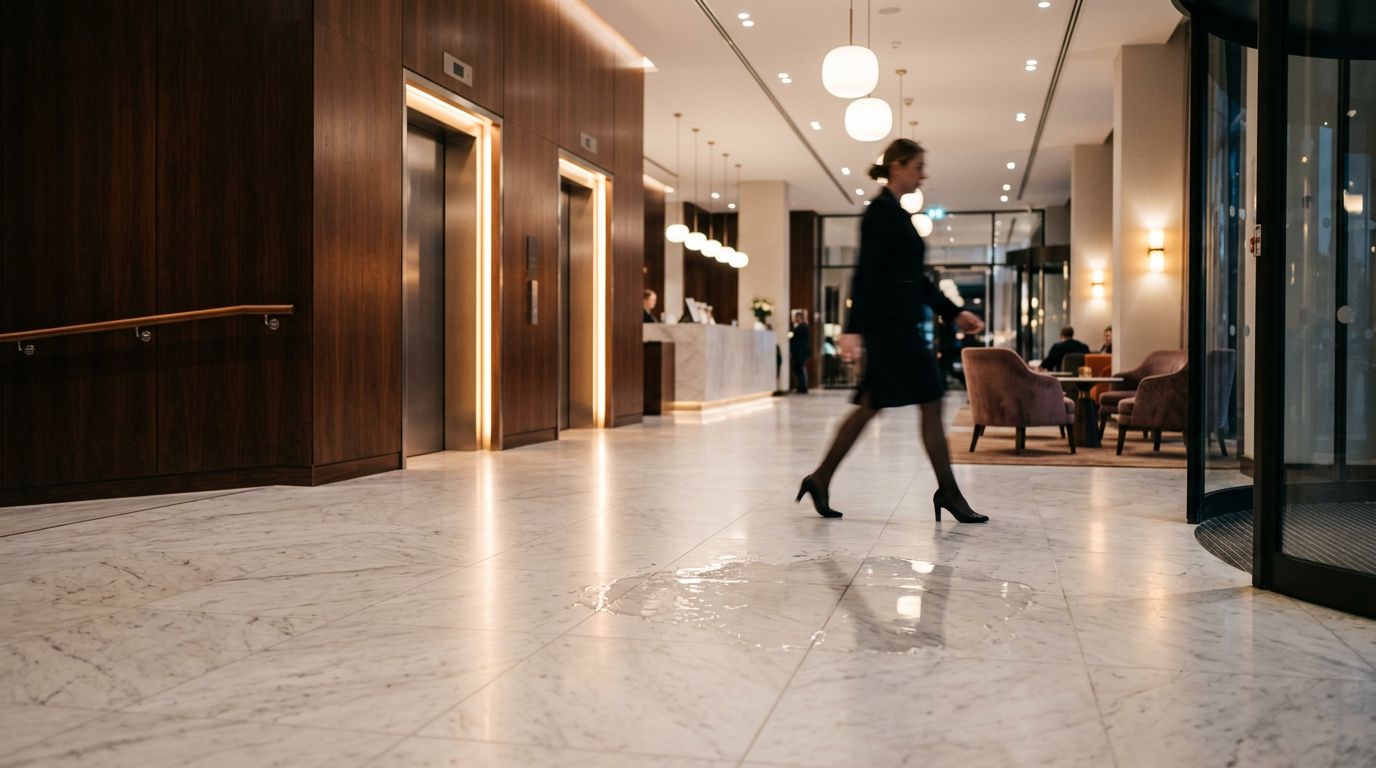
A fall at a hotel can happen in a second. Rain blows into the lobby, a pool deck stays slick, or a loose runner bunches up near an elevator. Then the bills start.
In florida hotel slip and fall claims, the hard part usually isn’t proving you fell. It’s proving the hotel had notice of the danger. To recover, you often need to show staff knew about the hazard, or should’ve found it before you got hurt. Here’s how notice works, what evidence matters, and what can weaken a strong case.
Why Notice Decides Florida Hotel Slip and Fall Claims
Hotels owe guests reasonable care. Because guests are invited onto the property for business reasons, the law expects regular inspections, timely cleanup, and warnings when a danger can’t be fixed at once. Still, a hotel is not an insurer of every accident. A fall alone does not prove negligence.
When the case involves a spill, tracked-in water, or another temporary substance, Florida law puts notice at center stage. Under Florida Statute 768.0755, an injured person must show the business had actual or constructive knowledge of the dangerous condition and should have taken action.
Actual notice is straightforward. Maybe a front desk clerk saw the puddle. Maybe housekeeping got a complaint and never returned. Maybe video shows an employee walking past the hazard twice.
Constructive notice is more common, and often harder to prove. It means the hotel should’ve known. Either the condition lasted long enough to be found, or it happened so often that it was foreseeable. Think of a lobby entrance that gets slippery every time it rains, or a leaking ice machine that creates the same puddle day after day.
If you want a plain-English look at duty of care in Florida slip and fall cases, start there. That framework often controls who had responsibility for the area where the fall happened.
In many hotel cases, notice is the hinge. If you can’t show the hotel knew or should’ve known, the claim gets much harder to win.
The Proof That Helps Show Notice
Evidence in hotel cases fades fast. Staff mop the floor, replace a mat, reset a caution sign, or save over video. Because of that, the first day matters more than most people think.
This quick chart shows how notice is usually proved:
| Type of notice | What it may look like | Proof that helps |
|---|---|---|
| Actual notice | Staff saw the spill or got a complaint | Video, guest complaints, employee statements, incident reports |
| Constructive notice, time | The hazard sat long enough that routine checks should’ve found it | Surveillance timestamps, dirty liquid, footprints, track marks, missed inspection rounds |
| Constructive notice, recurring condition | The same danger kept happening in the same area | Maintenance records, prior complaints, work orders, photos of repeated leaks or slick surfaces |
The pattern matters more than any single piece of proof. For example, a clean splash that appeared seconds before the fall tells a very different story than a puddle with dirt, footprints, and cart tracks through it.
Surveillance footage is often the best witness. It can show when the hazard first appeared, how many employees passed it, and whether warning cones were in place. Housekeeping logs, pool deck checks, and maintenance tickets can also expose long gaps in inspection. In the same way, witness statements may show guests had complained earlier, or that staff said the leak was “always there.”
Not every hotel fall involves a temporary spill. Some cases stem from loose carpet, broken tiles, bad lighting, uneven stairs, or a worn pool deck. In those cases, notice can come from repair requests, prior incidents, or proof that the defect had been visible for weeks.
If you’re acting quickly, this Florida slip and fall evidence checklist can help you preserve proof before it disappears. It also helps to secure a Florida slip and fall incident report while the facts are fresh. A prompt request may also keep a hotel from deleting video on its normal overwrite cycle.
Do these steps as soon as you can:
- Photograph the exact area, including lighting, signage, and what caused the fall.
- Ask for the manager’s name, and report the incident right away.
- Get witness names and phone numbers before people leave.
- Save your shoes and clothing in the same condition.
- Seek medical care promptly, because gaps in treatment invite doubt.
Common Defenses Hotels Use, and How to Answer Them
Hotels rarely admit notice. Instead, they argue around it. A common defense is, “The spill happened moments before the fall.” That argument tries to erase constructive notice. You answer it with timestamps, witness statements, and physical signs that the hazard was older than the hotel claims.
Another defense is that the danger was obvious. Sometimes that matters. Still, an open condition doesn’t always excuse a hotel, especially if the area was dim, crowded, or set up in a way that drew a guest’s attention elsewhere.
Hotels also rely on missing paperwork. If no report was made, they may say they never knew about the incident at all. That’s one reason early documentation matters so much. A short, accurate report made on-site can stop later disputes about the time, place, and cause of the fall.
Fault can also reduce recovery. Florida uses modified comparative fault in many negligence cases, so compensation may drop if you share blame, and recovery may be barred if you’re more than 50 percent at fault. Because of that, be careful with quick statements like “I wasn’t looking” or “It was probably my shoes.”
Finally, don’t wait. Many Florida negligence claims now face a two-year deadline, and evidence can disappear long before that. Once notice is established, the next issue is usually value. This Florida slip and fall damages guide explains the losses that may be part of a claim.
A hotel fall case isn’t won by injury alone. It’s won by proof that the danger was known, ignored, or left in place long enough for staff to catch it. In florida hotel slip and fall claims, fast action gives you the best chance to prove notice. Get medical care, preserve the evidence, and have the facts reviewed before the hotel controls the story.