
Florida Chain-Reaction Rear-End Crash Proof Checklist for Not-At-Fault Victims
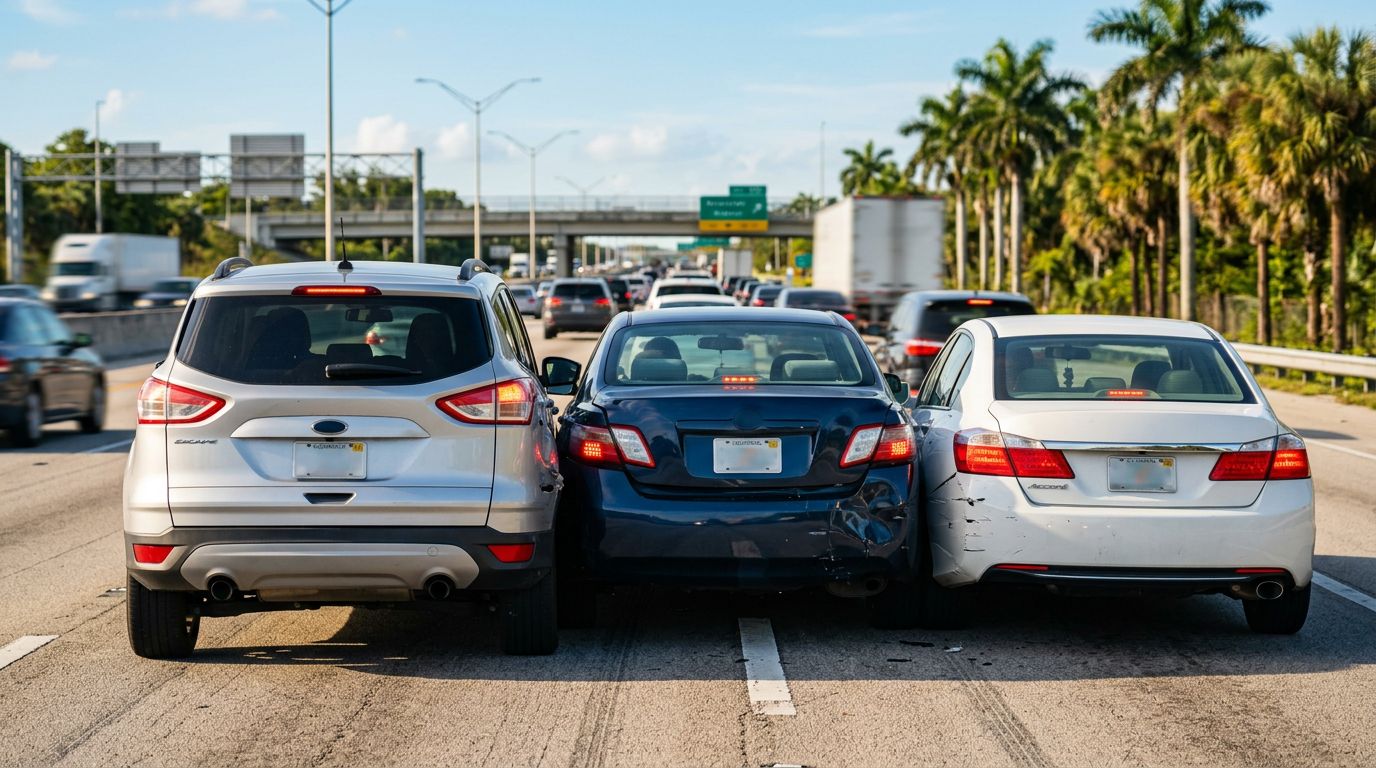
One hard hit from behind can feel like a row of dominoes falling. Your car jerks forward, then back, and the story gets messy fast. In a Florida chain reaction accident, the pain is only part of the problem. The other part is proving who started the sequence, when each impact happened, and why you shouldn’t carry the blame.
Florida recorded 362,063 crashes in 2025, about 992 a day. State data does not break out chain-reaction rear-end crashes as a separate category. Still, anyone who drives I-95, US-19, or Tampa Bay traffic knows how often sudden slowdowns cause multi-car pileups. If you were not at fault, this checklist can help protect your case before key proof disappears.
Why chain-reaction rear-end crashes are harder to prove
A simple two-car rear-end crash often starts with a basic rule: the rear driver may be presumed negligent. A multi-car wreck is different. The last driver may trigger the first impact, but a middle driver can also make things worse by following too closely or hitting a second time.
That sequence matters because insurers love confusion. They may argue your injuries came from the front impact, not the rear hit. They may claim you stopped short, failed to react, or had time to avoid the car ahead. In other words, they try to turn one violent moment into several smaller arguments.
In a chain-reaction case, “who hit whom” is only the start. The real issue is the order and force of each impact.
Because of that, timing evidence matters. Photos of front and rear damage help show direction. Skid marks can show braking. Airbag and event data can help place the hardest hit. Witnesses often remember the first bang, then the second. That detail can make or break a liability fight.
Medical proof matters just as much. Soft-tissue injuries, concussions, and spine injuries do not wait for dramatic vehicle damage. If the insurer starts pointing to “minor damage,” it helps to understand how proving injuries after a low-impact rear-end crash in Florida can still support a strong claim.
Florida’s no-fault system adds another layer. Your PIP coverage usually pays first. However, serious injuries, such as permanent harm or major scarring, may allow a claim against the at-fault driver outside PIP. That is why clean, early proof matters from day one.
Proof checklist for not-at-fault victims after a Florida chain reaction accident
Think of the crash scene like wet cement. At first, it holds every mark. Then it hardens, cracks, or gets wiped away. So, the first steps after a Florida chain reaction accident should focus on saving proof before it vanishes.
- Photograph the full scene. Start wide, then move closer. Capture traffic lanes, weather, debris, skid marks, signals, and every vehicle’s final position.
- Document all sides of your car. Rear damage may show the first hit. Front damage may show you were pushed forward, not that you caused the next collision.
- Get every driver’s details. Collect names, plate numbers, insurance cards, and the make and model of each vehicle involved. Multi-car claims fall apart when one driver gets left out.
- Find witnesses early. A neutral witness can confirm that you were stopped or slowing safely. Ask for a phone number and a short note about what they saw first.
- Look for video fast. Dash cams, nearby stores, gas stations, toll areas, and home cameras may capture the sequence. Many systems overwrite within days.
- Seek medical care right away. Prompt treatment ties symptoms to the crash. Also, tell the doctor about every area that hurts, even if the pain seems mild at first.
- Preserve the vehicle. Don’t rush into repairs if fault is disputed. Photos, black box data, crush depth, and repair estimates may help accident reconstruction later.
- Save your timeline. Keep texts, call logs, towing papers, ride receipts, and work absence records. Small time stamps often fill big gaps.
If a truck helped start the chain or joined it, the proof needs get wider. Trailer height, underride guards, inspection records, and company documents can matter. In that situation, this Florida truck underride evidence checklist shows what should be preserved early.
After you gather what you can, get the crash report and read it carefully. Police reports help, but they are not always perfect. If a diagram, lane position, or vehicle order is wrong, that error can echo through the insurance claim.
Mistakes that let insurers shift blame onto you
Insurance adjusters know chain-reaction wrecks confuse people. So, they look for gaps. A few common mistakes give them room to argue.
First, don’t give a polished story before you know the facts. Right after a crash, many people say, “I think I hit the car in front.” That may be true physically, yet it does not mean you caused the impact. You may have been pushed. Stick to what you know.
Next, don’t downplay your injuries. Adrenaline can hide pain for hours or days. If you tell the officer or insurer that you’re fine, they may use that against you later. Be accurate, not tough.
Also, don’t let your car disappear. Salvage yards, repair shops, and insurers move fast. Once the vehicle is fixed or sold off, you may lose the best proof of force and sequence. If liability is disputed, a lawyer can send preservation letters before that happens.
Social media can also hurt your case. A smiling photo at dinner tells nothing about neck pain, headaches, or lost sleep. Still, insurers may twist it into “proof” that you were not hurt.
Finally, remember that front-end damage does not make you at fault by itself. In chain-reaction crashes, front damage is often part of the same story. The issue is whether you had control before impact, or lost it because another driver hit you first.
The bottom line is simple. The less room there is for guesswork, the stronger your claim becomes.
Conclusion
A chain-reaction rear-end crash can turn a clear case cloudy in seconds. Yet good proof cuts through the fog. Save the scene, protect the vehicle, get prompt care, and keep a clean timeline. If an insurer is trying to pin a Florida chain reaction accident on you, quick legal action can lock down the evidence before it slips away.