
Florida Restaurant Slip And Fall Claims Proof Checklist
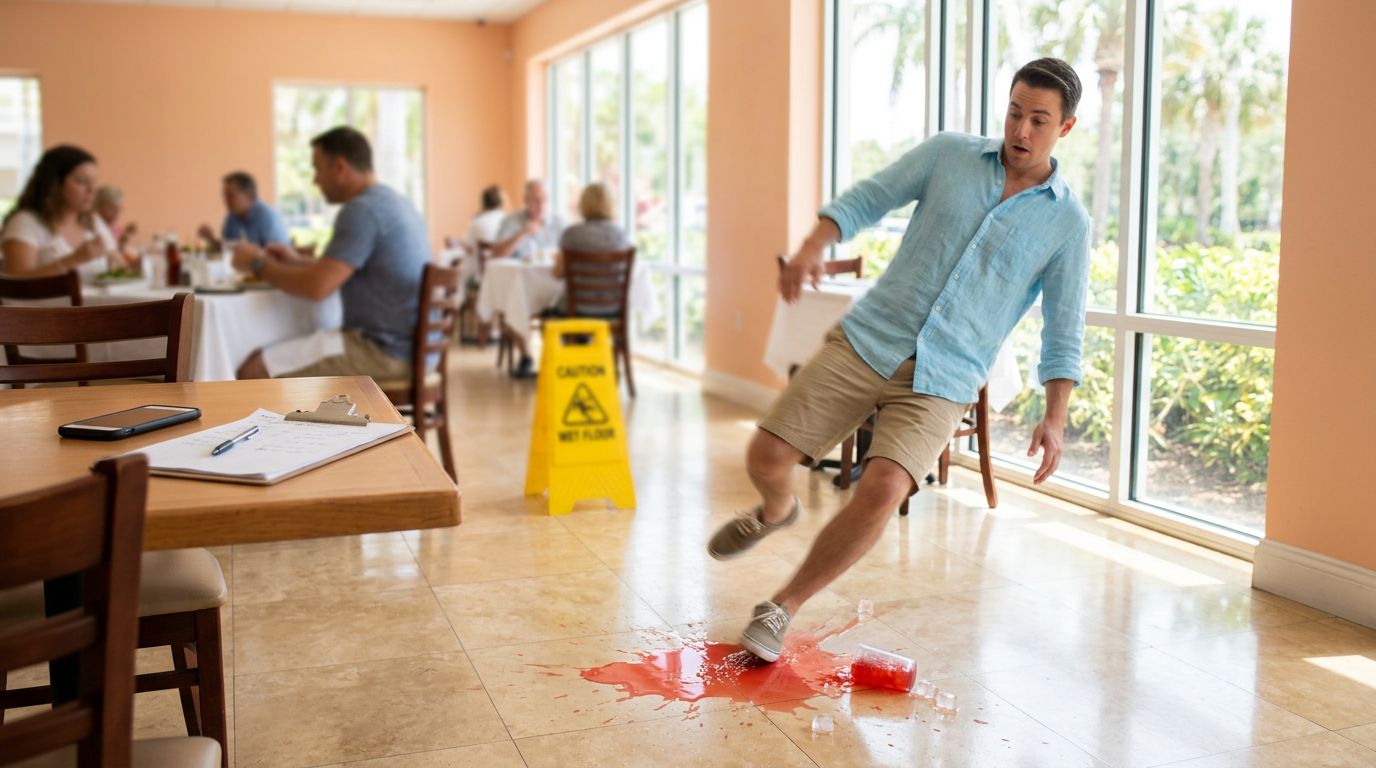
A restaurant floor can turn dangerous in seconds. A spilled drink, rain at the entry, or grease near a restroom can send someone down hard.
In florida slip and fall claims, the fall itself isn’t enough. The case usually turns on proof, and that proof can vanish before dessert is cleared. Managers mop floors, video loops over itself, and witnesses leave.
If you were hurt in a Florida restaurant, focus on two things right away: medical care and evidence. This checklist shows what needs to be proved, what to save, and what mistakes can hurt your claim.
What you have to prove after a restaurant fall
A restaurant owes customers a duty to keep the premises reasonably safe. Because customers are invitees, the business must inspect for hazards, fix dangerous conditions, or warn people in time. If you want a deeper look at duty of care in Florida slip and fall cases, that guide breaks down the basics in plain English.
Still, liability doesn’t arise just because you hit the floor. Florida law usually requires proof that the restaurant had actual or constructive notice of the hazard. Actual notice means staff knew about the spill or problem. Constructive notice means the evidence suggests they should have known.
That point is often the battlefield in restaurant cases. A puddle by the soda machine may show recurring trouble. Rainwater at the entry may point to a predictable condition on a wet day. A greasy restroom floor may suggest poor cleaning or no inspection.
Recent reporting also suggests restaurant slip and fall incidents rise in winter months, sometimes by about 25 percent, because rain and tracked-in moisture make floors slicker. In Florida, that matters because many restaurants have heavy foot traffic and indoor-outdoor entryways year-round.
You also need to connect the fall to your injuries. In other words, the proof must show the hazard caused the fall, and the fall caused your medical problems. Finally, you must show damages, such as medical bills, lost income, or pain.
One more point matters. Florida uses modified comparative fault. If the defense convinces a jury you were more than 50 percent at fault, recovery can be barred. So the cleaner your proof, the less room the other side has to shift blame.
The proof checklist that matters most
Start with the scene. A restaurant claim is a lot like a melted ice cube. Wait too long, and the shape is gone.
This quick table shows the evidence that usually carries the most weight.
| Proof | Why it matters | Where it comes from |
|---|---|---|
| Photos and video of the hazard | Shows the floor condition, lighting, warning signs, and layout | Your phone, a companion’s phone |
| Witness names and contact details | Supports how the fall happened and whether staff saw the danger | Nearby diners, employees, delivery drivers |
| Incident report | Creates a time-stamped record that you reported the fall | Restaurant manager or risk department |
| Surveillance footage | Can show how long the hazard was there and who walked past it | Restaurant cameras, nearby businesses |
| Medical records | Ties the fall to your injuries and symptoms | ER, urgent care, doctors, therapists |
| Shoes and clothing | May show liquid, grease, or lack of traction | Preserve the items in the same condition |
The takeaway is simple: collect evidence that shows what was on the floor, how long it was there, and what the restaurant knew.
Take wide photos first. Then get close shots of the spill, mat, tile, or uneven surface. Include the lack of warning cones if none were out. If you can, capture the path from the entrance or table to the spot where you fell. Context matters.
Next, report the fall to a manager before you leave. Ask for a written report, or at least the report number and the manager’s name. Avard Law’s guide on getting a slip and fall incident report explains how to lock down that paper trail fast.
The strongest restaurant cases often have one thing in common: proof gathered before the staff cleaned the floor and the cameras recycled.
Witnesses also matter more than people think. A server may have seen the spill sit there. Another customer may remember someone almost slipping minutes earlier. Those details can turn a weak claim into a solid one.
After that, protect the items you wore. Don’t wash your shoes. Don’t throw away stained pants. If grease, water, or food got on them, that physical evidence may help later.
Medical treatment is the next pillar. Get checked the same day if you can. Adrenaline hides pain, and insurers love to argue that a delayed visit means the fall wasn’t serious. For more early-stage steps, the firm’s Florida slip and fall evidence checklist is a useful companion after the first 72 hours.
Mistakes that weaken claims before they start
Restaurant owners and insurers often defend these cases by saying the danger was obvious, the floor was inspected, or the customer simply wasn’t paying attention. Small mistakes can feed those arguments.
First, don’t guess. If you don’t know how long the spill was there, don’t say “probably 20 minutes.” If you aren’t sure what caused the fall, say that clearly. Guesses age badly once video or witness accounts show something different.
Also, be careful with recorded statements. A casual comment like “I think I was fine” can come back later when your back pain worsens. Short, accurate reports work better than rushed explanations.
Social media can hurt more than people expect. A smiling dinner photo after the fall doesn’t prove you’re uninjured, but the defense may use it that way. The same goes for gaps in treatment. If you skip follow-up visits, insurers may claim your injuries healed or came from something else.
Keep every receipt and record. Parking, prescriptions, braces, co-pays, and missed work all help tell the damages story. If you want a clearer sense of what you can claim after a Florida slip and fall, review the types of losses that often matter in settlement talks.
Timing is the thread running through all of this. Video can disappear within days. Witnesses forget details fast. Florida deadlines are shorter than they used to be, so waiting can damage even a good case. When injuries are serious, early legal help can preserve footage, send records requests, and stop the story from being rewritten.
Conclusion
A restaurant slip and fall case isn’t won by outrage. It’s won by proof. The best florida slip and fall claims usually show the hazard, the notice, the injury, and the losses with a clean paper trail. If your fall happened in a Florida restaurant, act quickly, save everything, and get legal advice before key evidence disappears.