
Florida Jackknife Truck Crashes: Proof Checklist for Not-At-Fault Victims
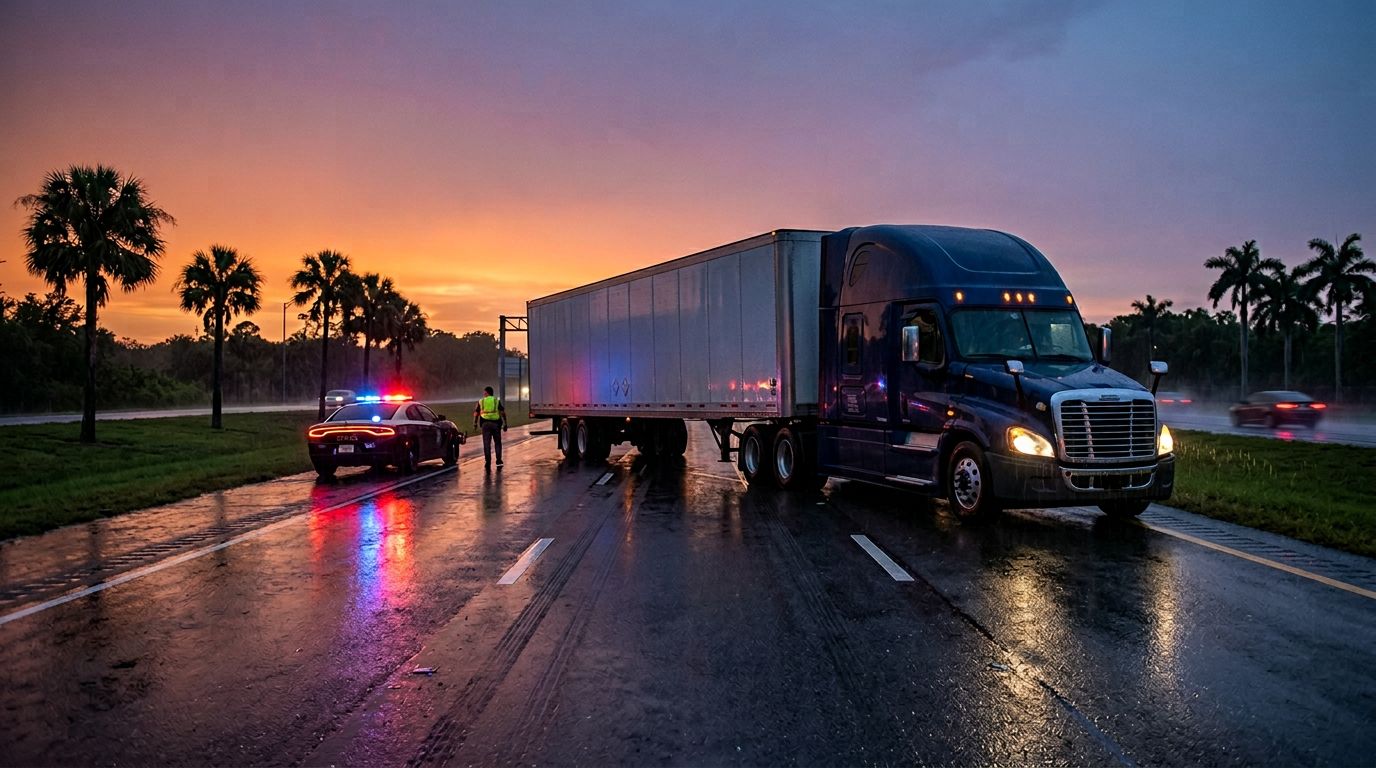
When a trailer swings sideways across the road, the wreck feels chaotic. Still, your case should not.
In Florida jackknife truck crashes, the strongest claims usually belong to the people who move fast on proof. Skid marks fade. Dash cam files get erased. Trucks get repaired. Meanwhile, insurers start building their version of events right away. If you were not at fault, the goal is simple: lock down the evidence before someone else defines the story for you.
Why jackknife truck cases become blame fights so quickly
A jackknife crash happens when the trailer folds toward the cab and blocks one or more lanes. It can start with hard braking, slick pavement, bad tires, poor loading, or driver error. In Florida, rain, congestion, and high-speed roads make the risk worse.
Public 2026 state-specific jackknife numbers are not available yet, and official reporting often trails by a year or more. Still, federal data shows jackknifing remains a serious part of large truck crash analysis. The FMCSA’s jackknife crash table and Large Truck and Bus Crash Facts both show how often heavy truck crashes lead to injury, death, and multi-vehicle damage.
That matters because jackknife cases rarely stay simple. A trucking company may blame weather. The driver may say traffic stopped short. An insurer may claim you were following too closely, speeding, or could have avoided the trailer. If several cars collide, the finger-pointing spreads fast.
In a jackknife case, the first version of events often shapes the whole insurance fight.
Florida also adds another layer. Your PIP coverage may pay first, but serious injuries can support a claim against the at-fault parties. That is why fault proof matters so much. If you want a broader look at how fault gets sorted out, this guide on determining fault in Florida truck crashes gives helpful context.
Your proof checklist for the first 48 hours
Think of the crash scene like footprints in wet sand. At first, the marks are clear. Then rain, traffic, and tow trucks wash them away.
Start with the highest-value proof:
| Proof to save | Why it matters | How fast to act |
|---|---|---|
| Scene photos and video | Shows lane positions, trailer angle, road conditions, and debris | Immediately |
| Witness names and numbers | Neutral witnesses can confirm speed, braking, and sequence | Same day |
| Vehicle preservation | Crush damage and data can show how the impact happened | Before repairs or disposal |
| Medical records | Links your injuries to the wreck and timing | Within hours or days |
| Camera footage | Business, traffic, and dash cameras may capture the full event | Within days |
The table shows the pattern: speed matters. In jackknife cases, the best evidence is often the easiest to lose.
Take wide shots first. Capture the full roadway, the tractor, the trailer, every damaged vehicle, skid marks, cargo spills, weather, and traffic controls. Then move in for close photos of impact points, tire marks, reflective tape, brake lights, license plates, and company markings.
Next, keep your own timeline. Save towing papers, ride receipts, texts, calls, missed work notices, and any messages from the trucking company or insurer. Small time stamps can settle big arguments.
Medical care also does more than protect your health. It creates a record. Tell the doctor about every symptom, even if it seems minor. Neck pain, headaches, numbness, and back pain often show up after the adrenaline fades.
A few quick notes can help, too:
- Write what you remember: traffic speed, rain, lane changes, braking, and where the trailer came from.
- Name every witness: passengers, nearby drivers, store employees, or first responders.
- Do not guess: if you are unsure, say you are unsure.
- Do not authorize disposal: once a car or truck gets repaired, sold, or crushed, key proof may vanish.
If you need a broader post-crash guide, these steps after a Florida truck crash can help you avoid early mistakes.
Also, be careful with statements. Saying “I couldn’t stop in time” may sound harmless. Yet in a jackknife case, that sentence can get twisted into an admission of fault, even if the truck blocked the lane seconds before impact.
The records that often prove the truck driver or company caused the jackknife
Photos from the road are only the start. Some of the strongest proof sits in company files and electronic systems.
A good claim often turns on black box data, driver logs, dispatch records, maintenance files, inspection reports, cargo records, and post-crash drug and alcohol testing. Those documents can show fatigue, bad brakes, worn tires, poor training, overloaded cargo, or pressure to rush.
For example, a shifted load can make a trailer unstable during braking. Bald tires can reduce traction on wet roads. A driver who worked beyond legal hours may react too late in stopped traffic. None of that shows up clearly in a quick roadside conversation.
This is also where preservation letters matter. They tell the trucking company to keep the truck, trailer, data, and records intact. Without that step, evidence may be overwritten or “lost” during routine business activity.
Florida jackknife truck crashes sometimes lead to chain-reaction collisions, and federal investigators have studied how quickly those scenes grow complex. The NTSB’s Florida I-75 investigation is a reminder that multi-vehicle truck crashes demand careful evidence work, not assumptions.
If fault is disputed, legal help often changes the case early. A lawyer can move to preserve the truck, request records, and stop the insurer from boxing you into a weak statement. If you need help taking those steps, Florida residents can review their options with Florida truck accident attorneys.
Conclusion
A jackknife crash can turn the highway into a wall of steel in seconds. Yet proof still wins these cases. Save the scene, protect the vehicles, get prompt medical care, and push for the records the trucking company controls. If you were not at fault, early action can keep a hard case from becoming an unfair one.