
Florida Gas Station Slip and Fall Claims Proof Checklist
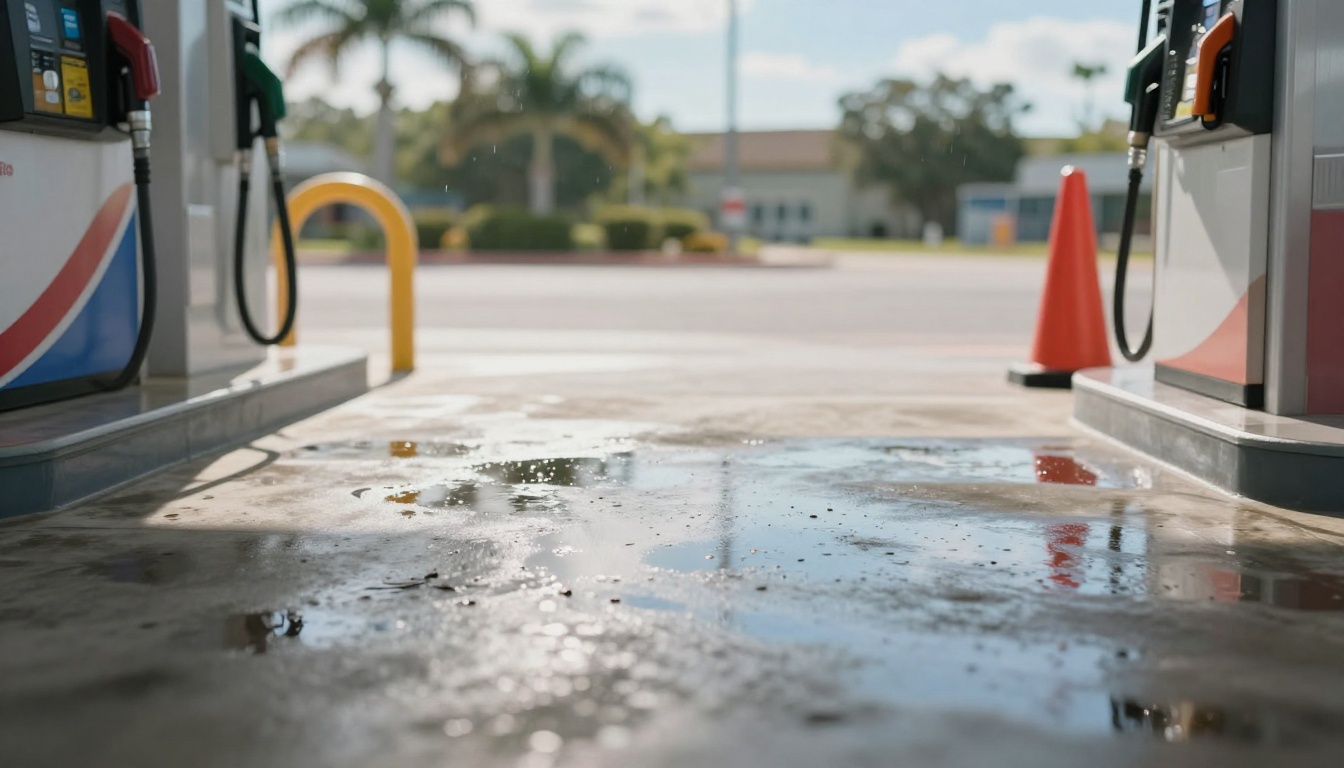
A gas station floor can look harmless until it acts like black ice. One step on spilled soda, fuel, rainwater, or oily residue can send you down hard.
In a florida slip and fall claim, the fall itself is only the start. The real fight is proof. To recover money, you need to show what was on the ground, how long it was there, what the station knew, and how the fall changed your health and finances.
What a Florida gas station slip and fall claim must prove
Gas stations count as business establishments in Florida. So, when a customer slips on a temporary substance, the case often turns on Florida Statute 768.0755. That law requires proof that the business had actual or constructive knowledge of the hazard and failed to correct it.
Actual knowledge means an employee saw the spill or was told about it. Constructive knowledge means the spill sat there long enough that staff should have found it, or the same hazard happened so often that the station should have expected it.
Most claims rise or fall on four points:
- A dangerous condition existed
- The station knew, or should’ve known, about it
- The station failed to fix it or warn about it
- That failure caused your injuries and losses
In a gas station claim, the hazard often disappears first, so your proof has to outlast the cleanup.
Florida’s broader negligence rules sit in Chapter 768 of the Florida Statutes. As of March 2026, most negligence lawsuits must be filed within two years if the fall happened on or after March 24, 2023. Florida also uses a modified comparative fault rule. If you’re more than 50 percent at fault, you recover nothing. If you’re 50 percent or less at fault, your recovery drops by your share of blame.
That means the station’s proof and your proof are in a race from day one.
The proof checklist for the first 72 hours
Time matters because gas stations clean fast and cameras overwrite fast. A shiny floor an hour later can hide what caused the fall. So, start building your file right away.
First, photograph the exact area. Get wide shots and close-ups. Capture the liquid, dirt, footprints, tire marks, poor lighting, worn mats, missing cones, and the pump or aisle number. If the fall happened by a drink cooler, freezer, restroom, or entry door, show that too. Those spots often create repeat hazards.
Next, report the fall to a manager before leaving if you can. Ask for an incident report and note the employee’s name. If you need help with that paper trail, this Florida slip fall incident report guide explains what to request and why it matters.
This quick table shows the proof that usually matters most:
| Evidence | Why it matters | Common mistake |
|---|---|---|
| Photos and video | Shows the hazard before it’s cleaned | Taking only one close-up shot |
| Incident report | Locks in time, place, and notice | Leaving without reporting it |
| Witness names | Supports how long the hazard existed | Trusting staff to contact witnesses later |
| Shoes and clothing | Can show residue, wetness, or traction | Washing or throwing them away |
| Medical records | Connects the fall to your injuries | Waiting days to seek care |
Also save your receipt, bank record, or app transaction. That simple detail proves you were there. Then write down the time, weather, and what happened right before the fall. Memory fades quickly, especially after pain and stress kick in.
Ask the station to preserve surveillance footage. Many locations have cameras covering pumps, entrances, and checkout areas. Still, video may disappear in days. For a broader look at early documentation, this Florida slip and fall evidence checklist is a helpful next step.
The short version is simple: if the floor gets mopped, your photos become the scene.
How to prove the station knew about the hazard
Notice is the hinge of a gas station case. Without it, the defense will say the spill appeared seconds before you fell.
Gas station claims often involve recurring hazards. Think fuel drips near pumps, tracked-in rain near the door, melted ice by coolers, or leaking drink stations. A one-time spill is harder to prove. A repeat problem is different. If employees dealt with the same slippery area before, that pattern can support constructive notice.
The best proof of notice often comes from small details. Dirty liquid, shoe tracks through a puddle, faded warning cones, or a mop bucket nearby can suggest the condition existed for a while. Surveillance footage may show workers passing the area without cleaning it. Cleaning logs can help too, especially when they have gaps or look back-filled.
Defense lawyers also push a few familiar themes. They may argue the spill was obvious, you were distracted, or your shoes caused the fall. They may say a warning sign was out. Those arguments don’t end the case by themselves. A cone placed too far away, poor lighting, crowding, or a hidden slick spot can still support liability.
A strong florida slip and fall claim also needs damage proof. Keep every bill, work note, prescription, and mileage record. If you missed work, get wage records from your employer. If your injuries changed daily life, note that in a journal. For a plain-language look at case value, review this Florida slip and fall damages overview.
Picture the claim like a chain. One link is the hazard. Another is notice. Another is injury. If one breaks, the case weakens.
Conclusion
A gas station slip and fall claim isn’t won by saying you fell. It’s won with proof that shows the hazard, the station’s notice, and the harm that followed. Act fast, report the fall, preserve every photo and record, and get medical care right away. When the cleanup starts, your evidence has to carry the whole story.