
Florida Wide Right Turn Truck Crash Proof Checklist
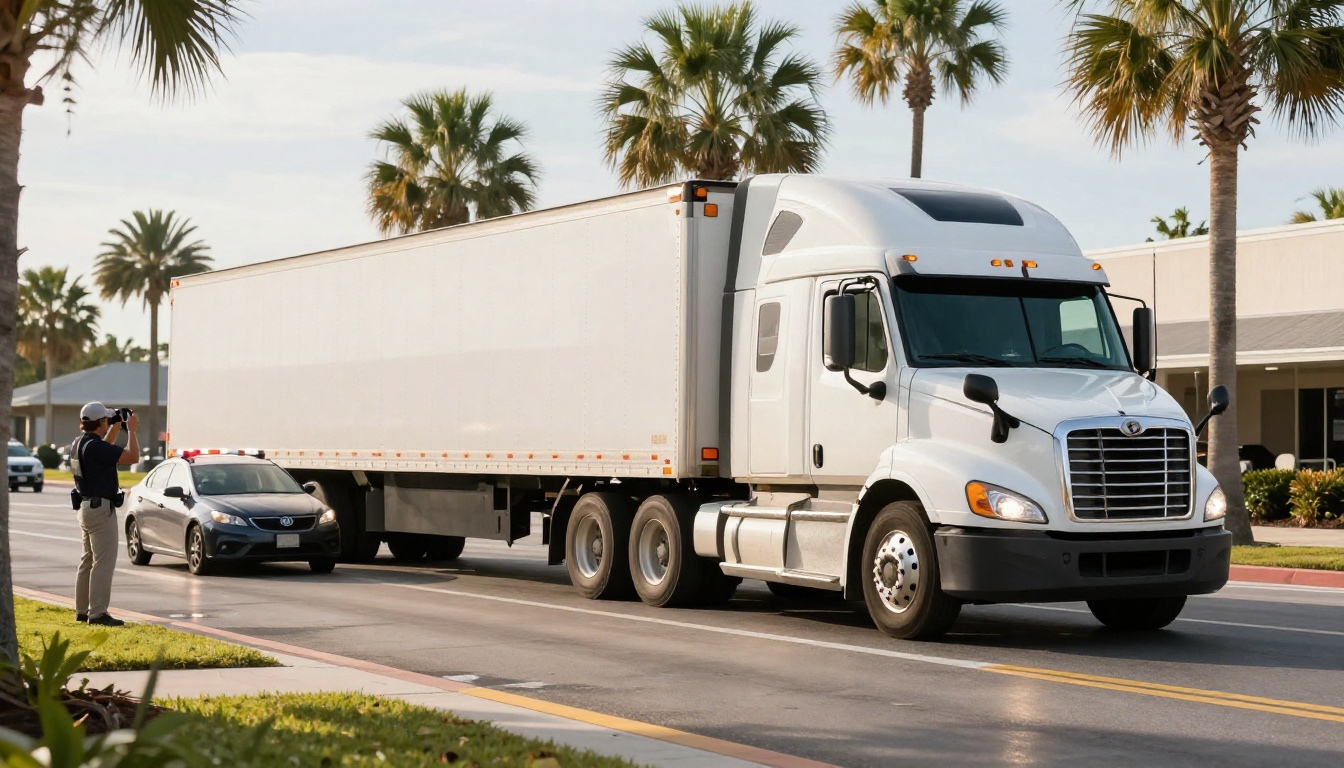
A wide right turn truck crash can feel unfair from the first second. The truck swings left, then cuts right, and a smaller car gets pinned, sideswiped, or shoved toward the curb. After that, the insurance fight starts fast.
If you were hurt in Florida, the most important job is simple: save proof before it disappears. That means scene photos, truck details, witness names, medical records, and video. If you’re still in the first stage after the wreck, this guide on steps to take after a Cape Coral truck accident covers the basic response in plain language.
Why wide right turn truck crashes are so hard to prove
These crashes confuse people because the truck often begins by moving left. To a driver nearby, that can look like an opening. A second later, the trailer swings back right and closes the gap like a gate.
That area beside the trailer is often called a squeeze zone. If a car is caught there, the damage can be severe. Side panels crush easily. Occupants may suffer neck, shoulder, spine, or head injuries even at city speeds.
As of March 2026, Florida does not publish a separate statewide count for wide right turn truck crashes. Still, the larger truck-crash picture is clear. Florida reported more than 10,000 large truck crashes in 2023, placing it among the highest states in the nation. Wide-turn collisions are one piece of that bigger problem.
Geometry also works against passenger vehicles. A large truck may need about 55 feet of turning space, so drivers often swing wide before completing a right turn. Add blind spots on the right side, heavy traffic, and a late signal, and the risk rises quickly.
Liability is not automatic. The trucking company may argue you passed on the right, sat in a blind spot, or tried to beat the turn. That is why physical proof matters more than anyone’s memory. Florida traffic rules on turning, signaling, and lane use appear in Chapter 316 of the Florida Statutes, but rules alone don’t win claims. Evidence does.
In a wide-turn case, the first story often sticks. Good proof keeps the wrong story from taking over.
The proof checklist for the first 48 hours
Think of the crash scene like wet paint. It looks clear at first, then it smears. So, act early if you can do so safely.
Start with wide photos. Show the truck, the curb, lane markings, turn lane, traffic signals, and where each vehicle stopped. Then move closer. Photograph damage on both vehicles, especially the trailer wheels, the truck’s right side, and scrape marks on your car.
Next, lock down the truck’s identity. Get the plate, USDOT number, trailer number, company name, and any markings on the cab. A blurry photo is better than no photo.
Video matters even more. Nearby stores, gas stations, warehouses, buses, or dashcams may have caught the turn. Many systems overwrite within days. If the officer gives you a crash report number, request the report as soon as it becomes available through Florida Traffic Crash Reports.
Here is the short list of proof that usually carries the most weight:
| Evidence | Why it matters | How to get it fast |
|---|---|---|
| Wide scene photos | Shows lane position, curb distance, and truck angle | Use your phone before vehicles move |
| Close damage photos | Helps show a squeeze-play or trailer swing | Capture both cars from all sides |
| Truck identifiers | Ties the crash to the right driver and company | Photograph door markings, plate, and trailer number |
| Witness contacts | Neutral witnesses can break a blame dispute | Get names and cell numbers at the scene |
| Video sources | Can show the full turn from start to impact | Ask nearby businesses right away |
| Same-day medical records | Connects injuries to the crash timing | Go to ER, urgent care, or your doctor promptly |
The takeaway is simple: don’t just photograph the dent. Photograph the story.
If your crash involved a side hit or lane dispute during the truck’s swing, Avard Law’s Florida lane-change sideswipe fault guide can help you see how insurers analyze space, timing, and impact angles.
Records and mistakes that can decide the claim
Scene proof starts the case. Paper records often finish it.
A strong file usually includes the crash report, 911 logs if available, towing records, repair estimates, body shop photos, medical bills, wage loss proof, and a short timeline of your symptoms. If the truck was on a work route, company records may also matter, including dispatch data, driver logs, training history, and post-crash inspection records.
Fault can spread beyond the driver. In some Florida cases, the trucking company, a maintenance contractor, or another business may share blame. That’s why it helps to understand determining liability in Cape Coral truck accidents, especially when more than one party controlled the truck or the route.
Just as important, avoid a few common mistakes.
Don’t guess in a recorded statement. If you are unsure whether you were beside the cab or the trailer at impact, say you are not sure. Guessing creates openings.
Don’t rush to repair or release the vehicle if fault is disputed. Crush damage, paint transfer, and scrape direction can all matter later.
Don’t downplay injuries. Adrenaline is a liar. What feels like soreness at noon may become a serious neck or back problem by night.
Also, don’t assume a right-side position makes you at fault. Sometimes it does. Often, it doesn’t. The key question is whether the truck driver made the turn safely, signaled in time, checked the right side, and avoided trapping traffic.
Florida’s modified comparative fault rule can reduce compensation if you share blame. If a jury puts you over 50 percent at fault, recovery may be barred in a negligence claim. That makes clean, early evidence even more important.
Conclusion
A wide right turn truck crash is messy, fast, and easy for insurers to distort. The best response is early proof, clear records, and careful statements. Save the scene, protect the vehicle, get medical care, and move quickly if the trucking company starts shifting blame. In truck cases, timing is not a small detail, it’s the difference between a strong claim and a weak one.