
Florida Gas Station Slip and Fall Claims: How to Prove Notice
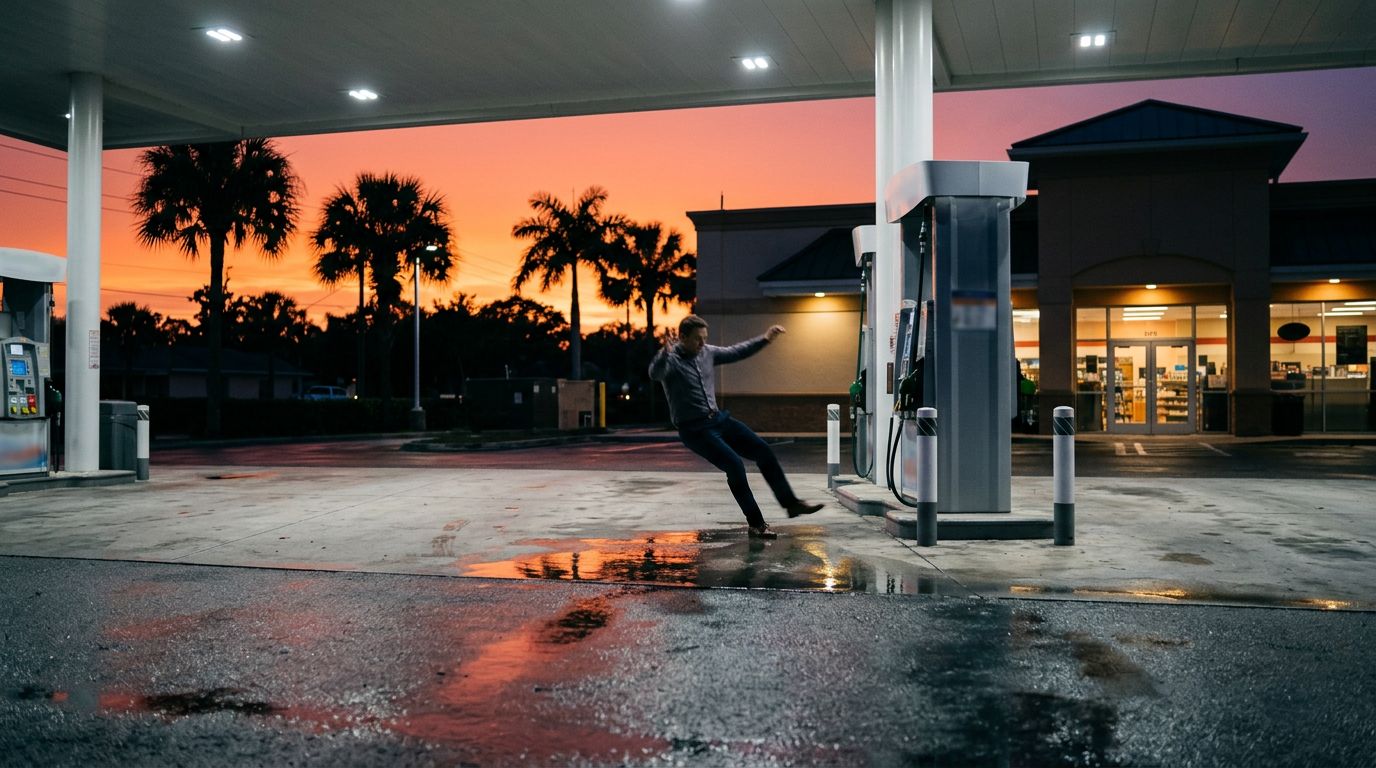
A bad fall at a gas station can happen in a second. You step out of the store, cross the pump area, or walk past a cooler, and suddenly you’re on the ground. Then the hard part starts.
In many florida slip and fall claims, the fight is not over whether you fell. It is over whether the gas station knew, or should have known, about the danger before the fall. That issue is called notice, and it often decides whether a claim stands up or falls apart.
Why notice matters so much in a Florida gas station case
Gas stations and convenience stores owe customers reasonable care. That means they should inspect the property, clean hazards, fix unsafe conditions, and warn people when a danger can’t be removed right away. If you want a broader look at that rule, this guide to duty of care in Florida slip cases explains the basics.
Still, a station is not automatically liable just because someone slipped. Florida law puts the focus on notice when the fall involves a temporary spill or slick substance. The rule appears in section 768.0755 of the Florida Statutes.
That statute covers what the law calls a “transitory foreign substance.” In plain English, that means something like spilled soda, rainwater, melted ice, oil, windshield washer fluid, or another temporary hazard.
Notice usually comes in two forms:
- Actual notice means staff knew about the hazard.
- Constructive notice means the facts suggest they should have known.
Gas stations create repeat risks. Fuel drips near pumps. Ice melts by coolers. Customers track rain into the store. Washer stations leak. Because of that, a recurring slick spot can help show constructive notice even if no employee admits seeing it.
A fall alone doesn’t prove negligence. The claim usually turns on what the station knew, or should have known, before you hit the ground.
As of March 2026, the basic notice rule has not changed. Courts still look to the same standard found in section 768.0755 when a business denies it had time to catch a hazard.
The evidence that helps prove a gas station had notice
Notice is rarely proved with one perfect piece of evidence. Usually, you build it like a chain. Each link helps support the next one.
This is the proof that often carries the most weight:
| Evidence | What it may show |
|---|---|
| Photos of the spill or surface | Size, color, dirt, footprints, tire marks, poor lighting, missing warning signs |
| Surveillance video | How long the hazard sat there, who walked past it, whether staff ignored it |
| Witness statements | Prior complaints, repeated leaks, or employees discussing the problem |
| Incident report | A time-stamped record that you reported the fall on-site |
| Cleaning or inspection logs | Missed checks, long gaps, or back-filled paperwork |
| Shoes, clothing, and medical records | What substance caused the fall, and how the fall caused injury |
The pattern matters. A fresh splash that appeared seconds before the fall tells one story. A dark puddle with footprints, cart tracks, or dirt around the edges tells another.
At gas stations, the best proof often comes from cameras. Many locations have footage aimed at entrances, aisles, and pump lanes. That video can show whether the hazard sat there long enough for staff to catch it. It can also show employees walking by without placing a cone or mat.
Because video can vanish fast, act quickly. Report the fall to the manager before leaving if you can. Ask for the manager’s name, the store number, and an incident report. Also note the pump number, the exact spot, the time, and the weather. Those details matter later.
Photos should show more than the puddle itself. Step back and capture the whole area. Show the path you were walking, the lighting, nearby mats, warning signs, and anything that might explain why the hazard stayed there. If you slipped near a drink station or cooler, photograph that too.
For the first steps after a fall, this Florida slip and fall evidence checklist can help you preserve proof before it disappears.
Don’t overlook physical evidence. Save the shoes and clothes you wore. Don’t wash them right away. If oil, soda, or grime transferred onto them, that can help tie the scene to the fall. Also get medical care as soon as possible. A same-day record connects the fall to the injury far better than a delayed visit.
Common defenses gas stations use, and how notice answers them
Gas stations and insurers often defend these claims the same way. First, they argue the spill appeared moments before the fall. Next, they say the danger was obvious. Then they try to shift blame to the customer.
Strong proof can answer each point.
If the station says the spill was too new to detect, photos, witnesses, and video may show otherwise. Dirty liquid, repeated drips, or long gaps in inspection can support constructive notice. If the same cooler leaks every week, or the same doorway gets slick each time it rains, the business can’t act surprised.
Another common defense is distraction. The insurer may claim you were looking at your phone or not watching where you were going. Florida uses modified comparative fault. So if you are found more than 50 percent at fault, recovery may be barred. That’s why the scene matters so much. Poor lighting, crowded walkways, blocked views, or no warning sign can reduce the force of that argument.
Video doesn’t wait for a lawsuit. In many cases, it disappears within days or weeks.
Delay also hurts otherwise strong claims. In many Florida negligence cases, the filing deadline is now two years. But evidence problems start long before that. Witnesses forget details. Managers transfer. Cameras overwrite old footage. Small delays can create big holes.
Be careful with recorded statements, too. A quick comment like “I think I’m okay” may look harmless that day. Later, it can be used to question real injuries. If liability becomes clear, Florida slip and fall damages may include medical bills, lost wages, and pain and suffering, but only if the evidence supports the case from the start.
In gas station cases, the floor may dry quickly, but the proof doesn’t have to disappear with it. The strongest claims show a hazard, notice, no timely fix or warning, and a clear injury. If you were hurt, move fast, preserve what you can, and get help before the station’s version becomes the only version left.