
Florida Truck Blind Spot Crashes: Proof For Not-At-Fault Drivers
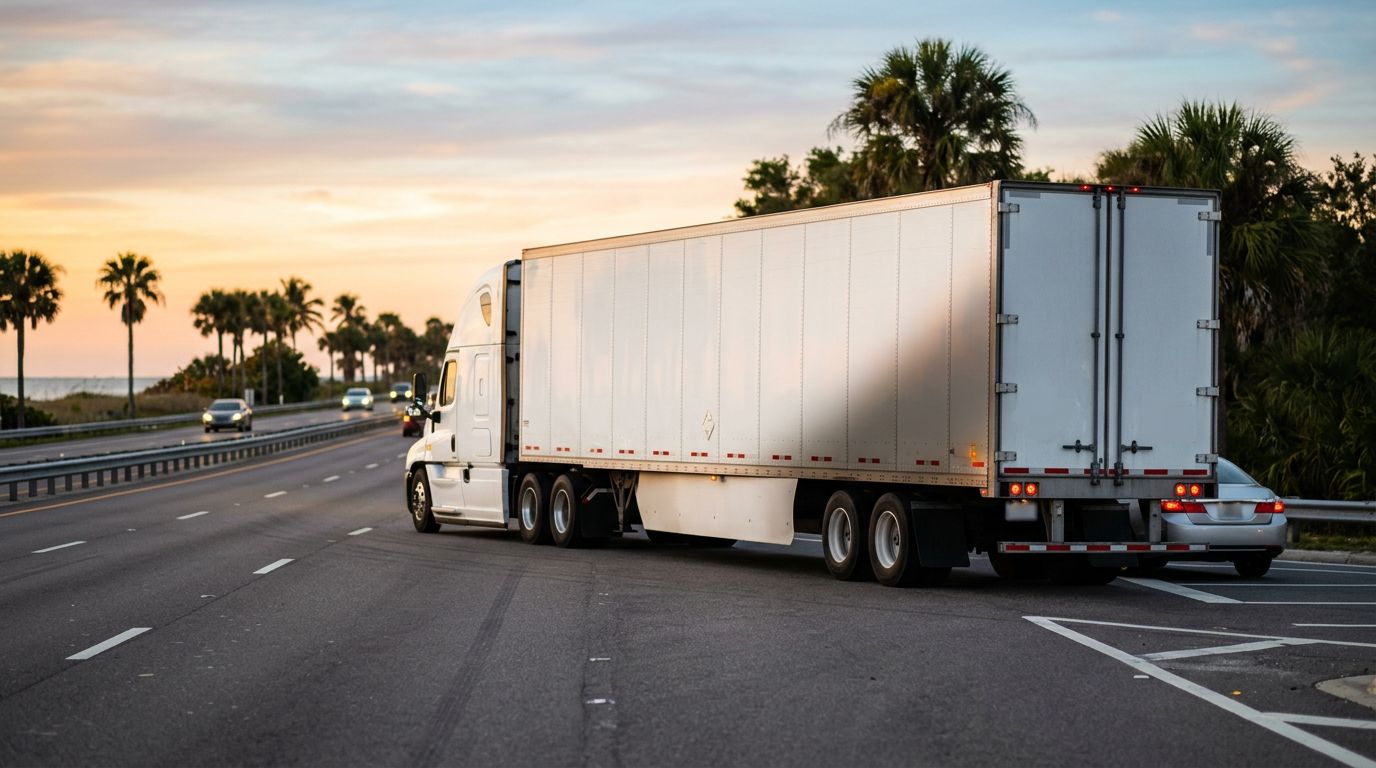
A tractor-trailer can hide an entire car in its no-zones, and after a wreck the same thing can happen to the evidence. It disappears fast.
If you were hit in a truck blind spot crashes scenario in Florida, don’t assume the damage tells the whole story. Trucking insurers often argue that the car lingered beside the trailer, sped up, or moved into the truck’s path. Public 2026 figures are not out yet, but the latest available Florida blind spot crash rate was 7.8 per 100,000 people in 2023. That makes quick proof collection more than a good idea, it makes it the backbone of your claim.
Why blind spot truck cases get disputed so fast in Florida
Blind spot wrecks often look simple from the shoulder. Then the blame starts.
The truck driver may say you were riding in the no-zone. The carrier may claim you cut across the lane line. If the crash happened during a wide right turn, they may argue you tried to squeeze through. In other words, these cases turn on position and timing.
That matters even more in Florida because fault can reduce what an injured person recovers. A trucking insurer knows that. So it will look for any statement, photo gap, or missing record that helps shift blame.
Current public data still trails the calendar, but the risk is clear. Nationwide, blind spot truck crashes kill about 500 car drivers each year, and right-side blind spots account for a large share of those deaths. National crash summaries in NHTSA’s 2023 large truck fact sheet show that people in passenger vehicles bear most of the harm in large-truck crashes. Florida freight research in FDOT’s Florida truck crash analysis also shows how often severe truck wrecks happen on major freight corridors.
Federal rules also require commercial trucks to use mirrors designed to reduce blind spots. Still, mirrors don’t excuse careless lane changes or wide turns. If the truck moved into your lane without clearing space, proof can show it.
What to save in the first 48 hours after a blind spot crash
Think of the scene like footprints near the tide. At first, the marks are sharp. A day later, they may be gone.
Start with the evidence that fades first:
| Proof to save | Why it matters | How fast to act |
|---|---|---|
| Scene photos and video | Shows lane position, side damage, truck angle, and road markings | Same day |
| Witness names and numbers | Neutral accounts often settle who moved where | Same day |
| Nearby camera sources | Business, traffic, and dash cam footage may capture the lane change or turn | Within 24 to 72 hours |
| Truck and trailer identifiers | Carrier name, DOT number, plate, and trailer number link the right company to the wreck | Same day |
| Your vehicle preservation | Damage patterns, paint transfer, and data can help reconstruct impact timing | Before repairs or disposal |
| Medical records and symptom notes | Ties your injuries to the crash and the force of impact | Within hours |
The table shows the pattern. The best proof is often the easiest to lose.
Take wide photos first. Capture every lane, shoulder, merge area, skid mark, gouge, and traffic sign. Then move closer. Photograph the truck’s side, mirrors, trailer panels, underride guards if present, company markings, and the exact crush damage on your car. In blind spot crashes, side-swipe patterns matter because they can show which vehicle moved into the other.
Also, write down what you remember while it’s still fresh. Note speed, weather, whether the truck used a turn signal, and where your car sat before impact. If a witness says, “The truck came over on you,” save that name and number.
If your vehicle gets repaired or crushed too soon, some of the strongest fault proof may disappear before the insurer fully opens the claim.
Be careful with statements, too. Give police accurate facts, but don’t guess. “I think I was in his blind spot” can be twisted later, even if the truck cut across your lane. A similar preservation problem appears in this Florida truck underride evidence checklist, because damaged vehicles and camera footage rarely wait around.
The trucking records that often decide fault
Roadside photos are only the start. Some of the best proof sits inside company files and onboard systems.
When the facts are disputed, these records often matter most:
- Electronic data: The truck may store speed, braking, throttle use, and timing in the seconds before impact.
- Driver logs and dispatch messages: These can show fatigue, rushing, or pressure to stay on schedule.
- Inspection and maintenance files: Mirror problems, body damage, lighting issues, and missed repairs can support fault.
- Dash camera or onboard video: Some fleets record the road, the cab, or both.
- Post-crash inspection reports: These may document fresh side damage, broken mirrors, or defects.
- Bills of lading and route records: Delivery timing can help explain why a driver made an unsafe move.
Not every truck records the same data, and not every fleet keeps video for long. That’s why early preservation letters matter. They tell the company to keep the truck, trailer, data, and records intact instead of letting them vanish in routine operations.
Electronic proof can also support the physical evidence. If the truck’s data shows braking or steering at a key moment, it may line up with damage to your fender, doors, or wheel area. This guide on proving fault with truck black box evidence explains why timing data can reshape a truck crash case.
Meanwhile, broader pattern data in FMCSA’s Large Truck and Bus Crash Facts helps show why serious truck crashes often lead to multi-vehicle damage and aggressive blame-shifting. A citation against the truck driver can help, but you don’t need a ticket to prove fault. Strong records and preserved physical evidence usually carry more weight.
What matters most after a Florida truck blind spot crash
The strongest takeaway is simple: act before the story hardens. Blind spot cases often turn on a few feet of lane position and a few seconds of timing.
Save the scene, protect the vehicle, and push to preserve company records early. If the trucking insurer is already pointing fingers, legal help right away can protect the proof that protects your claim.