
Florida Parking Lot Trip and Fall Claims Proof Checklist
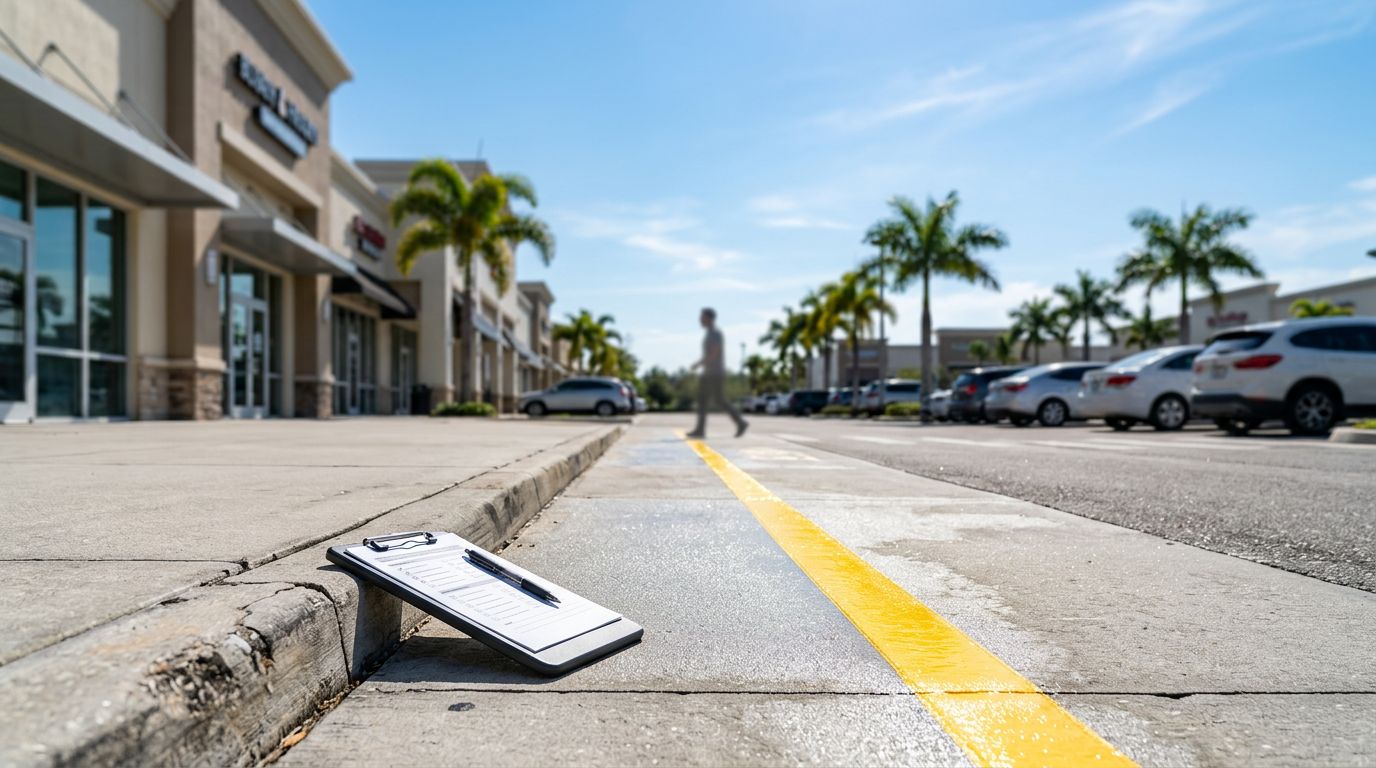
A parking lot fall can happen in one bad step. A cracked curb, hidden wheel stop, or slick painted stripe can drop you fast.
What turns that fall into a strong claim? In Florida, parking lot trip fall claims usually depend on proof, not outrage. The right evidence can show what caused the fall, who had notice, and how the injury changed your life.
What you must prove in a Florida parking lot fall case
A parking lot claim starts with duty. If you were shopping, dining, or visiting a business, you were likely an invitee. That means the people in control of the property had to use reasonable care to inspect the area, fix hazards in a reasonable time, or warn about them.
Control matters more than labels. In some cases, the owner controls the lot. In others, a tenant, management company, or maintenance vendor may share blame. For a broader look at who may owe that duty, see Avard Law’s Florida premises liability duty of care guide.
The next issue is notice. In plain terms, did the property controller know about the danger, or should they have known? Florida still puts heavy weight on notice. For temporary substances, such as oil, water, or slippery paint, Florida Statute 768.0755 requires proof of actual or constructive knowledge.
Parking lot cases often involve fixed defects, not only spills. Think broken pavement, uneven asphalt, raised concrete, loose drainage grates, poor lighting, or wheel stops that blend into the ground. In those cases, notice may come from the age of the defect, prior complaints, repair records, or proof that the condition sat there long enough to be found.
Florida’s fault rule also matters. Under the state’s Chapter 768 negligence rules, your recovery can drop if you share blame. If you are 51 percent or more at fault, recovery may be barred. That gives insurers a reason to argue you were distracted or the danger was obvious.
The fall starts the case, but the proof decides it.
The evidence checklist that gives your claim weight
Evidence fades fast in a parking lot. A cone appears. A pothole gets patched. Video gets recorded over. So the first day often matters most.
This quick table shows the proof that usually matters most:
| Proof | Why it matters | Example |
|---|---|---|
| Photos and video | Shows the hazard before it changes | Raised curb, broken asphalt, poor lighting |
| Witness names | Supports how the fall happened and how long the defect existed | Another shopper saw people stumble there earlier |
| Incident report | Creates a time-stamped record | Manager notes the exact aisle or parking space |
| Surveillance footage | May show notice, cleanup delays, or prior near-falls | Employees passed the defect several times |
| Medical records | Connects the fall to your injuries | Same-day urgent care or ER visit |
| Shoes, clothing, receipts | Preserves physical proof and confirms you were there | Scuffed sole, stained pants, store receipt |
Start with wide photos. Show the whole area, including striping, curbs, lighting poles, and nearby storefronts. Then move closer. Capture the crack depth, the height difference, the wheel stop color, or the puddle itself. If lighting was poor, take photos from your walking angle, not only straight down.
Next, report the fall before you leave if you can. Ask for a manager. Get names, the exact location, and the time recorded. If you want to lock down that paper trail quickly, this Florida slip and fall incident report guide explains what to request and why speed matters.
Witnesses often help more than people expect. A bystander may say the curb was hard to see. Another person may have warned staff earlier. Small details like that can support constructive notice.
Also save what you wore. Don’t wash your shoes. Don’t toss ripped clothing. If slippery residue, dust, paint, or gravel got on them, that physical proof may matter later.
Medical care is the other half of the story. Adrenaline can hide pain for hours. Still, a gap in treatment gives the defense room to argue something else caused your injuries. The cleaner the medical timeline, the stronger the link between the fall and the harm.
Common mistakes that weaken parking lot trip fall claims
The first mistake is guessing. If you don’t know how long the defect was there, don’t invent a time. If you aren’t sure whether you tripped on a curb or a wheel stop, say that. Accuracy helps. Guessing hurts.
Another mistake is assuming the hazard was “too obvious” to matter. Property owners often raise the open-and-obvious defense. Sometimes that argument works. Still, it does not end every case. A faded wheel stop at dusk, a curb that blends into the pavement, or a broken surface hidden by shadows may still support liability.
Delay also causes damage. Parking lot video may disappear in days, not months. Meanwhile, memories fade quickly. Although many Florida negligence cases now face a two-year filing deadline, your best proof can vanish long before that.
Be careful with early statements. A quick “I’m okay” at the scene may look harmless, but it can come back later. The same goes for social media posts that show you smiling while you were still in pain.
Finally, don’t forget the damages side of the case. A claim needs proof of losses, not only fault. That can include medical bills, lost income, future care, and pain. For a plain-language summary, review Florida slip and fall damages.
When the parking lot gets fixed, your photos, records, and witnesses should still tell the story.
Act before the scene changes
A parking lot trip and fall claim is like a photograph left in the sun. Wait too long, and the details fade. The strongest cases move early, preserve the scene, and build a clean record from the lot to the doctor’s office.
If a Florida parking lot fall left you hurt, protect the evidence first. Then have an attorney review the hazard, the notice proof, and the medical timeline before the other side gets to rewrite what happened.