
Florida Delivery Van Crash Claims Proof Checklist for Not-At-Fault Victims
A delivery van crash can look simple at the light and complicated by evening. One missing photo, one late doctor visit, or one careless statement can give an insurer room to cut your claim.
That risk is higher in Florida delivery van crash claims because a business may control the vehicle, the driver’s route, and the best records. As of March 2026, Florida does not publish a separate statewide count for delivery van crashes, so your case often turns on the proof you save, not broad statistics.
If you were not at fault, start building the file before the story changes.
Why delivery van crashes create harder fault fights
A crash with a delivery van isn’t always a basic two-car claim. The van may belong to one company, the driver may work for another, and the insurance may sit with a third party. Because of that, fault can spread across several players.
The company also may hold the best evidence. Route logs, dispatch messages, GPS data, maintenance records, and onboard camera footage can show speed, stops, distractions, and whether the driver was working. Yet those records don’t stay around forever. Some video systems overwrite fast. Some businesses fix damage or move the van within days.
That is why early proof matters so much in Florida delivery van crash claims. You are not only proving impact. You are preserving the paper trail behind it.
If the wreck involved several cars, the sequence can get messy fast. A van may hit you from behind, push you into another vehicle, then leave everyone arguing about who caused what. In that kind of case, this Florida chain reaction accident checklist can help you see how impact order affects blame.
In commercial crash cases, silence helps the other side. Records disappear when no one asks for them.
The first 48 hours: proof that disappears first
Start with safety and medical care. Then think like someone preserving a scene after a storm. The road will clear, witnesses will leave, and memories will shrink.
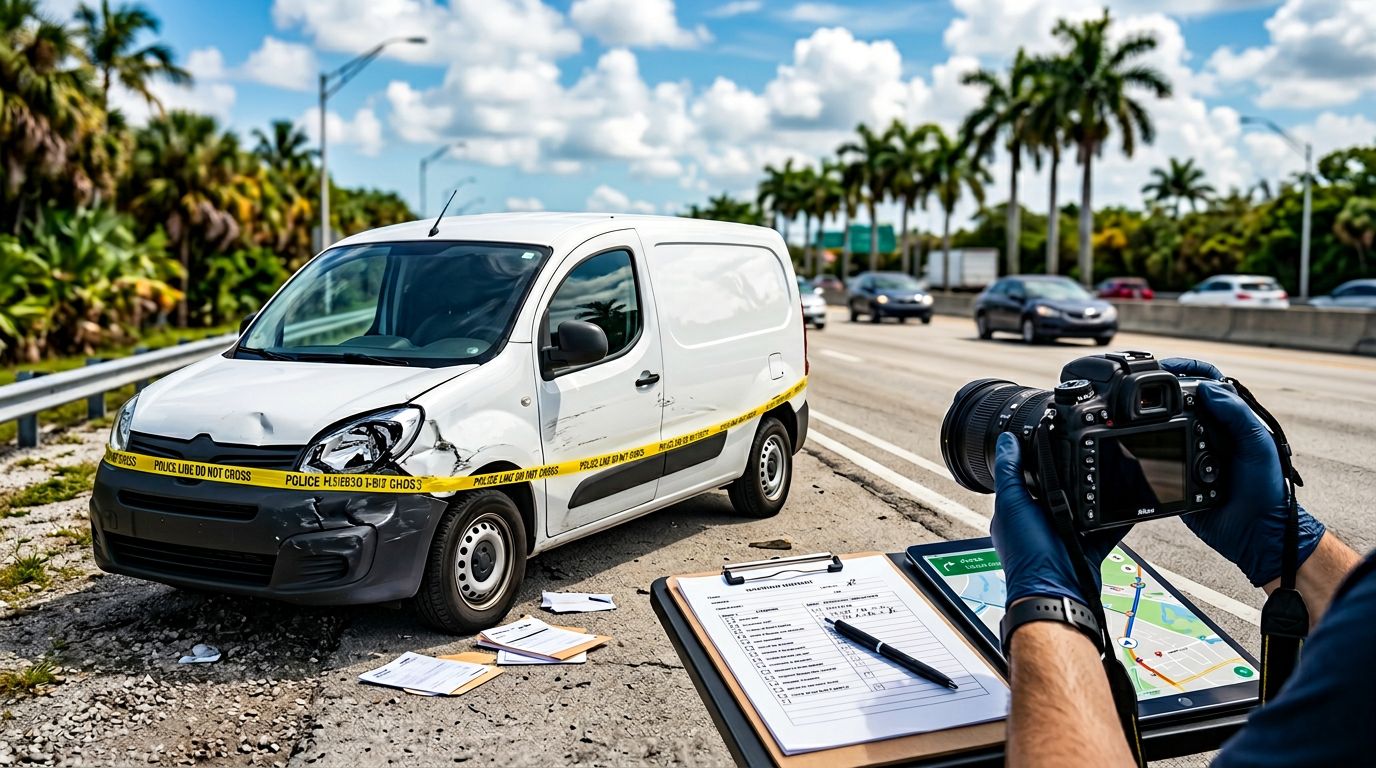
Take wide photos before close-ups. Capture traffic lights, lane markings, skid marks, debris, weather, road work signs, and the resting positions of all vehicles. Then photograph your car and the van from every angle. Get the company name on the van, any unit number, the plate, and visible damage. If the driver used a delivery app or scanner, note that too.
Next, collect names and numbers from witnesses. A neutral witness can stop the usual blame game. Also ask the officer for the report number. Once it’s available, get the report through the Florida Crash Portal and compare it to your own notes. Florida’s crash reporting information from FLHSMV also explains how reports are handled and when they become available.
This quick table shows the proof that usually matters most:
| Proof | Best source | Why it matters |
|---|---|---|
| Scene photos and video | Your phone, dashcam, witness phones | Shows positions, signals, damage, and road conditions |
| Van identity details | Side markings, plate, unit number, insurance exchange | Helps identify the driver, owner, and insurers |
| Witness contacts | Bystanders, nearby workers, other drivers | Adds neutral facts before stories drift |
| Crash report number | Responding agency | Ties the event to an official record |
| Same-day medical records | ER, urgent care, primary doctor | Links pain and symptoms to the crash date |
The takeaway is simple. The best proof is often the proof saved first.
Also, get checked out quickly even if you walked away. Neck pain, headaches, and back symptoms often show up later. In Florida, fast treatment also matters because no-fault benefits have deadlines. If the van driver or insurer calls, keep your statement short and factual. Don’t guess about speed, distances, or whether you “could have avoided it.” Guesses age badly.
Damages proof that makes your claim harder to downplay
Winning fault is only half the job. The second half is showing what the crash cost you. That means medical bills, wage loss, repair costs, and the day-to-day limits the injury caused.
Start a small file and keep it clean. Save bills, visit summaries, prescriptions, mileage to appointments, work notes, and photos of bruising or braces. If you miss work, get a short letter from your employer with the dates missed and your pay rate. If you work for yourself, gather invoices, canceled jobs, and bank records.
Florida’s no-fault system can confuse people after a commercial vehicle crash, because your own PIP coverage often pays first. This guide on how no-fault rules affect your Florida accident settlement explains why that matters even when the van driver caused the wreck.
A lawyer can also push for company-held records you can’t get on your own. Those may include:
- Dispatch and route logs: These can show whether the driver was rushing, off route, or still on the clock.
- Vehicle maintenance records: These may reveal bad brakes, worn tires, or missed repairs.
- Phone and scanner data: These records can support a distraction claim.
- Onboard video or telematics: These systems may capture speed, braking, and impact timing.
Once your records are organized, settlement talks get stronger. If you want a model for putting records in order, this guide to building a strong settlement demand after Florida crash shows how a clear package helps tell the story.
The strongest claims read like one clear timeline, from crash scene to treatment to lost income.
One missing piece can turn a solid claim into a fight. That is why Florida delivery van crash claims depend on early photos, prompt care, clean records, and fast steps to preserve company evidence.
If you were not at fault, don’t wait for the insurer to shape the story first.
Get help while the evidence is still there, and make the facts do the talking.