
Florida Failure To Yield Driveway Crash Proof Checklist
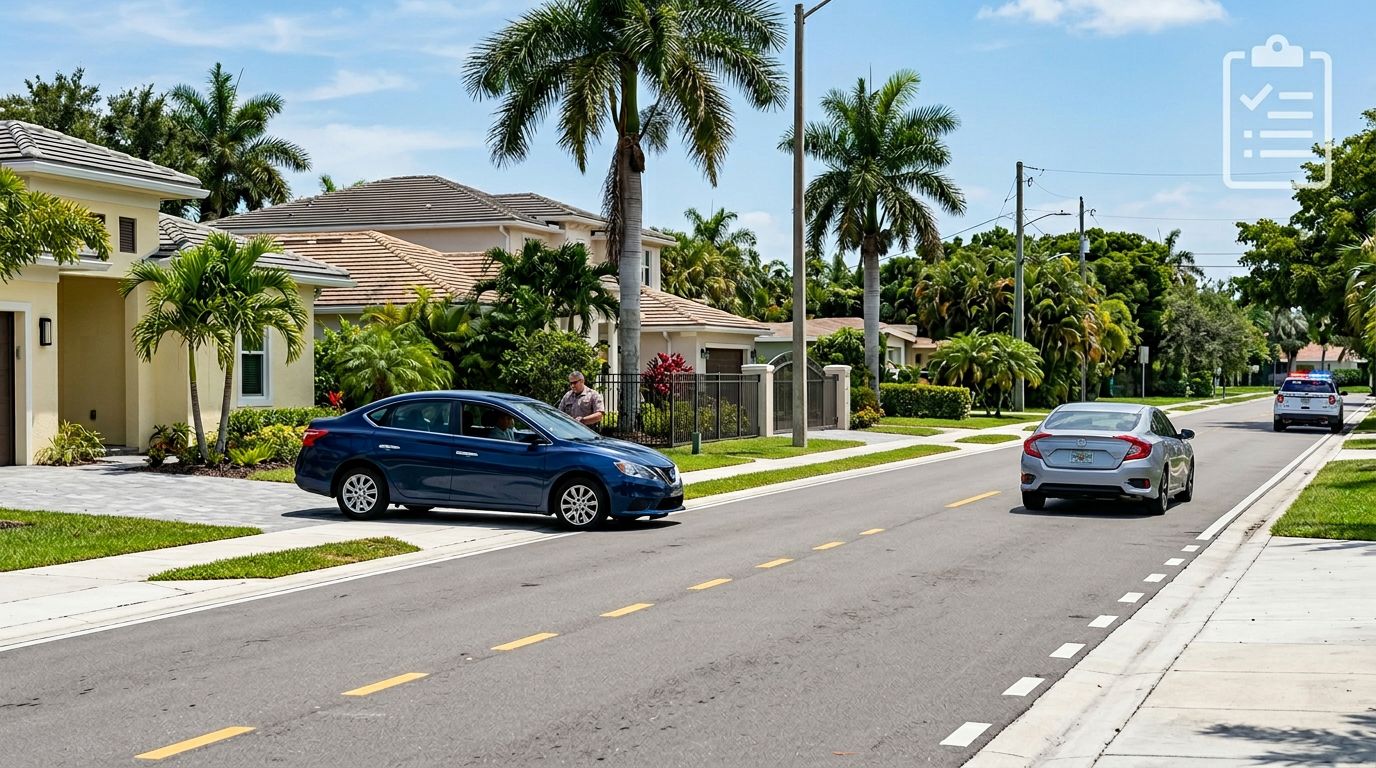
A driveway crash can turn into a blame fight before the tow truck arrives. One driver says, “You came out of nowhere.” The other says, “I had no chance to stop.”
In a failure to yield driveway case, proof matters more than confidence. If you were hurt in Florida, the best facts are usually the plain ones, photos, timing, damage, and medical records.
What Florida law says when a driver exits a driveway
Florida starts with a simple rule. Under Florida Statute 316.125, a driver entering a road from a driveway, alley, or private road must stop and yield to vehicles and pedestrians close enough to create an immediate hazard.
As of March 2026, that rule hasn’t changed. The duty still falls on the driver leaving private property. That sounds simple, but claims rarely stay simple.
Why? Because the other side often tries to muddy the water. They may say the roadway driver was speeding. They may argue a hedge, parked car, or fence blocked the view. Sometimes they claim both vehicles were moving in confusing ways, especially if one car was backing out.
That’s why the statute is the starting line, not the finish line. You still have to show what each driver did in the seconds before impact. Think of the law like a map. It tells you the route, but it doesn’t prove where the cars were.
State data doesn’t break out driveway-only crashes in a clean public category for 2025 or early 2026. Still, Florida reported more than 362,000 crashes in 2025, and many right-of-way disputes happen where driveways meet busy roads. In other words, these wrecks are common enough to deserve a careful response.
If the other driver was reversing, not pulling forward, the proof issues can overlap with those in this Florida backing-up accident proof checklist. The facts still turn on movement, sight lines, and who had the duty to wait.
The first-hour proof checklist for a driveway yield crash
The crash scene is like wet paint. If you don’t save it fast, it smears.
Start with safety. Call 911 if anyone is hurt. Then get medical care the same day if you can. Pain often shows up later, but delay gives insurers room to argue.
Here’s the proof that usually carries the most weight:
| Proof | Why it matters | Best source |
|---|---|---|
| Wide scene photos | Shows driveway, sidewalk, lanes, and sight lines | Your phone |
| Vehicle damage photos | Shows angle of entry and point of impact | Before towing |
| Witness contacts | Confirms speed, position, and movement | Neighbors, bystanders |
| Camera footage | Captures the seconds before impact | Doorbell, dashcam, business cameras |
| Medical records | Ties symptoms to the crash date | ER, urgent care, doctor |
That table tells the story. You need both scene proof and injury proof.
Take wide photos first. Show the driveway opening, the sidewalk, the shoulder, mailboxes, trees, parked cars, and lane markings. Then move closer. Photograph damage on both vehicles from multiple angles. Front-corner damage, door damage, and scrape direction often help explain who moved into whose path.
If vehicles get moved before you take photos, proving fault gets harder fast.
Next, look for cameras. Doorbell footage, apartment cameras, nearby stores, and dashcams often settle the fight in seconds. Ask right away. Many systems overwrite within days.
Also, get witness names before people leave. A neutral witness can break a deadlock when both drivers blame each other. Keep your questions simple. Ask what they saw, not what they think happened.
If the contact turned into a side scrape instead of a straight hit, damage patterns matter even more. That’s why this Florida lane change accident fault guide can help you understand how side-impact proof works.
Finally, write down a short timeline while the memory is fresh. Note the time, road name, direction of travel, weather, traffic flow, and anything the other driver said. Small admissions matter. “I didn’t see you” can carry more weight than people realize.
How to protect your injury claim after the scene clears
Once the cars are gone, the case becomes a paperwork fight. The insurer’s next goal is simple: shrink the claim.
A common tactic is blame-shifting. The adjuster may say you were going too fast, failed to brake, or should’ve seen the driveway driver sooner. They may also try to downplay the crash by calling it “low speed.” Don’t let the vehicle damage speak alone. Mild-looking metal damage can still line up with real neck, back, shoulder, or head injuries.
Medical timing matters here. Florida drivers often have PIP coverage that pays first for some medical care and lost wages. That means your treatment records become one of the first neutral parts of the file. Get checked out promptly, describe every symptom, and keep follow-up visits consistent.
Good claim files usually include:
- Treatment records: ER, urgent care, primary doctor, therapy, imaging
- Wage proof: missed days, employer note, lost jobs or canceled work
- Out-of-pocket costs: medication, rides, towing, rental, braces
- A short symptom log: sleep problems, pain, driving limits, work limits
Keep it simple. One paragraph a week is enough. You’re building a clean record, not writing a novel.
If the driveway crash caused a second impact, or pushed another car into the chain, fault can get messy. In that situation, this Florida multi-car accident claims guide is useful because sequence becomes part of liability.
Just as important, be careful with recorded statements. Report the crash to your own insurer, but don’t guess when the other side asks loaded questions. “I think I had time to stop” can sound harmless. Later, it can be framed as an admission.
The strongest claims tell one clear story from start to finish. The law, the photos, the damage, the witness account, and the medical records should all point the same way.
A driveway crash may happen in seconds, but the proof window is even shorter. The driver who saves the facts early usually stands on firmer ground later.
If a failure to yield driveway crash left you hurt or unfairly blamed, act before the story hardens. Get medical care, preserve the scene, and get legal help before detailed statements or a quick settlement cut down your claim.