
Florida Trailer Detachment Crash Proof Checklist for Not-At-Fault Drivers
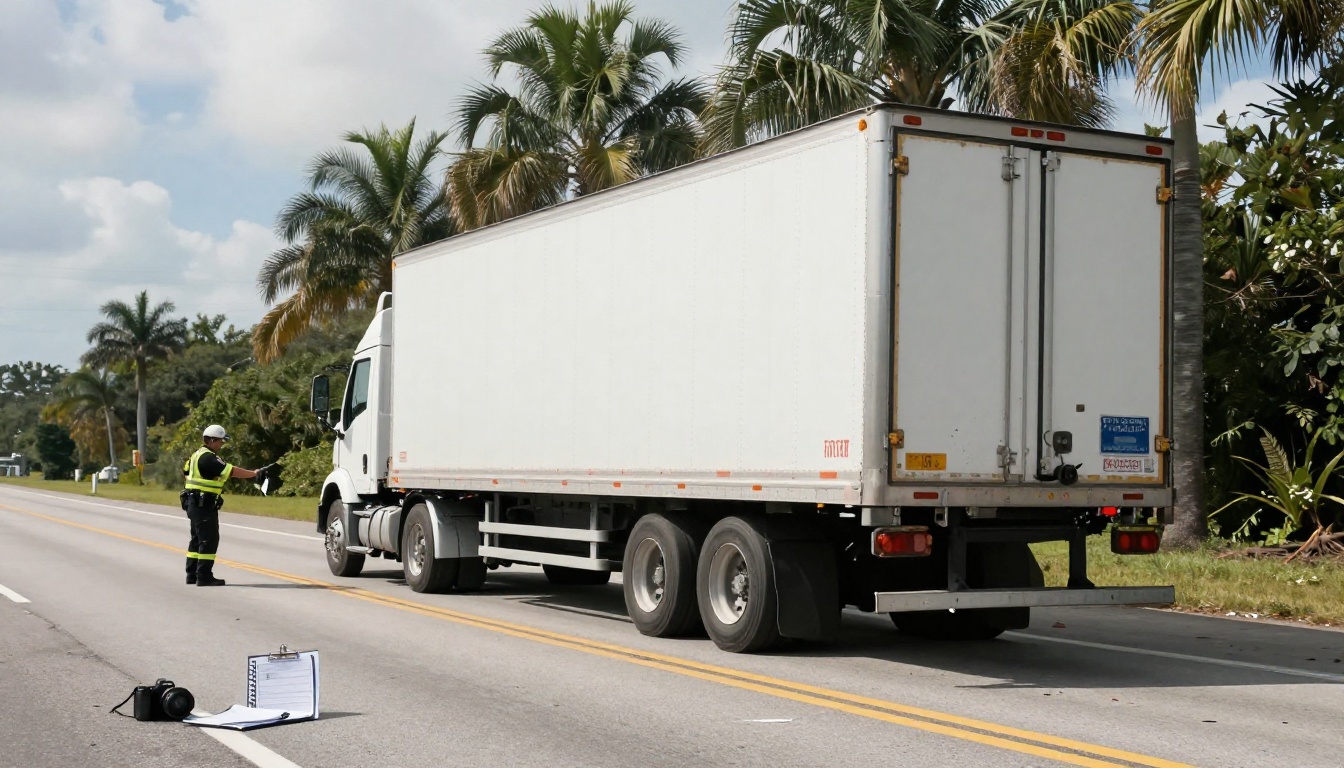
One loose coupler can turn a trailer into a steel sled in your lane. After a Florida trailer detachment crash, the battle is not only about injuries. It is about locking down proof before the hitch gets fixed, the trailer gets hauled away, and the insurer starts shifting blame.
If you were not at fault, speed matters. The best evidence often vanishes within days, sometimes hours. Start with the proof checklist below, then get help before someone else’s version of events sticks.
In a trailer detachment case, the hitch area may matter as much as the damaged vehicles.
Why a Florida trailer detachment crash gets disputed so fast
A detached trailer creates instant chaos. One wreck can involve the towing driver, the trailer owner, a trucking company, a repair shop, or even the party that loaded the trailer. As a result, insurers often point fingers in every direction.
Public Florida data still does not break out trailer separations as a stand-alone crash category as of March 2026. Federal reporting tracks large truck crashes more broadly. Still, safety reporting has estimated about 50,000 hitch-related crashes nationwide each year, with roughly 21,000 injuries and 450 deaths. So, even if the label sounds narrow, the danger is real.
Rules matter here, too. Trailers generally need proper lights, secure connections, and backup chain protection. Heavier trailers may also need braking systems and a working breakaway setup. For the federal safety framework, see the Federal Motor Vehicle Safety Standards.
These crashes also overlap with other proof problems. If the trailer dropped metal, lumber, tools, or other cargo, the case can start to look like a Florida road debris accident fault guide. If several cars hit the detached trailer or slammed into each other after it stopped in the lane, many of the same timing issues show up in a Florida chain-reaction accident checklist.
Florida is still a no-fault state. That means your own PIP coverage may pay first for medical care. Yet serious injuries can still support a claim against the people who caused the detachment. So, fault proof still drives the bigger case.
The first 48 hours: proof checklist after trailer separation
Think of the crash scene like ice on a sidewalk in the sun. It starts disappearing right away. Save the parts that tell the story first.
Here is the short version:
| Proof to save | Why it matters | How fast to act |
|---|---|---|
| Scene photos and video | Shows lane position, trailer angle, debris, lighting, and visibility | Immediately |
| Hitch, coupler, chains, and breakaway parts | Can reveal a bad hookup, missing pin, rust, or failed latch | Before towing or repairs |
| Trailer plate, VIN, DOT number, and company markings | Helps identify owners, carriers, and insurers | Same day |
| Witness names and camera sources | Neutral accounts and video can settle blame fights | Within 24 hours |
| Vehicle preservation, medical records, and receipts | Ties force, injury, and losses to the crash | Start now and keep updating |
The pattern is simple. The physical connection points matter most, and they do not stay untouched for long.
Start with wide shots. Photograph the full roadway, shoulder, lane lines, skid marks, traffic signs, weather, and where the trailer came to rest. Then move in. Capture the coupler, ball mount, pintle hook, chains, wiring, tongue, lights, license plate, torn welds, missing clips, bent hardware, and any fresh rust or scraped metal.
If cargo came loose, photograph that too. A detached trailer can leave behind more than the trailer itself. Broken chain links, safety pins, wood blocks, straps, and loose freight can all help explain what failed first.
Also, track where the trailer and vehicles go after the scene clears. Write down the tow yard name, address, and phone number. Save the towing invoice. If fault is disputed, do not rush to approve repairs or disposal.
A repaired hitch tells a cleaner story than a broken one, and that usually helps the other side.
Medical care belongs on the checklist, too. Neck pain, numbness, headaches, and back pain often show up after the shock fades. Prompt treatment creates a time-stamped record. That matters for PIP, and it also matters if your injuries support a claim beyond no-fault.
Keep your words short after the wreck. Give police the facts, not guesses. Saying “maybe I could have missed it” may sound harmless. Later, it can sound like shared fault.
Records and mistakes that often shape the claim
Roadside photos are only the first layer. Strong trailer detachment claims usually depend on records behind the scene. Those may include inspection logs, maintenance files, repair orders, trailer rental agreements, load paperwork, pre-trip reports, dispatch messages, and, in commercial cases, driver logs and onboard data.
Those records can show worn parts, missed inspections, poor loading, or a hookup that was never checked. If the trailer detached at night, lighting records and reflective tape condition can matter, too. A dark trailer in a live lane is a blame fight waiting to happen.
If a tractor-trailer was involved, early preservation matters for more than the hitch. Brake condition, trailer lighting, impact angles, and the trailer’s rear structure may all become part of the case. That is why this Florida truck underride evidence checklist is useful background on saving trailer-related proof before it disappears.
Look past the basic crash report. In many cases, 911 audio, dispatch logs, officer body camera footage, dash cam files, tow records, and nearby business video fill the biggest gaps. A lawyer can often send preservation letters early, before footage is erased or the trailer is rebuilt.
The most common mistakes are simple. People guess about speed or distance. They post about the wreck online. They toss towing papers in the glove box and forget them. They let an insurer take a recorded statement before the scene facts are fully clear.
Call a lawyer early if the detached trailer had commercial markings, the towing vehicle left the scene, several insurers are blaming one another, or your injuries are more than minor. In those cases, the side that preserves the hardware usually controls the story.
The bottom line after a detached trailer wreck
A Florida trailer detachment crash is messy, but your next steps should be clear. Save the hitch evidence, protect the vehicles, get medical care, and lock down every time stamp you can.
If fault is disputed, move fast. Broken parts do not wait, and neither does the insurer. Get legal help before repairs, salvage, or missing video turn a strong claim into a weak one.