
Florida Missed Fracture X-Ray Claims: What Patients Should Save
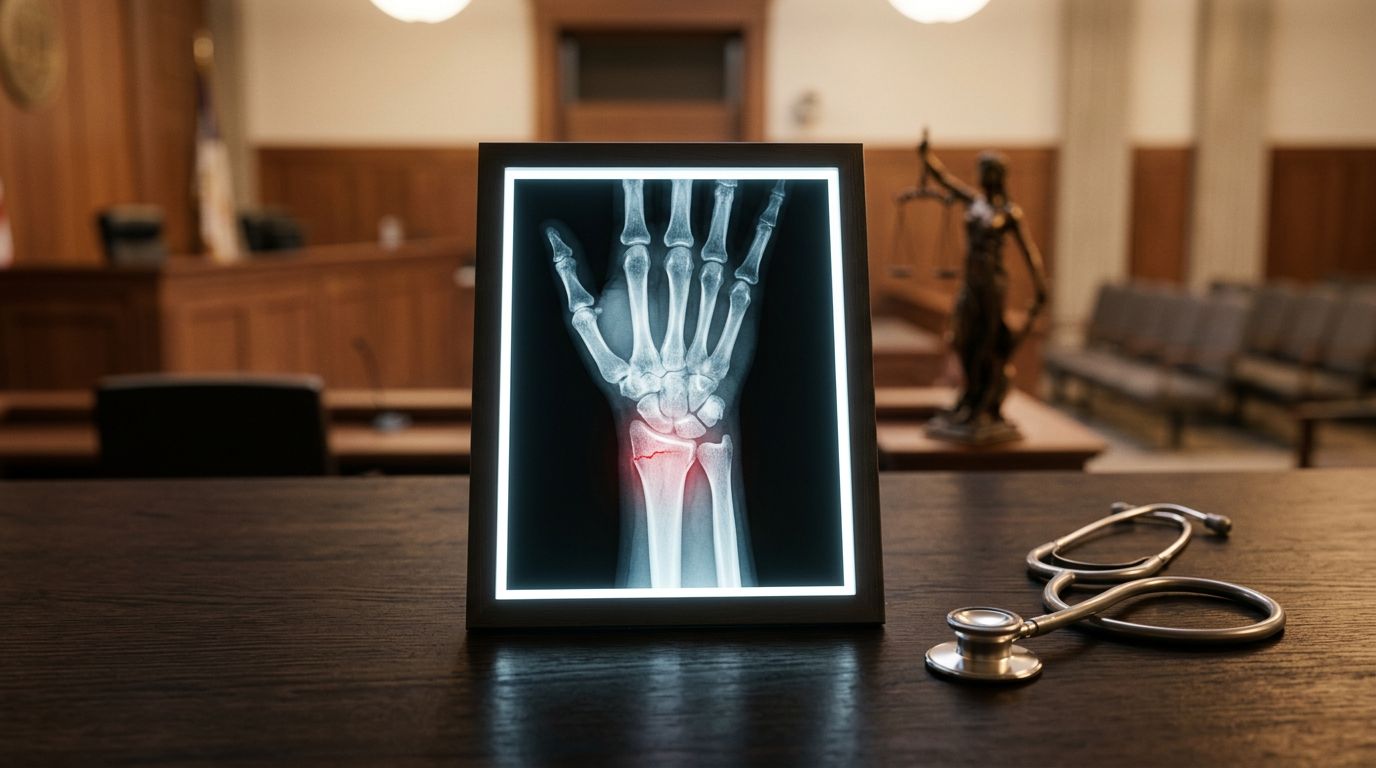
An X-ray can look final. For many patients, it isn’t. A fracture can hide in a wrist, hip, ankle, or foot film, then show up days later after the pain gets worse.
What turns that delay into a strong claim? Records. If the miss led to surgery, a longer recovery, or lasting damage, missed fracture x-ray claims often depend on what you saved and when you saved it.
The record trail matters more than memory, so it helps to start early.
When a missed fracture on X-ray may support a Florida claim
Not every missed fracture is malpractice. Some breaks are hard to spot, especially hairline fractures, scaphoid injuries, and fractures hidden by swelling or bone overlap. Still, Florida law asks a direct question: did the doctor, radiologist, or facility act like a reasonably careful provider would have acted in the same situation?
That question goes beyond the film itself. If your exam showed strong fracture signs, a careful provider may have needed more views, repeat imaging, or a CT or MRI. The same goes for severe pain, point tenderness, or an inability to bear weight after a “normal” X-ray. The NIH overview of radiology safety and communication explains why image reading and follow-up both matter.
For a claim, you also have to show harm from the delay. Perhaps the bone shifted because you kept walking on it. In other cases, a scaphoid fracture doesn’t heal right. Sometimes a hip fracture leaves a patient bedridden until another hospital finds it.
As of April 2026, Florida’s core malpractice rules still focus on standard of care, causation, and losses. In most cases, you have two years from when you discovered, or should have discovered, the error, while a four-year outer deadline usually applies. Medical malpractice claims also involve a pre-suit notice period. For a closer look at common radiology interpretation errors, it helps to compare the missed image with what a careful provider should have done next.
What patients should save right away
Think of your file like a chain. If one link breaks, the defense may say the story isn’t clear. So, save both the medical record and the day-to-day proof of how the delay changed your life.
Start with the documents that pin down timing and medical decisions:
| What to save | Why it matters |
|---|---|
| Original X-ray images and the radiology report | The films may show what was present on day one, even if the report said no fracture. |
| Discharge papers and follow-up instructions | These show your diagnosis, your restrictions, and what warnings you were given. |
| Portal messages, texts, and voicemail logs | Time-stamped messages can show delayed calls, changed findings, or missed follow-up. |
| Photos, symptom notes, and a pain journal | Swelling, bruising, sleep loss, and trouble walking help show the real impact. |
| Bills, pharmacy records, and wage loss proof | These connect the delay to added treatment, extra cost, and missed work. |
The X-ray itself is often the most overlooked item. Don’t keep only the summary page. Ask for the image file, the radiology report, and any later corrected report. If a second doctor reviewed the same film and found the fracture, save that record too.
Under Florida’s patient records law, patients generally have access to their records. That can include ER notes, urgent care charts, imaging center records, orthopedic records, and billing records. Request them early, because systems change and memories fade.
A missed fracture case often rises or falls on the timeline, not the later diagnosis alone.
Write down dates while they’re fresh. Note when the injury happened, when the first X-ray was taken, when pain got worse, when you sought more care, and when the fracture was finally found. Keep the timeline plain and factual.
Also save the “small” items. A boot receipt, rideshare charges to appointments, photos of a cast, and emails to your employer can support damages. If the delay led to surgery, physical therapy, or a longer time off work, collect every paper tied to that change.
Mistakes that can weaken missed fracture X-ray claims
The biggest mistake is waiting too long. Time hurts these cases in two ways. First, Florida deadlines can block a claim. Second, delayed record requests make it harder to get clean files and sharper memories.
Another problem is failing to follow medical advice after the miss is found. If a later doctor tells you to stay off the leg, wear a brace, or see a specialist, do it. Otherwise, the defense may argue your own choices added to the damage.
Patients also weaken good cases when they save only bills and ignore the rest. In missed fracture x-ray claims, money records matter, but they don’t prove the miss. The stronger file includes images, reports, chart notes, follow-up calls, and a symptom timeline. A delayed fracture can also fit the broader rule for when misdiagnosis qualifies as malpractice.
Some people file only a licensing complaint and think that ends the matter. The Florida Department of Health complaint process may help create an administrative record, but it doesn’t replace a malpractice claim for compensation. Those are separate paths.
Most of all, don’t assume a “normal” X-ray ends the story. If pain stays sharp, swelling grows, or you still can’t use the limb, get re-checked. A hidden fracture is like a crack in a windshield, ignore it, and the damage often spreads.
The next step is protecting both your health and your claim
Pain after a “normal” X-ray can feel confusing. Still, the best move is simple: protect your health first, then protect the paper trail.
Save the images, the report, the discharge papers, and your timeline. In Florida, missed fracture x-ray claims are built on proof that the delay changed the outcome, not on frustration alone.
If you think an X-ray miss made your injury worse, act before records scatter and deadlines tighten. The sooner the file comes together, the stronger your options tend to be.