
Florida Turn-On-Red Crash Claims: Proof Checklist
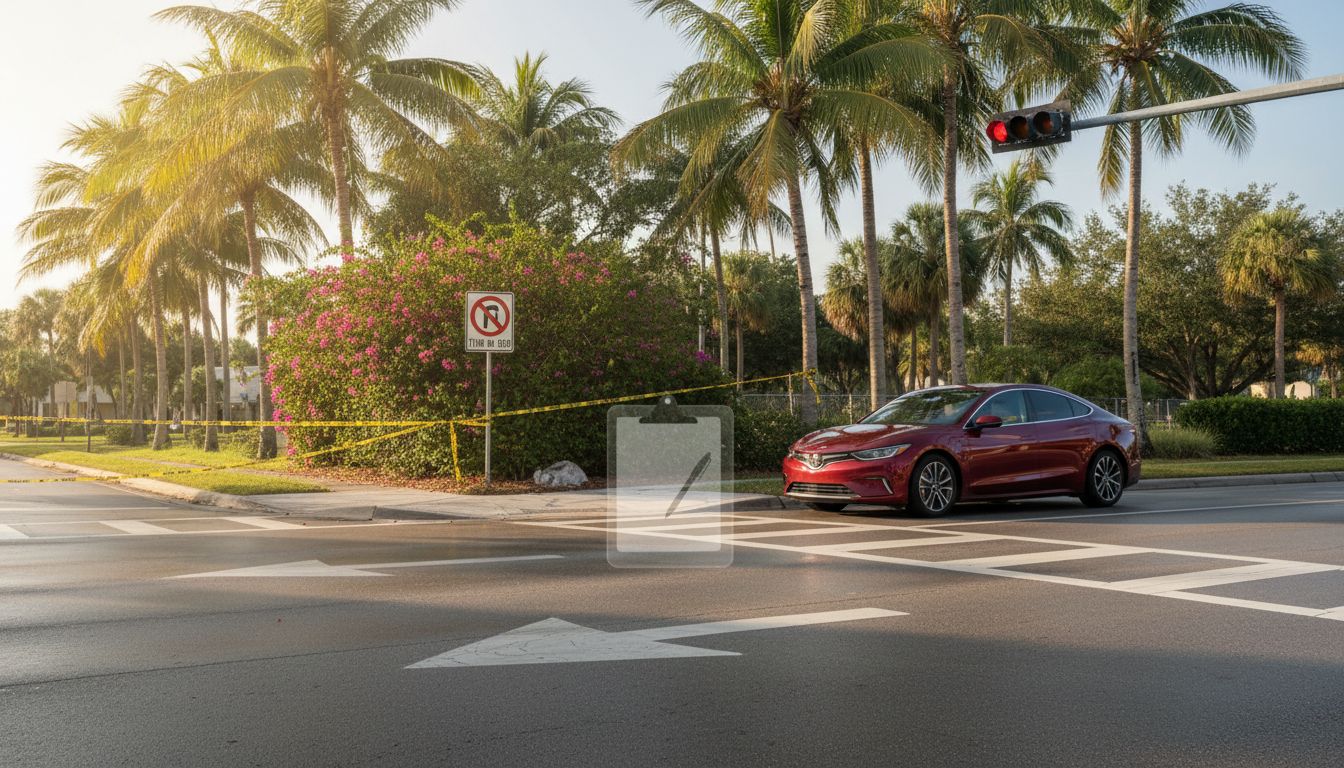
A right turn on red is legal in Florida, but only if the driver fully stops and yields. That sounds simple. After a crash, it rarely feels simple.
In florida turn on red crash claims, the fight often turns on a few seconds of video, one witness, or a photo of a hidden sign. If you’re hurt, proof matters more than anyone’s confident story at the scene.
Why turn-on-red crashes become fault fights
Florida still allows most right turns on red in 2026, but only after a complete stop and only when no sign bars the turn. As Florida Today explained, drivers must also yield before turning. A separate summary of Florida’s right-turn-on-red restrictions makes the same point.
That yield duty matters because the turning driver usually enters someone else’s path. It may be a pedestrian in the crosswalk, a cyclist near the curb, or a driver moving straight on a green light. If the turning driver rolls through the stop, looks only left, or ignores a “No Turn on Red” sign, fault can stack up fast.
Still, these cases aren’t always one-sided. The other side may claim the straight-through driver sped up, the pedestrian stepped outside the crosswalk, or visibility was blocked. Florida’s modified comparative negligence rules can reduce a recovery when blame is shared. If you’re more than 50% at fault, you may recover nothing on the negligence claim.
A right turn on red is allowed, not required. If the turn isn’t clearly safe, the driver should wait.
That’s why the small details matter. Did the driver stop before the line or after crossing into the crosswalk? Was the pedestrian signal active? Did a truck, hedge, or sun glare block the view? Those facts often decide whether an insurer pays fairly or tries to shift blame.
The proof checklist that supports Florida turn on red crash claims
The best evidence usually comes from the first day. Think of it like wet cement. Once cars move, witnesses leave, and cameras overwrite footage, the shape of the crash starts to fade.
Here’s the proof that usually matters most:
| Proof | What it helps show |
|---|---|
| Photos of the whole intersection | Stop line, crosswalk, lane layout, signal position, and sight lines |
| Video from dashcams or nearby cameras | Whether the driver fully stopped, yielded, or turned into traffic |
| Photos of signs | A posted “No Turn on Red” sign or lane-use sign can change liability |
| Witness names and numbers | Neutral accounts often break a he-said, she-said fight |
| Vehicle damage and final positions | Impact angles can show who moved into whose path |
| Medical records and wage proof | They connect the crash to your injuries and losses |
The table tells the story fast: scene proof shows how the crash happened, and medical proof shows what it cost.
Start with wide photos first. Capture the traffic light, crosswalk, curb line, and any sign near the corner. Then move closer and photograph debris, skid marks, damage, and road marks. If a crosswalk was involved, photograph both sides of the street.
Next, lock down video. Ask nearby stores, gas stations, or homes if they have footage. Many systems delete files within days. Save dashcam clips in more than one place, and keep the original file if you can.
Then get the official paperwork. The police report can help, especially if it notes failure to yield, a citation, or the officer’s first diagram. Still, don’t treat the report like the whole case. Video and scene photos often say more.
Medical proof matters just as much. If you’re sore, dizzy, or stiff, get checked quickly. Florida injury claims often start under no-fault insurance, so timing can affect benefits. This overview of what PIP covers after a crash explains why early care and clean records matter. For a broader records list, Avard’s guide on gathering evidence after a wreck is also useful.
Common mistakes that weaken a right-on-red injury claim
The biggest mistake is guessing. If an insurer asks, “Did you think the other driver stopped?” don’t fill in blanks. Guessing about speed, timing, or signal status can turn into an “admission” later.
Another problem is delayed treatment. People often go home thinking they’re fine, then wake up hurting. That happens all the time. Even so, the insurer may argue the injury came from something else if there is a long gap before care.
Some drivers also miss the intersection details that matter most. They photograph the bumper, but not the crosswalk. They save the repair bill, but not the sign showing “No Turn on Red.” In these cases, the missing photo can cost more than the visible damage.
It also hurts to settle too early. A turn-on-red crash may involve more than vehicle repairs and one urgent care visit. Lost pay, follow-up treatment, and pain can all affect value. If you need a plain-language overview, this page on types of car accident compensation shows what a claim may include.
One more trap is careless wording at the scene. “I didn’t see you” or “I thought I had time” sounds harmless. Later, it can sound like fault. Stay calm, get help, exchange information, and stick to facts.
A right-on-red crash can hinge on one simple point: who had the right-of-way at that moment. The stronger your proof, the harder it is for the other side to rewrite those seconds.
If the insurer says you caused the intersection crash, act fast. Preserve the scene, protect your medical timeline, and get legal advice before a quick statement or low offer locks the story against you.