
Florida Near-Drowning Claims at Apartment Pools: Fence and Gate Proof
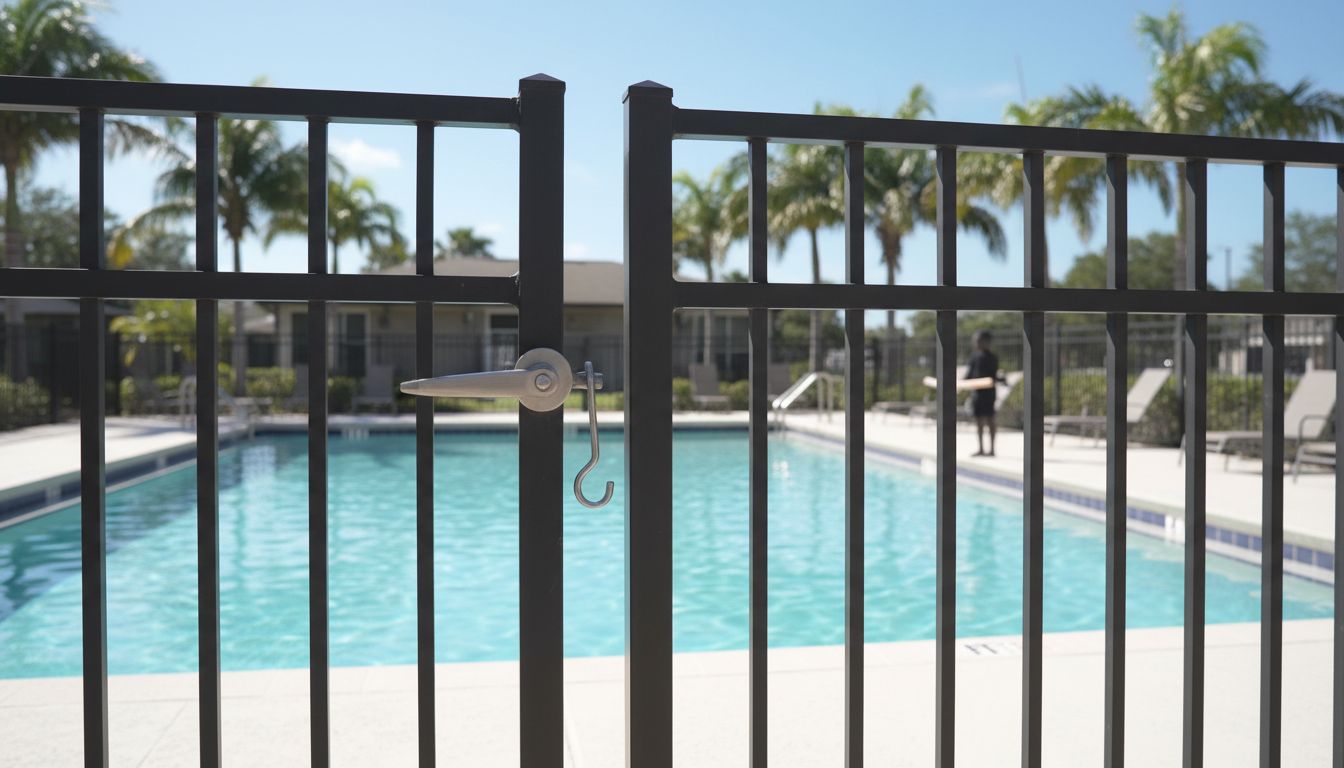
A near-drowning at an apartment pool can turn on one dull piece of metal, the gate latch. When someone reaches the water through a broken fence, a gate that will not self-close, or a lock residents prop open, the claim often rises or falls on proof from the scene.
If you’re looking into florida near drowning claims, don’t assume medical records alone will tell the story. Apartment complexes and insurers often point first to supervision. Fence and gate evidence can shift the focus back to preventable access failures.
Why fence and gate proof carries so much weight
In apartment pool cases, the first legal issue is often control. The deed holder may own the complex, but the property manager, maintenance staff, security contractor, or pool vendor may control day-to-day safety. That is why Florida premises liability duty of care matters so much in these cases.
A pool barrier is not a minor detail. It is the line between a child being kept out and a child reaching the water in seconds. Because near-drownings happen fast, small failures matter. A gap under the fence, a loose hinge, a missing spring, or a latch set too low can become central proof.
Families and lawyers often review Florida’s pool barrier requirements and the broader Chapter 515 pool safety law as a starting point, because Florida treats barriers and controlled access as core safety measures. Apartment complexes may also face duties under other codes, permits, and operating rules, so the analysis does not stop with one statute.
As of April 2026, there still is not a public statewide dataset that neatly breaks out apartment pool near-drownings by failed gates or fences. That means these claims are usually built from scene evidence, not broad statistics.
In many florida near drowning claims, the barrier story decides whether the event looks unavoidable or preventable.
The fence and gate evidence that usually matters most
Time works against families after a pool incident. Staff may reset a latch, replace a spring, chain a gate, or clear away warning signs before anyone understands what changed. Because of that, early documentation matters. For a wider roadmap on early action, see Avard Law’s guide on preserving evidence for pool accident claims.
These are the records that often carry the most weight:
| Evidence | What it can prove |
|---|---|
| Same-day photos of the fence line | Gaps, climb points, bent panels, missing sections |
| Video of the gate in motion | Whether it self-closes, drags, or fails to latch |
| Maintenance logs and repair tickets | Prior notice, repeat complaints, delayed fixes |
| Surveillance footage or access logs | Who entered, whether the gate stood open, how long it stayed unsecured |
| Incident reports and witness statements | The timeline, first observations, and who saw the barrier condition |
The strongest claims connect the physical barrier to the timeline. A photo of a broken latch is useful. A photo plus a resident email from two weeks earlier saying “the gate never shuts” is far stronger.
Also, do not ignore measurements. The height of the latch, the gap under the fence, and the force needed to pull the gate closed can all matter. If someone recorded the gate bouncing open instead of catching, that clip can speak louder than a long statement.
If the complex uses key fobs, keypad codes, or electronic locks, ask whether access records exist. Those logs may show when residents entered, whether staff bypassed the lock, or whether the gate remained unsecured. Meanwhile, camera footage can show a pattern, not only the incident itself.
If the gate worked later, that does not prove it worked before the incident. Repairs often happen fast after a near-drowning, and those repairs can erase the very condition that caused the harm.
How apartment complexes defend these claims, and how proof answers them
Apartment complexes usually raise familiar defenses. First, they often argue the event happened because an adult lost sight of the child. Florida law can reduce recovery when fault is shared. Still, that does not erase the duty to keep a pool barrier working. A fence exists because children move quickly and water accidents unfold quietly.
Next, management may claim it had no notice. That defense weakens when records show prior complaints, repeated work orders, resident emails, or vendor notes about a gate that dragged, stuck, or failed to latch. Even without a perfect paper trail, video and witness accounts can show the problem lasted long enough that staff should have found it.
Another common move is finger-pointing. The owner blames the manager. The manager blames the maintenance company. The maintenance company blames residents for propping the gate open. In florida near drowning claims, that shuffle is common. The real answer usually comes from contracts, inspection schedules, and repair records that show who had the duty and the chance to fix the problem.
Context matters too. If residents regularly used a brick, chair, or strap to hold the gate open, the complex cannot treat that as a surprise if staff saw it and did nothing. A “rules posted” sign does not cancel a known hazard.
The same fast-moving proof issues that matter in winning premises liability claims at pools matter here as well. In both settings, good cases are built on notice, documentation, and the condition of the scene before it changes.
An apartment pool near-drowning is not judged only by what happened in the water. The case often turns on what failed before anyone reached the water at all.
That is why fence and gate proof can carry so much weight. In florida near drowning claims, a missed latch, a sagging gate, or an ignored repair ticket can tell the story with more force than any later excuse.