
Florida Rental Car Crash Claims: Which Insurance Pays Your Bills
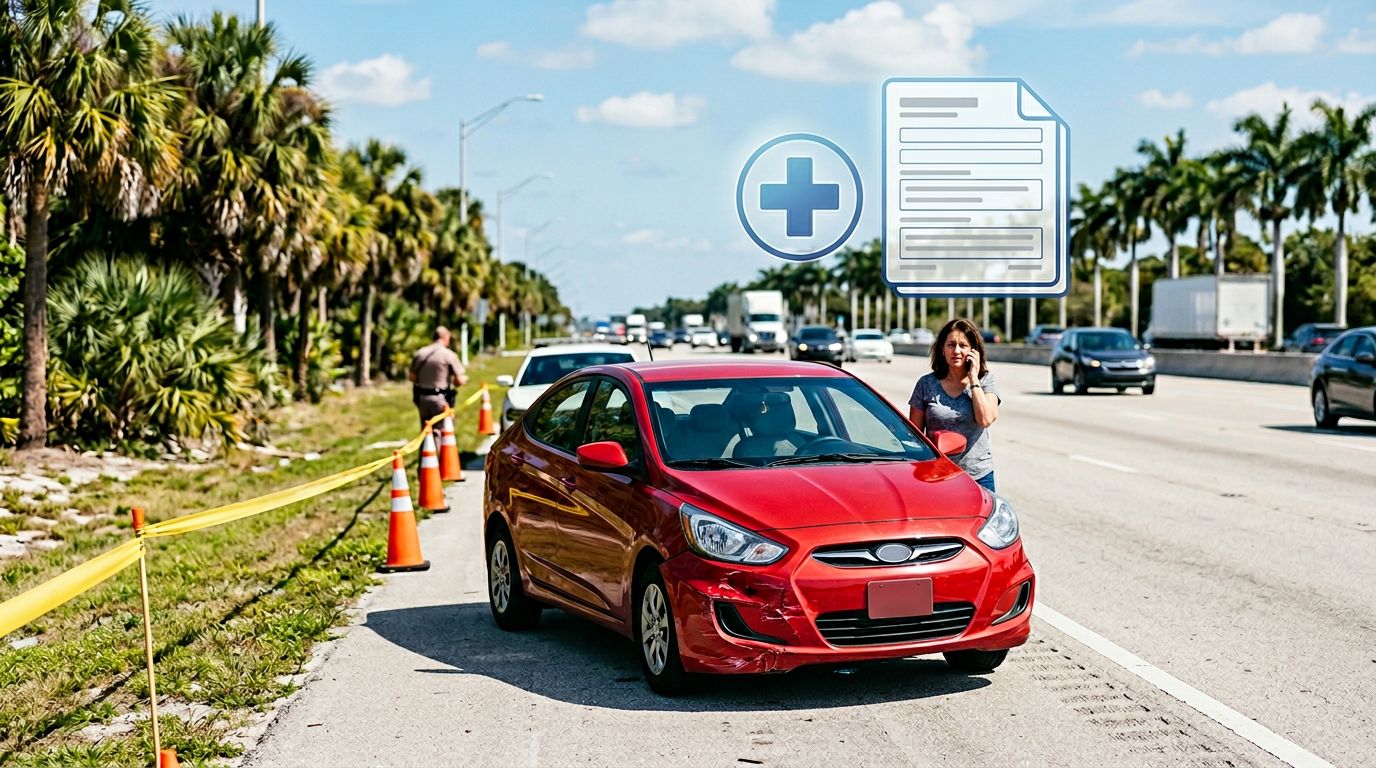
A rental car crash in Florida can turn one wreck into a stack of insurance questions. Medical bills come first, then repair estimates, then missed work, then calls from adjusters.
The policy that pays is not always the one you expect. In Florida, no-fault rules, rental contract terms, and your own auto coverage can all overlap. One missed step can shift costs onto you.
The good news is that the payment order follows a pattern. Once you know that order, it gets much easier to sort out Florida rental car accident claims and protect your money.
What insurance is in play after a Florida rental car crash
A rental car does not come with one clean answer. Several policies may apply at the same time, and the order matters.
As of May 2026, Florida still uses a no-fault system for most crashes. That means medical bills often start with Personal Injury Protection, or PIP. The Florida Department of Highway Safety and Motor Vehicles lists the state minimums on its insurance requirements page.
| Coverage | Usually pays first | What it often covers |
|---|---|---|
| PIP | Your medical bills | 80% of reasonable medical costs and part of lost wages |
| Health insurance | Remaining medical charges | Deductibles, copays, and network limits may apply |
| Liability coverage | Other people’s injury or property losses | Pays if you caused the crash |
| Collision or rental waiver | Damage to the rental car | Depends on your policy or rental agreement |
| UM/UIM | Your losses if the other driver has too little coverage | Helpful when the at-fault driver is uninsured or underinsured |
That table shows the basic pattern. PIP usually leads the way for medical care. Liability coverage matters more when fault and serious injury enter the picture. Rental car protection often focuses on the vehicle itself, not your body.
Which policy pays first for medical bills and lost wages
For most Florida crashes, PIP is the first stop for medical bills. If you have your own Florida auto policy, that coverage usually follows you into the rental car. It does not matter much whether you drove your own car or a rental. The policy rules still control.
PIP is limited, though. It usually pays only part of the bills and part of the missed wages. It also has timing rules. If you wait too long to get care, the insurer may refuse payment.
PIP helps, but it is not a blank check. The 14-day treatment rule can decide whether the claim pays at all.
That is why fast medical care matters after a crash. A doctor visit, urgent care visit, or emergency room visit can protect the claim and create records that tie the injuries to the wreck.
Once PIP reaches its limit, health insurance may take over. That can help, but it can also bring deductibles and network limits. The billing order gets messy fast, which is why Florida PIP medical benefits often become a major part of the case.
When the other driver’s insurance comes into play
If another driver caused the crash, their liability coverage may pay after your first layer of benefits runs out. That usually matters most when the injuries are serious, the bills are large, or the car damage is heavy.
Florida fault rules also shape the claim. If the other driver was mostly to blame, their insurer has less room to push the cost back at you. If fault is disputed, the claim can stall while both sides argue over the facts.
Rental desk protection works differently. Collision damage waivers and similar add-ons often cover the rental car itself. They usually do not pay your medical bills. Supplemental liability coverage can help if you hurt someone else, but it does not fix every loss.
That is why many people end up with more than one claim file. One file may cover the rental car. Another may cover the medical bills. A third may involve the at-fault driver’s insurer. If you were visiting Florida, out-of-state tourist injury claims in Florida can also involve a home-state policy that follows you into the rental.
The bills rental car claims often miss
A crash rarely stops at hospital charges. Smaller losses can add up fast, and people miss them because they look too ordinary to claim.
Common examples include:
- Towing and storage fees
- Rideshare or taxi trips to medical visits
- Lost wages when injuries keep you off work
- Replacement transportation after a totaled car
- Repair-related expenses that keep the car out of service
Keep every receipt. Save mileage logs, work notes, and discharge papers. Those records make it easier to connect the expense to the crash.
Transportation problems matter more than many people expect. If your car is totaled and you still need rides for treatment, the claim may need to address that gap. Transportation costs after a Florida crash can become part of the damage picture when the records are clear.
Passengers and tourists need to check a second layer
Passengers often assume the driver’s insurance will sort everything out. Sometimes that happens, but not always. A passenger may have access to PIP, then a claim against the at-fault driver if the injuries are serious enough.
That is why passenger cases need careful review. The driver may have one policy. The passenger may have another. A household policy or a relative’s policy may also matter.
For a closer look, see Florida passenger injury claims.
Tourists face a different problem. A visitor may rely on a home-state policy, but the rental contract and Florida rules still control parts of the claim. That can create delays when the insurer, rental company, and repair shop all want different documents. A small mistake can slow the claim for weeks.
Practical steps that protect the claim
The first few hours after a rental car crash matter a lot. Good records can save time and money later.
- Get medical care quickly, especially within 14 days if you want to protect PIP benefits.
- Photograph the cars, the plates, the road, and any visible injuries.
- Save the rental contract, insurance cards, and the crash report number.
- Report the wreck to the rental company and your insurer, but keep your statement short and factual.
- Keep every bill, receipt, and work note in one place.
Do not guess at coverage. Ask which policy is paying first and which policy is only a backup. That simple question can prevent a denied bill or a missed deadline.
Conclusion
A Florida rental crash can involve PIP, health insurance, liability coverage, UM or UIM coverage, and rental car protection. The order matters as much as the coverage itself.
Medical bills often start with PIP, but that is only the first layer. After that, the claim may move to health insurance, the at-fault driver’s policy, or another source tied to the rental.
The safest approach is simple. Get care fast, keep records, and identify every policy before the bills start landing.