
Florida Crash Claims Without a Police Report and the Evidence That Helps
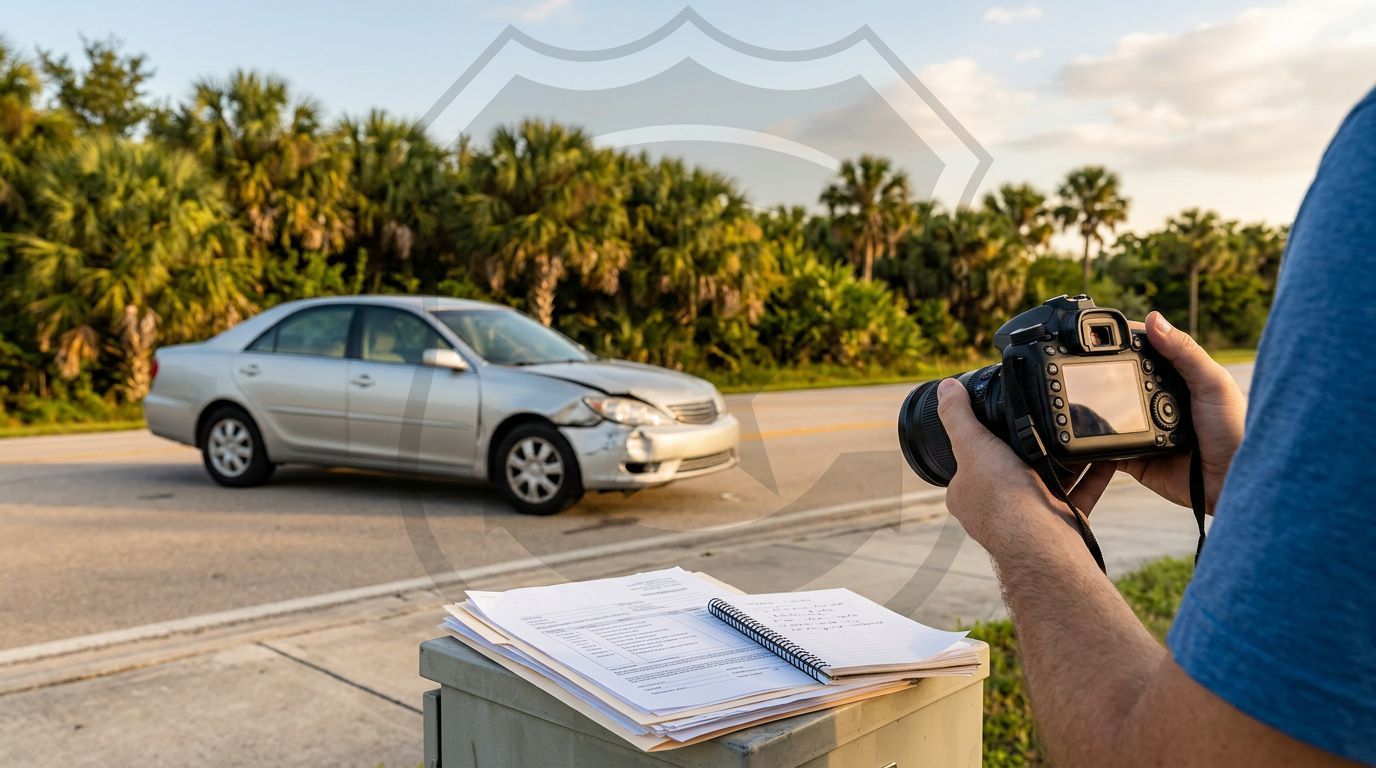
A missing police report can feel like a closed door after a crash. It isn’t.
You can still pursue a Florida crash claim without one, but the proof has to do more work. That means your photos, medical records, witness details, and repair bills can carry real weight, especially when an insurance adjuster starts asking questions.
Florida’s no-fault rules also matter here, because your first claim may run through your own coverage before fault gets sorted out. A clear record helps from the start, and that record is easier to build than many people think. If you want a plain-language look at that system, see Florida no-fault law explained.
A claim can still move forward without a police report
A police report helps, but it is not the claim itself. Insurance companies like it because it gives them a third-party summary, yet they do not get to stop a claim just because no officer wrote one.
That matters in minor crashes, parking-lot collisions, and low-speed impacts where drivers exchange information and leave before police arrive. It also matters when no officer comes to the scene, or when an officer responds but does not complete a full report.
The key point is simple: the file still needs proof. If you have injuries, treatment records, photos, and witness information, the claim can still move forward. If you have a property damage claim only, repair records and scene evidence may be enough to show what happened.
Florida’s no-fault system also gives injured drivers another path for early medical benefits. PIP usually looks first at treatment, billing, and timing, not a police narrative. That is why fast action matters after the crash, even if no report exists.
What Florida crash-report rules mean for your case
Florida law still expects crashes to be reported in many situations. If the crash involves injury, death, or enough property damage, the reporting rules can apply right away. The state’s reporting statutes are set out in Florida’s crash report statute and Florida’s accident-reporting law.
That does not mean every crash needs the same response. A small fender bender with no injury often ends up documented by the drivers themselves. A crash with injuries, a tow, a hit-and-run, or a suspected impaired driver should get more attention fast.
If the police do not file a report, your own written record becomes more important. Save the crash date, time, location, road conditions, and the names of everyone involved. If an officer gave you a driver exchange form, keep it. If not, write down the other driver’s insurance and plate information while it is still fresh.
A police report helps, but the rest of the evidence often decides the claim.
Evidence that can replace the police report
The best evidence is the evidence you collect before memory fades and cars get repaired. That is where many claims win or lose ground.
Use a mix of visual proof, medical proof, and paper proof. Together, they can paint a clear picture of how the crash happened and what it cost you.
| Evidence | Why it helps | How to preserve it |
|---|---|---|
| Photos and video | Shows damage, road layout, skid marks, and injuries | Back them up and keep original files |
| Witness names and numbers | Supports your version of the crash | Ask for contact details before leaving the scene |
| Medical records | Connects the crash to pain, treatment, and diagnosis | Keep every visit note, discharge sheet, and bill |
| Repair estimates | Shows the force and type of impact | Save body shop reports and supplements |
| Texts and insurance exchanges | Confirms what each driver said after the crash | Screenshot messages and save call logs |
Photos matter more than people expect. A cracked bumper, deployed airbag, broken glass, or a bent wheel can say a lot. So can a clear picture of the intersection, traffic signal, or parking lot lane where the impact happened.
Medical records matter just as much. If you waited days or weeks to get care, the insurer may argue the injury came from something else. When you seek treatment early, your chart helps connect the pain to the crash.
Repair estimates also carry weight. A shop can explain hidden damage that does not show up in one quick photo. That detail helps when the insurer tries to downplay the force of the collision.
How insurers test a no-report Florida crash claim
Adjusters look for gaps. They compare your statement with the photos, the medical timeline, and the vehicle damage. If the story changes along the way, they notice.
That is why consistency matters. If you tell the insurer one thing on day one and another thing after a treatment visit, they may argue the facts are shaky. They may also question any injury that shows up long after the crash with no paper trail.
Florida’s no-fault rules can help with early medical bills, but they still depend on timing and proper documentation. If you need a refresher on how injury benefits work after a wreck, the page on Florida PIP medical benefits after a crash explains the basics in plain language.
For settlement demands, adjusters want a clean file. A well-organized packet with records, photos, and loss proof often does more than a dramatic story. That is why some claims get stronger when they are built like a case file instead of a memory dump. A useful example is building a strong crash demand letter, because the same documents that support a demand letter also support a claim without a report.
Common mistakes that weaken the claim
Small mistakes can make a simple case look messy. Once that happens, the insurer has room to question it.
A few errors come up again and again:
- Waiting too long to get medical care
- Failing to save scene photos or videos
- Throwing away receipts for medication or towing
- Giving different versions of the crash to different people
- Posting about the crash on social media
- Assuming the lack of a report means the claim is over
The first mistake is often the hardest to fix. If you do not seek treatment quickly, the insurer may argue the injury was minor or unrelated. That can hurt both a medical claim and a later settlement request.
The second mistake is failing to preserve evidence. A car gets repaired, a road gets repaved, and a witness disappears. Once those details are gone, they are hard to replace.
Social media also causes problems. A simple photo at dinner can be used out of context. It is smarter to keep the crash off your feed until the claim is resolved.
When a Florida car accident attorney helps most
A lawyer becomes especially helpful when fault is disputed, injuries are real, or the insurer starts dragging its feet. That is also true when the other driver denies what happened and there is no police report to anchor the file.
An attorney can gather witness statements, request records, organize the timeline, and push back on unfair blame shifts. If the crash involved serious injury or a dispute over coverage, Florida car accident attorneys can help you understand the next step without guessing.
That support matters most when the evidence is scattered. A claim built from scattered pieces is harder to trust. A claim built from clean records, quick treatment, and consistent facts is much harder to dismiss.
Conclusion
A police report helps, but it does not control your Florida claim. If you have the right evidence, you can still build a strong case.
Photos, witness details, medical records, repair estimates, and prompt reporting all matter. So does fast medical care, especially when PIP benefits may depend on timing.
When a report is missing, the record you create becomes the backbone of the claim. The sooner you start that record, the better your chances of being taken seriously.