
Florida Marina Dock Slip and Fall Claims: What Proves Negligence
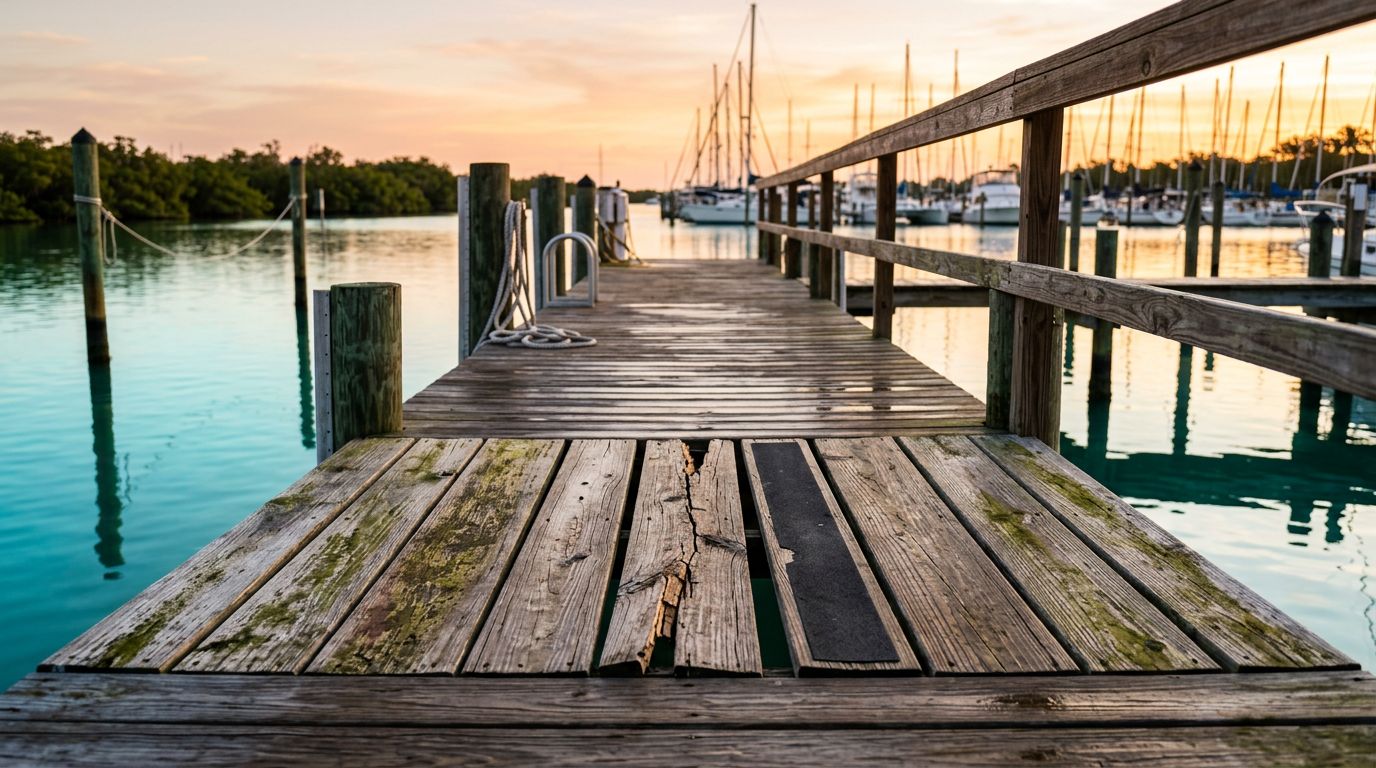
A marina fall can turn an ordinary visit into weeks of pain, bills, and missed work. In a Florida marina slip fall case, the hardest part is usually not showing that you fell, it is proving why the dock was unsafe and why the marina should have fixed it.
That proof often comes down to timing, inspection records, photos, and witnesses. The duty starts with the same framework explained in Avard Law’s Florida premises liability duty of care, then the facts decide whether the marina ignored a hazard it should have found.
Why marina dock falls raise a different proof problem
Docks live in a tough environment. They get wet from spray, rain, tides, and foot traffic. That alone does not make every dock fall a negligence case.
What matters is whether the marina let a dangerous condition stay in place. Broken boards, slippery algae, missing grip strips, loose ropes, and poor lighting can turn a walkway into a trap. A visitor may expect a dock to be damp, but not hidden defects that a safe marina should have addressed.
That is why these cases are built on evidence, not guesses. A dock that looks harmless after a quick cleanup may have been dangerous minutes earlier. A claim gets stronger when the injured person can show what the dock looked like before the condition changed.
The basic legal duty is simple. A commercial marina must use reasonable care to inspect, maintain, repair, and warn. If staff fail to do that, and someone falls because of it, negligence may be proven.
A related point matters here. If the hazard was a temporary spill, tracked-in water, or a similar condition, Florida law often focuses on whether the business knew, or should have known, about it. That brings the case into the same kind of proof fight seen in many premises claims.
What actually proves negligence on a Florida dock
Negligence has four parts, and each one needs proof. The best claims show the full picture, not just the injury.
| What must be shown | What helps prove it |
|---|---|
| Duty of care | The marina controlled the dock and invited guests onto it |
| Breach of duty | The dock had a hazard, like algae, a broken board, or bad lighting |
| Causation | The unsafe condition caused the fall |
| Damages | Medical care, lost wages, pain, therapy, or lasting limits |
The strongest cases tie those parts together with real-world facts. For example, a wet board alone may not prove much. A wet board with green algae, no warning sign, and a witness who saw staff ignore the issue tells a different story.
Medical proof matters too. A bruised knee and a fractured hip are not the same kind of claim. The records need to match the force of the fall. If the injury affects work or daily life, that should also appear in the file. The firm’s Florida slip and fall damages page explains why those losses matter.
A strong negligence case is part scene, part timeline, and part medical proof. If one piece is missing, the defense will try to fill the gap.
Notice is the turning point in many claims
For many marina dock cases, notice is the battleground. Florida Statute 768.0755 says that in many slip and fall claims involving a transitory foreign substance, the injured person must prove the business had actual or constructive knowledge of the danger. You can read the statute text here: Florida Statute 768.0755.
Actual notice means someone at the marina knew about the hazard. Maybe an employee saw the spill. Maybe another guest complained. Maybe a worker walked past the danger and did nothing.
Constructive notice is different. It means the condition existed long enough, or happened often enough, that the marina should have found it during a reasonable inspection. On a dock, that can mean built-up algae, repeated puddles near a hose, worn boards with visible damage, or a slick patch that was there before opening.
A wet dock helps explain the fall. It does not prove negligence by itself.
That is why a report matters so much. A timely Florida slip and fall incident report can capture names, times, and the first version of the story before memories fade.
Notice is often the point where cases win or lose. If the marina had time to find the hazard and did nothing, the claim becomes much stronger.
Evidence that strengthens a marina slip and fall case
The right evidence can make a dock case clear. The wrong evidence, or evidence gathered too late, can leave too many holes.
The most useful proof often looks like this:
- Photos and video of the dock, walkway, lighting, and any visible hazard
- Surveillance footage from the marina office, gate, or nearby businesses
- Inspection and maintenance logs that show when staff last checked the dock
- Witness statements from people who saw the condition or the fall
- Weather, tide, and lighting records when those conditions helped create the hazard
- Medical records and wage proof that connect the fall to real losses
Each item tells part of the story. Photos show what the eye saw. Logs show what staff did, or failed to do. Witnesses fill in the gaps. Medical records show the injury was real and not minor.
If possible, the evidence should be gathered before the marina changes the scene. Boards get repaired. Signs get added. Cameras overwrite old footage. In a dock case, time can wash away proof almost as fast as the tide.
The goal is simple. Show what the hazard was, how long it was there, and why the marina should have acted sooner.
Shared fault can shrink the payout
Florida law also looks at the injured person’s conduct. Under Florida’s comparative fault rule, a jury can divide fault between the marina and the visitor. You can review the current statute here: Florida’s comparative fault statute.
That matters because your recovery can drop by your share of fault. If you are found 20% responsible, your award is reduced by 20%. If you are more than 50% responsible, you recover nothing.
Marina defendants often argue that the injured person was distracted, wore unsafe footwear, ignored a warning, or chose an unsafe path. Sometimes that defense has merit. Sometimes it is just a way to shift blame from a broken dock to the person who got hurt.
The key point is this: shared fault does not erase a marina’s duty. If the dock was unsafe and the marina knew, or should have known, about it, the case can still move forward. The question becomes how much each side is responsible.
What to do right after a dock fall
The first hour after a fall matters more than most people realize. A careful response can protect both your health and your case.
- Get medical care right away. Even if the pain feels minor, get checked. Some injuries get worse later.
- Report the fall to marina staff. Ask for the manager’s name and the report number.
- Take photos before anything changes. Capture the surface, lighting, warning signs, and surrounding area.
- Get witness names and phone numbers. People leave fast, and their memories do too.
- Keep your shoes and clothing. They may help show what happened.
- Write down the details while they are fresh. Include time, weather, lighting, and what you saw.
- Ask for legal help early. Video, logs, and maintenance records can disappear quickly.
A quick paper trail often makes the difference between a claim with proof and a claim built on memory alone.
Conclusion
A marina dock fall is not proof of negligence by itself. The stronger cases show a dangerous condition, knowledge of that danger, and a failure to fix or warn in time.
That is why the earliest evidence matters so much. Photos, reports, witnesses, and medical records can turn a slippery dock into a clear negligence claim.
When the facts line up, a Florida marina slip fall case is easier to prove. The hazard may be wet, but the legal issue should be dry and well documented.