
Florida Crash Claims When the Police Report Gets Fault Wrong
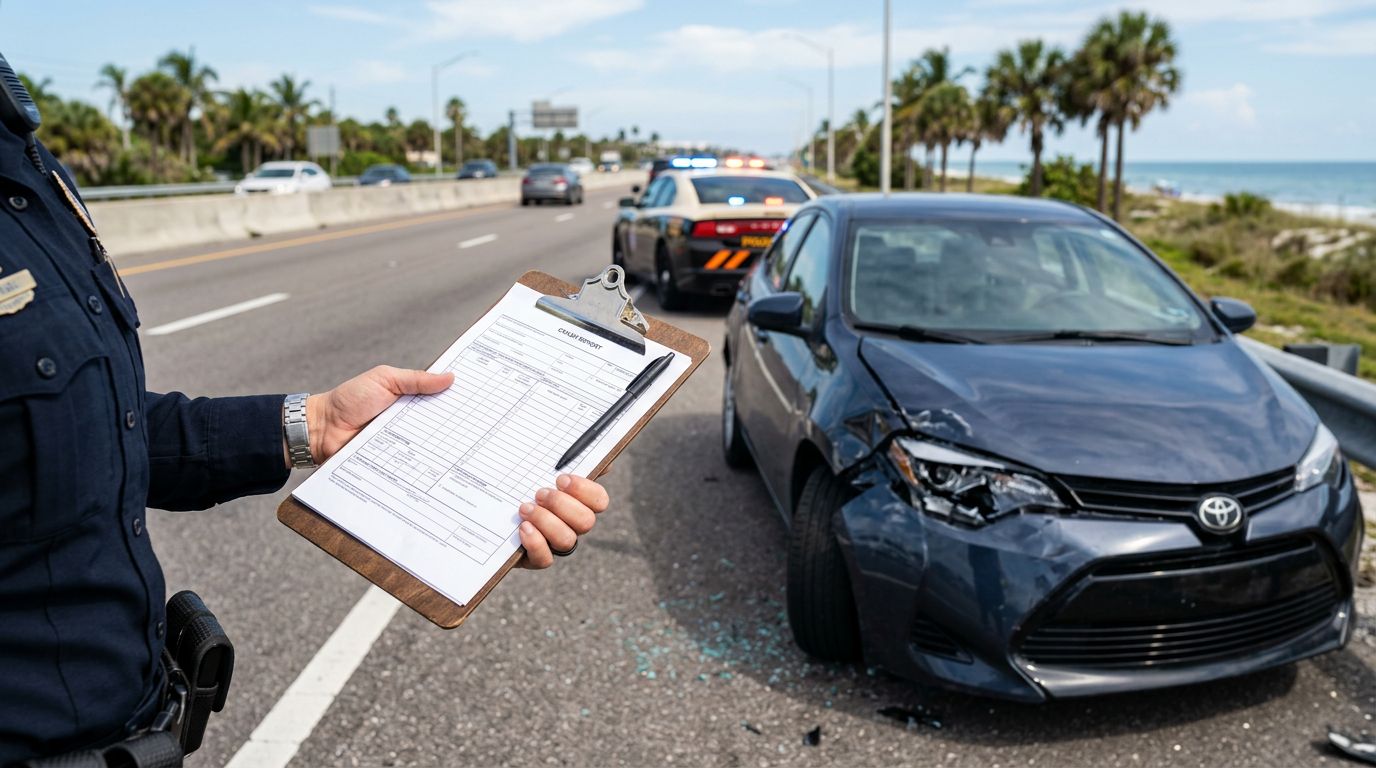
A wrong line in a crash report can change the way an insurer reads your case. It can make a strong Florida crash claim look weak before anyone checks the photos, witnesses, or damage.
That does not mean the report controls the outcome. In Florida, it matters, but it is still only one part of the file.
If the officer got fault wrong, your next steps matter. The sooner you correct the record, the better your chance of protecting the claim.
Why a Florida crash report matters, and why it is not the final word
Florida law enforcement officers use the Florida Traffic Crash Report to document what happened at the scene. The state explains the reporting system on its crash records and reporting page, and it also explains how people can obtain reports through the Florida crash report portal.
That report often becomes the first document an adjuster opens. It lists the drivers, the location, the time, the officer’s observations, and sometimes a diagram or citation. Because it arrives early, it can shape the first view of liability.
Still, the report is not a final ruling. It is an officer’s account based on the scene, the statements available at the time, and the evidence seen in a short window. If important facts were missed, the report can point in the wrong direction.
A police report can influence a claim, but it does not replace witness testimony, photos, video, and medical records.
That matters in Florida crash claims because insurers often treat the report like a shortcut. If the report blames you, they may slow down payment, lower an offer, or push for shared fault. If the report is wrong, your file needs stronger proof than a quick police summary.
Common ways fault gets misstated after a crash
Fault errors usually start with missing facts, rushed statements, or assumptions that sound tidy but do not match the scene. A driver who spoke first may sound more believable than the driver who was shaken or injured. A witness who left before speaking to police may never show up in the report at all.
The problem can be worse in crashes that already invite easy blame. Left-turn wrecks, rear-end collisions, lane-change crashes, and wrong-way crashes often get simplified too soon. That is why it helps to review the report with a sharp eye and not assume the first version is the best version.
If you want a clear local example of how report mistakes can hurt a case, the article on common mistakes in Florida crash reports shows how small errors can snowball into claim problems.
Here is a quick way to spot the most common fault issues:
| Report problem | Why it hurts your claim | Better proof to collect |
|---|---|---|
| Wrong lane or turn description | It can make you look like the unsafe driver | Photos of lane markings, dashcam video, witness statements |
| Missing witness information | The report may only reflect one side | Names, phone numbers, written statements |
| Incomplete diagram | The impact pattern may be misunderstood | Scene photos, skid marks, vehicle damage photos |
| Wrong citation or no citation | The insurer may treat the wrong driver as responsible | Bodycam footage, supplemental report, traffic camera video |
The table shows the core issue. A report built on partial facts can send a claim down the wrong track. That is why the best response is evidence, not frustration.
Left-turn cases are a good example. A report may assume the turning driver failed to yield, even when the other car was speeding or ran a light. If your crash involved a turn, the Florida left-turn accident proof checklist can help you see which facts matter most.
What to do right after you spot the mistake
Once you notice the report got fault wrong, act fast. Time helps the other side harden its version of events, and it hurts your ability to gather fresh proof.
Start with the report itself. Read every line, including the diagram, driver statements, witness names, and any cited violations. Then compare it with your notes and the photos from the scene.
After that, use the state portal to get the official crash report if you do not already have a copy. The Florida crash report portal is the state-run place to request it.
Then follow a simple order:
- Write your own timeline while the details are still clear.
- Save photos and video from the scene, your vehicle, and your injuries.
- Collect witness details before people forget or move away.
- Ask about a supplement if the officer or agency is willing to correct a factual error.
- Send the insurer your proof so the report is not the only thing in the file.
A supplement can help when the issue is factual, like a wrong plate number, a missed witness, or a bad date. If the fault call itself is wrong, the report may not change. Even then, the rest of the claim can still move forward if the evidence is strong.
This is also the stage where a claim file starts to matter. Medical records, repair estimates, wage loss proof, and consistent treatment notes can all support your version of the crash. If those records line up, the report has less power to steer the claim.
A well-organized claim file, like the one described in a Florida crash claim demand package, gives the insurer more to consider than the first police summary.
How to keep the claim moving when the report stays wrong
A wrong report does not end a case. It does, however, force you to prove your side with more care.
That proof should stay consistent from start to finish. If you tell the insurer one story, tell your doctor another, and give the officer a third version, the problem gets worse. Simple, steady facts carry more weight than a polished excuse.
The most useful records are often the least dramatic. Vehicle damage can show the direction of impact. Phone records can help confirm when calls were made. Nearby business video can show the approach of the vehicles. Medical records can show that your injuries began right after the crash, not days later.
This is where Florida crash claims can turn. The insurer may want to lean on the report because it is easy. Your job is to make the rest of the file harder to ignore.
When the fault issue is serious, the report can also affect settlement talks. A bad report can lower an initial offer or push the insurer to argue that you share more blame than you should. If the crash is headed toward litigation, the report is still only one piece of the evidence. Photos, witness testimony, and repair or reconstruction proof can carry more weight.
For that reason, do not wait for the officer to fix everything before you build your case. Keep collecting proof, keep treatment consistent, and keep your records in one place. If the report changes later, your file is already ready.
Conclusion
When the police report gets fault wrong, the first draft of the story is not the final one. Florida crash claims depend on proof, and proof often comes from outside the report.
The best response is simple. Get the report, flag the error, gather stronger evidence, and keep your claim file consistent. That approach gives the insurer, and if needed a court, a fuller picture of what really happened.
A bad report can slow a claim, but it does not get the last word.