
Florida Workers’ Comp Parking Lot Injuries Before and After Shifts
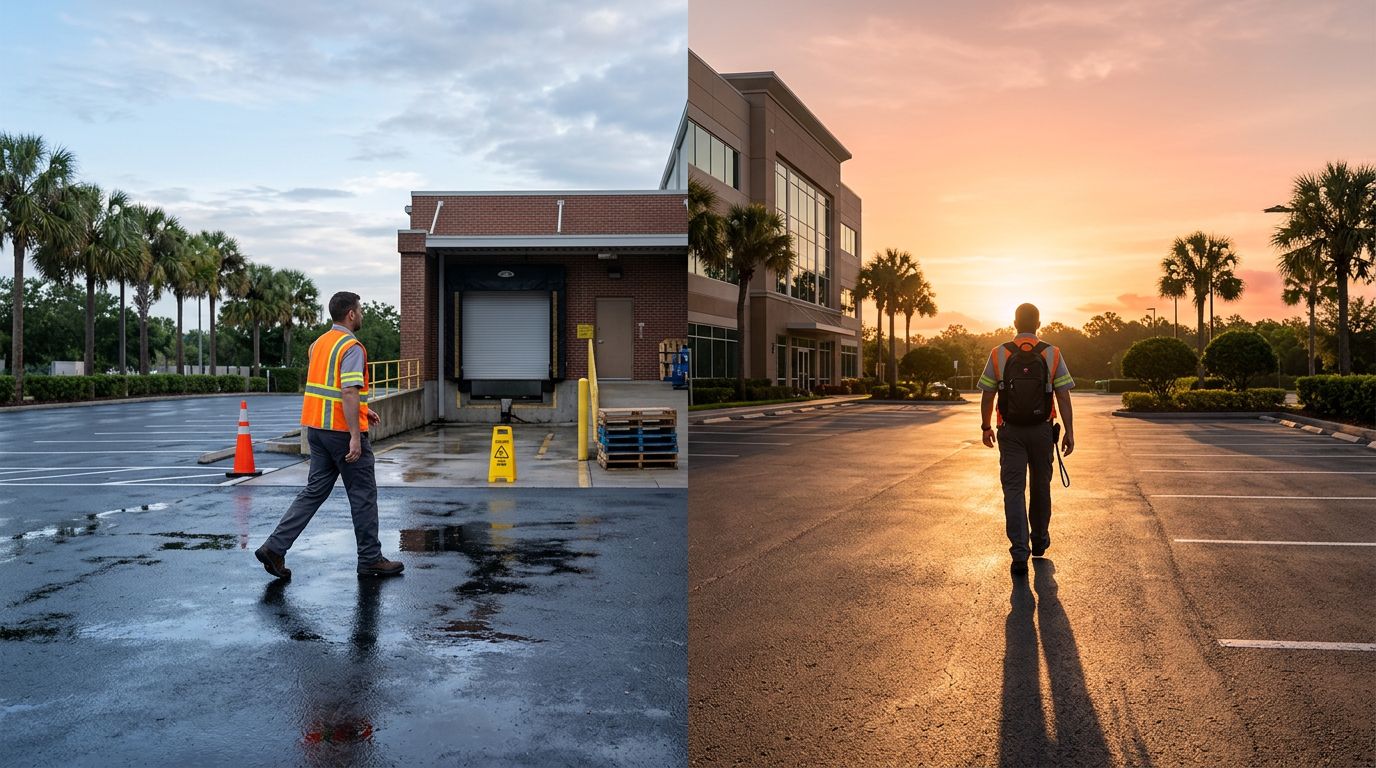
A fall in a parking lot can turn a normal workday into a claim fight. Florida parking lot injuries are sometimes covered by workers’ comp, but the answer depends on where the accident happened and who controlled the area.
A trip before you clock in can matter just as much as one after you leave. The key issue is often whether the lot or walkway counted as part of the employer’s premises under Florida law. If you know what insurers look for, you can protect the claim before it gets picked apart.
When a parking lot injury may count as work-related
Parking lot injuries are not automatically covered in Florida. The state workers’ comp system focuses on injuries that arise out of and in the course of employment, and that language matters a lot.
If the employer owns the lot, leases it, controls access, or treats it as part of the workplace, the injury may fall inside workers’ comp. That can include a slip on wet pavement, a fall near a loading area, or a collision while you are walking from the lot to the building.
Timing helps, but it does not control the result. You can be hurt before your shift starts or after it ends and still have a valid claim. A clock-in time is not the whole story.
A parking lot injury can be covered before or after a shift, but only if the facts tie the area to the job.
Florida law uses that same idea in a more formal way. Section 440.092 deals with the going and coming rule, which usually excludes ordinary commutes. Once you move beyond a normal commute and onto employer-controlled property, the analysis changes.
The going and coming rule is the starting point
Florida’s going and coming rule usually cuts off claims for ordinary commutes. If you are driving to work, parking on public property, or walking in from a place the employer does not control, the insurer may argue that the injury happened outside the course of employment.
That rule is why the exact parking setup matters. A shared lot open to the public is different from a lot the employer controls. The same fall can lead to two very different results depending on who maintained the space, who controlled access, and whether workers had to use that route to reach the job.
Florida law also looks at the path to the workplace. A short walk from a lot to the building can count when the employer has enough control over the area. For that reason, workers should never assume the claim is dead because they were “off the clock.” Sometimes the area still counts as part of the workplace.
The Florida Department of Financial Services has a helpful injured worker FAQ that explains the claims process in plain language. It is a good starting point if you want to understand the basics before you file.
Before and after shift examples that change the answer
A lot of parking lot cases turn on small facts. The same fall can look very different on paper.
| Situation | Likely result | Why it matters |
|---|---|---|
| You slip in an employer-owned lot before clocking in | Often covered | The lot may be part of the workplace |
| You fall in a public lot while walking to work | Often denied | The employer may have no control over the area |
| You are hurt after clocking out in a shared lot | Depends on control | Ownership alone may not be enough |
| You trip on a route the employer requires you to use | Often stronger | The route may be tied to the job |
A table like this only gives a starting point. The real claim depends on details, and insurers look for any reason to say the lot was public, shared, or outside the employer’s control.
A common example is the worker who slips between the car and the entrance before the shift begins. Another is the employee who leaves after work and trips on broken pavement near an exit gate. In both cases, the time of day matters less than the employer’s connection to the area.
The strongest claims usually have three things in common. The injury location is clear, the employer’s control over the area is documented, and the report matches the facts from the start. If one piece is missing, the case gets harder.
What courts and insurers look for
Florida workers’ comp claims around parking lots often rise or fall on control. Ownership helps, but control matters more.
A judge or adjuster may look at whether the employer assigned parking spots, paid for upkeep, restricted access, or used the lot as the normal route in and out of the building. Lighting, signs, security, and maintenance records can also matter. If the employer had the power to change the space, that can support coverage.
The injury itself also matters. A slip on oil, broken pavement, or poor lighting gives the insurer a fact to review. If the danger was hidden, the claim may still be valid. If the employee was rushing, carrying tools, or moving between work areas, that context can also help show the injury was job-related.
Evidence helps because memories fade fast. A report from a coworker, photos of the surface, a copy of the incident report, and even a map of the lot can help show how the area worked on the day of the injury. Medical records matter too, because they connect the accident to the injury.
If your injury developed over repeated days of walking across a bad surface, the claim can get even more complicated. A worn curb, poor drainage, or broken pavement may create a pattern, not a single event. In that kind of case, details matter just as much as the injury itself.
Small mistakes that weaken a parking lot claim
A parking lot claim can start to fall apart before the insurer even reviews it. Small mistakes give the carrier room to argue that the injury was minor, unrelated, or late.
One common mistake is waiting to report the injury because it seems mild. Pain can show up hours later, but a delay can still hurt the claim. Another is giving a vague report that leaves out the lot, the walkway, or the employer’s role in the area. If the first version of the story is incomplete, the insurer may use that gap later.
Inconsistent details can also create trouble. If one note says you fell near the building and another says you fell in the lot, the carrier may question the whole case. Social media can create problems too, especially if a photo makes the injury look smaller than it is. Finally, many workers go back to work too soon and say they are fine, even when they still hurt.
Clear records help more than strong opinions. Keep the facts tight, and keep them consistent.
What to do right after the injury
The first hour after a parking lot fall can shape the whole claim. Small steps matter.
- Tell your employer right away. Give a simple account of where you were, what happened, and who saw it.
- Get medical care as soon as you can. Tell the doctor the injury happened at or near work.
- Take photos of the area, the pavement, the lighting, and anything that caused the fall.
- Write down names of witnesses, managers, and anyone who helped after the accident.
- Keep copies of every report, bill, and work note.
Do not guess at facts when you report the injury. If the lot was shared or public, say that. If the employer directed you to park in a certain area, say that too. Details like these can make a difference later.
Also, keep your own notes about pain, missed work, and follow-up visits. Those notes can help when the insurer questions the timeline. Even a simple calendar can show how long the injury affected your day-to-day life.
Deadlines that can sink a claim
Deadlines in Florida workers’ comp move fast. Under Florida Statutes section 440.185, injured workers generally must give notice within 30 days of the accident or the first sign of the injury. Waiting can give the insurer a reason to deny the claim.
That short notice period is one reason people miss valid claims. A parking lot injury may seem minor at first, then worsen over time. If you wait until the pain gets worse, the carrier may question why the injury was not reported sooner.
If you want a plain explanation of the notice rules, see Florida workers’ compensation reporting deadlines. The page breaks down the time limits and what they mean in practice.
Deadlines are only part of the picture. The facts of the parking lot still matter, and so does the paper trail. A clean report, prompt medical care, and proof of control can turn a weak-looking claim into a strong one.
Conclusion
A parking lot injury before or after a shift can be covered in Florida, but the answer depends on control, location, and timing. The clock in and clock out times matter less than many people think.
If the employer owned, leased, or controlled the lot, the claim may fit within workers’ comp. If the area was public or shared, the case gets harder fast. That is why the first report, photos, and witness names matter so much.
Florida parking lot injuries are often won or lost on details that seem small at first. When the facts are unclear, the safest move is to act quickly and keep the record clean.