
Florida Pool Drain Entrapment Claims: Safety Violation Evidence
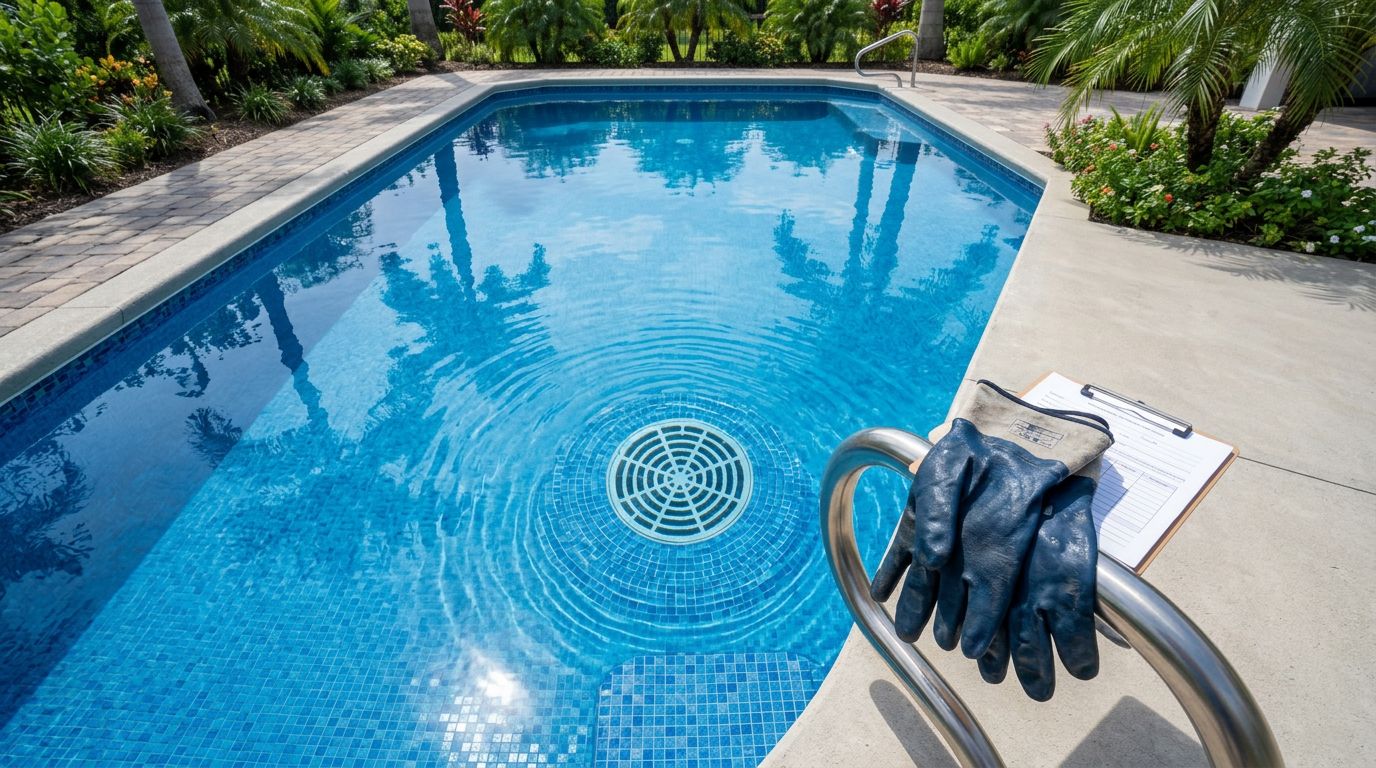
A pool drain accident can happen in seconds, but the proof can vanish just as fast. A loose cover, a missing log, or a pump room adjustment after the incident can change the whole case.
That is why pool drain entrapment claims often turn on details that seem small at first glance. In Florida, the strongest cases usually show both a safety failure and a direct link to the injury. The law sets real standards, and the scene, records, and repair history can either support those standards or expose a violation.
What a drain entrapment claim has to prove in Florida
Florida law gives these claims a clear framework. Florida’s pool safety statute requires public swimming pools and spas to use anti-entrapment systems or devices that meet the federal standard. For older public pools, the rules are stricter if the pool has a single main drain.
That matters because the law is not only about the injury. It is about whether the pool had the right protections in place before anyone got hurt.
A claim usually needs proof of four things:
- the drain or drain cover was unsafe
- the owner knew, or should have known, about the problem
- the unsafe condition caused suction or trapping
- the victim suffered harm
Private pool cases can work a little differently, but the same basic idea stays the same. The question is whether the owner failed to use reasonable care and whether that failure caused the injury. In a public pool case, the statute gives you a sharper target. In a private pool case, the maintenance history and physical evidence often carry even more weight.
Safety violations that often point to negligence
The best safety violation evidence is usually simple to see and hard to explain away. A broken drain cover does not need much translation. Neither does a missing backup safety device.
The Florida Department of Health’s pool inspection instructions are useful because they show what inspectors expect to see, including secured drain covers, intact grates, and functional anti-entrapment systems. When those parts are missing or damaged, the paper trail starts to matter fast.
| Safety problem | What it can show | Why it matters |
|---|---|---|
| Broken or missing drain cover | The suction opening was exposed | It is direct proof of a dangerous condition |
| Single drain without backup protection | The pool may not meet Florida rules | It supports a code or compliance violation |
| No vacuum release or shutoff system | Nothing stopped the suction event | It links the design to the injury risk |
| Prior repair notes or complaints | The owner knew about the hazard | It helps prove notice and delay |
A table like this does not tell the whole story, but it gives the case a shape. When the hazard is visible and the rules are clear, the defense has less room to hide behind guesswork.
Evidence that carries the most weight
The strongest pool drain cases usually rely on more than one kind of proof. Photos help. Records help. Witnesses help too. When those pieces line up, they create a timeline the insurer cannot ignore.
Photos should capture the drain cover, the screws, the markings on the part, the pump controls, and the surrounding pool area. Wide shots matter because they show layout. Close shots matter because they show wear, cracks, rust, or a mismatched replacement part.
Maintenance logs are just as important. A log can show whether the pool was inspected, when the last service happened, and whether anyone reported a defect before the injury. Repair invoices, vendor emails, and work orders can say the same thing in a different way.
Medical records and rescue reports connect the hazard to the harm. They show when the victim was pulled free, whether CPR was needed, and how serious the injuries were. That timing matters because a pool owner may try to claim the injury happened another way.
A clean pool deck can hide a dangerous drain problem. The records often show what the water line does not.
Other useful evidence includes 911 records, incident reports, witness names, and any video from nearby cameras. If the pool had lifeguards, staff, or security, their statements can also fill in the minutes before and after the event.
A strong claim does not depend on memory alone. It depends on a chain of proof.
Why timing matters after rescue or injury
Time works against the injured person. A broken grate can be swapped out. A pump can be reset. A warning sign can appear after the fact. Once that happens, the original condition becomes harder to prove.
That is why the first hours matter so much. If the incident led to a rescue or near-drowning, preserving evidence after a pool accident can keep the scene from changing before it is documented.
A few simple steps help protect the claim:
Take clear photos before anyone moves equipment or debris. Ask for the incident report right away. Write down witness names while memories are fresh. Save damaged clothing, goggles, or swim gear if they were part of the event.
The pool owner may also have records that disappear quickly. Service schedules, contractor notes, and prior complaints can be lost if nobody asks for them soon. A preservation letter can help stop that, but only if it goes out early.
The sooner the evidence is gathered, the easier it is to show what the pool looked like when the injury happened, not after repairs began.
How attorneys connect the facts to liability
Evidence becomes powerful when someone puts it in order. That is where a lawyer’s work often starts. The goal is to compare the pool’s condition to the legal standard and then build a timeline around the failure.
An attorney may request maintenance records, inspection history, service invoices, incident reports, and witness statements. In many cases, a pool safety expert or engineer will also review the drain system. That review can show whether the cover met the right standard, whether the pool had the required backup protection, and whether the system was safe for normal use.
The case often turns on a simple question: did the owner keep the pool in a safe condition before the injury happened? If the answer is no, the law can point toward liability.
The details matter because owners and insurers often try to separate the injury from the violation. They may say the cover was fine, the part was replaced later, or the swimmer caused the problem. Good evidence cuts through those claims. It shows what the pool looked like, what records were kept, and how the injury occurred.
Common defenses owners raise, and how records answer them
Pool owners rarely admit fault right away. Instead, they often raise a few familiar defenses.
They may say the drain cover was compliant. Photos, serial numbers, purchase records, and expert review can test that claim. If the part was cracked, loose, or not the right model, the records will show it.
They may argue the swimmer caused the event by using the pool incorrectly. Witness statements, rescue reports, and camera footage can show whether the person was simply swimming or whether the suction problem trapped them despite ordinary use.
They may also claim the pool passed inspection. That argument sounds strong until the maintenance history is checked. A past inspection does not erase later damage, and a missing repair record can point to a problem that existed for months.
The best rebuttal is a clear paper trail. When the scene, the logs, and the medical records all tell the same story, the defense has a much harder time shifting blame.
Conclusion
Pool drain cases move fast, and the evidence can disappear even faster. That is why the best pool drain entrapment claims are built on hard proof, not assumptions.
A damaged cover, a missing safety device, or weak maintenance records can carry more weight than a later explanation. When those facts match Florida’s safety rules, the case becomes much clearer.
The real difference often comes down to timing. The sooner the scene is documented, the better the chance of proving what went wrong and who was responsible.