
Florida Gas Station Assault Claims: Camera Footage and Prior Crime Proof
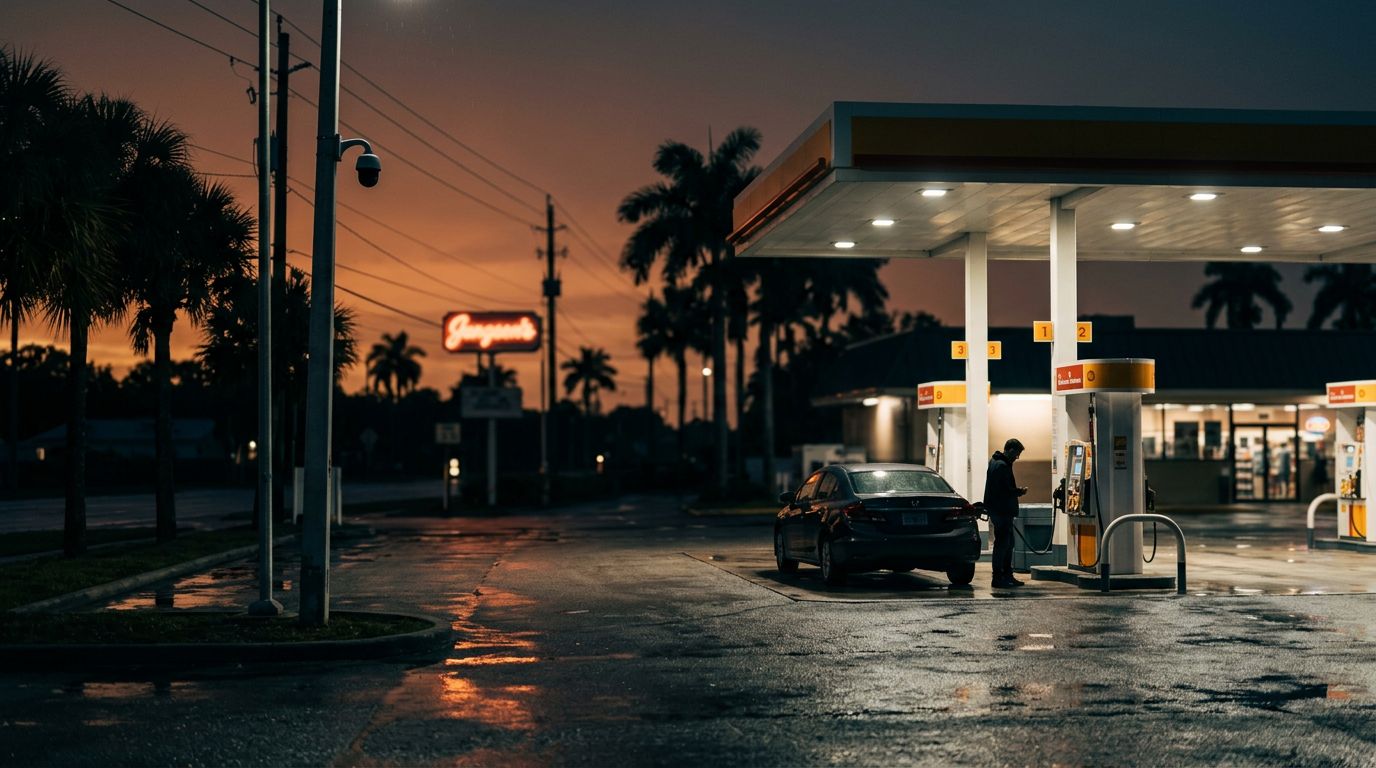
A gas station stop can turn violent in seconds. When that happens, the facts matter as much as the injury itself.
For people pursuing Florida gas station assault claims, two things often shape the case: camera footage and proof that the danger was already there. If the property had warning signs and ignored them, that evidence can change the outcome.
The assault may have started the harm, but it usually does not tell the whole story. The rest comes from records, video, and the history of the property.
Why gas station assault claims often turn on evidence
A civil claim after an assault is different from the criminal case that may follow. Police focus on the attacker. A civil claim looks at whether the business acted reasonably before the attack happened.
That matters because gas stations deal with public traffic, late hours, cash payments, and a steady flow of strangers. Those conditions can create risk. Still, risk alone does not prove liability. The claim usually depends on whether the owner, operator, or manager ignored signs that more security was needed.
The attack is only one part of the case. The rest is about what the property owner knew, and when they knew it.
That is why evidence matters so much. A strong file may include surveillance video, incident logs, police calls, witness statements, and maintenance records. Each piece helps answer the same question, did the business take reasonable steps to protect people on the property?
If the station had broken lights, dead cameras, or repeated problems with fights and robberies, the story changes fast. The attack no longer looks like a random event. It starts to look like a risk that was waiting to happen.
What camera footage can prove after a gas station assault
Camera footage can do what memory often cannot. It can show the scene as it was, not as it felt.
At a gas station, video may capture the parking lot, the pumps, the entrance, the register, and the space around the store. Even a short clip can help answer basic questions:
- Who was present before the assault started
- Whether lighting was poor in the area
- Whether employees or security staff were nearby
- How long it took anyone to respond
- Whether the attacker had been lingering or arguing earlier
That kind of footage can be powerful because it shows timing. A witness may remember the fight. A video can show the ten minutes before it.
Footage can also support claims about poor security. For example, it may show a broken camera, a missing guard, or a dark corner where customers had little protection. Sometimes the recording even captures earlier trouble the store failed to address.
The problem is that video does not stay around forever. Many systems overwrite footage quickly. That makes early action important. A lawyer can send a preservation request before the recording disappears.
A clean recording can also help when the defense tries to shift blame. If the video shows the victim standing in line, minding their own business, that can push back against arguments that they caused the incident.
How prior crime proof strengthens a Florida claim
Prior crime proof matters because it can show notice. In plain terms, it can show the business knew, or should have known, that people faced danger there.
That proof does not have to be dramatic. It often comes from ordinary records that build a pattern over time. The key is whether earlier incidents were similar enough to make the later assault foreseeable.
Here is a simple way to think about the most useful records:
| Evidence type | What it can show | Why it matters |
|---|---|---|
| Police reports | Earlier robberies, assaults, or trespass calls near the property | Confirms the area had known problems |
| Store incident logs | Complaints, confrontations, and prior threats inside the business records | Shows the business knew about repeated trouble |
| 911 or dispatch records | Calls made before the attack | Helps prove a pattern of active risk |
| Repair and maintenance records | Broken lights, failed cameras, or faulty locks | Supports a claim that security was neglected |
The best evidence usually tells the same story from different angles. A single old incident may not carry much weight. A pattern of recent, similar crimes often matters more.
Timing also counts. If several assaults, robberies, or fights happened in the months before the attack, that can be stronger than a one-time event from years earlier. Location matters too. Incidents on the same lot or at a nearby entrance often carry more weight than unrelated crimes miles away.
This is where records from police, the store, and witnesses can work together. One source may be incomplete. Together, they can show the property was not as safe as it should have been.
What to do right after the assault
The first hours after an assault can feel chaotic. Even so, small steps can protect the claim later.
- Get medical care right away. Some injuries do not fully show up until later, and treatment records help connect the assault to the harm.
- Report the incident to police. A police report gives the case an early paper trail, even if the attacker is not caught.
- Take photos of injuries and the scene if you can do so safely. Details like lighting, broken glass, or damaged property may matter later.
- Save clothing, receipts, texts, and names of witnesses. Small items often become useful when the story is challenged.
- Ask for the video to be preserved and contact Florida personal injury attorneys before key evidence disappears.
The sooner this starts, the better. Video gets erased. Witnesses forget details. Repairs happen. A claim gets much harder when the first version of the evidence is gone.
Why the right lawyer matters when the store blames you
Businesses often defend these cases by blaming the victim. They may say the attack was sudden, that security was reasonable, or that the injured person should have seen trouble coming. Sometimes they try to turn the focus away from their own records.
That is where an experienced lawyer helps. A careful review can uncover whether the store had earlier complaints, whether the cameras worked, and whether the property had a history of violent crime. Those issues can shift the case from a simple assault story to a security failure claim.
A lawyer can also look for details that a victim usually cannot get on their own. That includes surveillance requests, police follow-up records, witness interviews, and prior incident history. If the business and its insurer push back, the case may need formal requests for records and testimony.
Choosing counsel matters. The same practical concerns that apply in other injury cases apply here too, and these factors for hiring a Florida injury lawyer can help you compare your options. Experience with premises liability, access to investigators, and the ability to move fast all matter when evidence is at risk of disappearing.
A good case is rarely built from one document alone. It is built from timing, records, and proof that the danger was not hidden from the business.
Conclusion
A gas station assault can leave you with injuries, bills, and a long list of questions. Camera footage and prior crime proof help answer the biggest one, whether the attack was preventable.
When a business had warning signs and did little, that evidence can carry real weight. The sooner it gets preserved, the stronger the claim can be.