
VA Blue Water Navy Claims in 2026: Why Deck Logs Matter
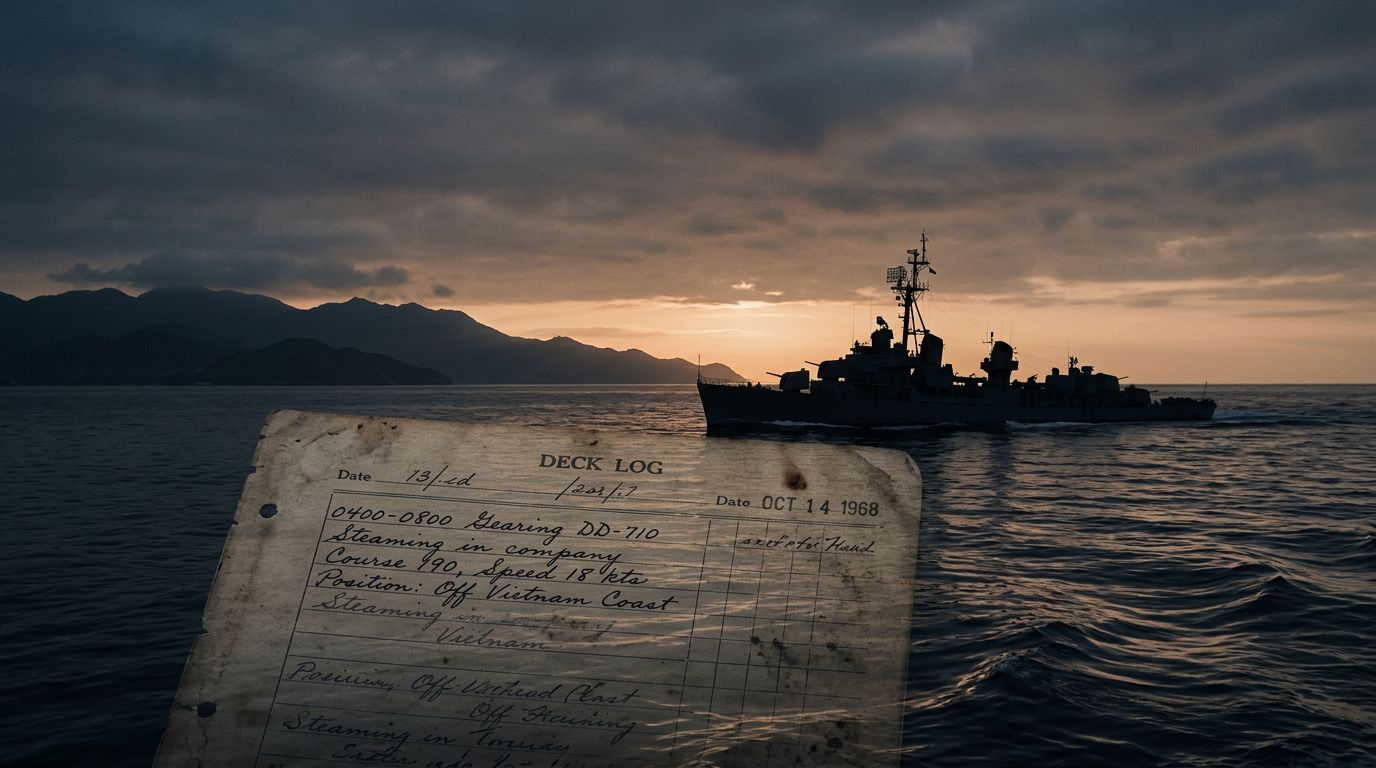
A Blue Water Navy claim can turn on a few lines in an old ship log. If those lines place the ship within the legal zone off Vietnam, the whole case can change.
In 2026, veterans still run into the same problem. Service records may prove you were aboard, but they may not clearly show where the ship was on a given day. That is where deck logs come in, and they can make the difference between a weak file and a solid one.
For Florida veterans and families, the record search can feel like chasing a paper trail through decades of archives. The good news is that the law still gives you a path, and the right evidence can support it.
Blue Water Navy claims still depend on ship location
Blue Water Navy claims focus on one main fact, where the ship was stationed or operating. In 2026, the key rule still looks at service on a Navy or Coast Guard ship off the coast of Vietnam, within 12 nautical miles of the shoreline, during the Vietnam era.
That matters because qualifying veterans may receive the Agent Orange exposure presumption. In plain terms, VA can accept exposure without making you prove it on your own. You still need proof of service and a current condition tied to that exposure, along with a diagnosis that fits the claim.
If you are trying to build the case, the legal issue is often not whether you served. The issue is whether the ship crossed the line that matters under VA rules. For background on the disability side of that proof, see service-connected disability criteria.
That single detail, where the ship was, is why records matter so much.
Why deck logs carry so much weight
Deck logs are the ship’s daily record. They can show dates, times, course changes, anchoring, and position. They can also show whether a vessel moved close to shore or entered waters that matter for a Blue Water Navy claim.
They are useful because they are dated records created during service. That gives them real weight when a claim needs more than memory or a later summary. A ship history might say a vessel was “in theater,” but a deck log can pin down the ship’s location on a specific day.
When ship location is the disputed fact, deck logs often answer the question better than a summary ever could.
Deck logs do have limits. They usually do not tell the full story of a veteran’s experience. They do not list every task, every fear, or every medical issue. Still, when the claim turns on geography, they can be the strongest paper trail in the file.
VA often uses archived logs, ship histories, and location databases when it reviews these cases. So does any careful attorney handling a Blue Water Navy claim.
Records that fill the gaps when logs are missing
Sometimes the logs are incomplete. Sometimes the exact date is unclear. Sometimes the ship’s route changed, but the paper trail did not keep up. That does not end the claim.
The goal is to build a timeline that makes sense from more than one source. The table below shows the kinds of records that often help when deck logs alone are not enough.
| Record type | What it can show | Why it helps |
|---|---|---|
| Deck logs | Ship position, dates, course, anchoring | Can place the ship within the 12 nautical mile zone |
| Ship histories | Deployment route and service periods | Gives context when logs are thin or hard to read |
| Buddy statements | What crewmates remember | Helps fill gaps in incomplete records |
| Cruise books or maps | Photos, dates, and route details | Supports the timeline and ship identity |
The best claims usually use more than one source. A log can place the ship near Vietnam, while a buddy statement or cruise book helps confirm the dates. Together, they tell a cleaner story.
Keep the medical side in view too. Even if exposure is accepted, VA still looks at the current diagnosis and how the condition affects you. That is why how VA disability ratings work matters after the exposure issue is solved.
How VA reviews these claims in 2026
The modern VA review process is more organized than it used to be, but it still depends on evidence. In a Blue Water Navy case, VA usually wants to see the ship, the dates, and the medical proof in the same file.
A simple way to think about the process is this:
- VA checks your service dates and the ship name.
- VA looks for deck logs, ship histories, and archived records.
- VA reviews your diagnosis and the condition tied to exposure.
- VA decides whether the presumption applies and what rating fits the condition.
If VA cannot find the logs on its own, that does not mean the record search stops. You can still submit the ship name, the dates you served, and a clear request that VA obtain the deck logs. If the logs are missing or incomplete, other proof can still help fill the gap.
The key point is simple. VA is not asking whether your service was honorable or important. It is asking whether the evidence proves the ship was where the law says it needs to be.
Common mistakes that slow a claim
A lot of Blue Water Navy claims stall for avoidable reasons. The facts may be good, but the file is thin or the timeline is fuzzy.
These mistakes cause the most trouble:
- Assuming any offshore Navy service qualifies, when the distance from Vietnam still matters.
- Sending the ship name without the dates you served aboard.
- Ignoring missing records instead of replacing them with other proof.
- Mixing up exposure evidence and medical evidence, which VA reviews separately.
A claim gets stronger when each piece supports the next one. The ship records show where you were. The medical records show what you live with now. The rating system then turns that evidence into compensation.
That step matters because even a winning exposure case still needs the right disability evaluation. A condition with a clear diagnosis and strong record support is easier for VA to rate than one built on vague notes.
Why Florida veterans often need local help
Florida veterans often deal with records from different places at the same time. A ship log may sit in an archive. A diagnosis may come from a local doctor. A VA notice may arrive while the claim is already under review.
That is where a Florida veterans law attorney can help. A lawyer can sort the timeline, request the right records, and push the file in the right order. That matters most when the ship history is old, the logs are incomplete, or VA asks for more proof after the first review.
For many veterans, the hardest part is not the law itself. It is turning a stack of scattered records into a clear claim that shows where the ship was and why the condition is connected. A careful review can make that job much easier.
Conclusion
A Blue Water Navy claim in 2026 still comes down to evidence that places the ship in the right spot. Deck logs matter because they can show that location with far more precision than memory or a short service summary.
If the logs are missing, the claim is not over. Ship histories, buddy statements, cruise books, and maps can still support the timeline. The strongest cases use all of them to prove where the ship was and how the condition fits VA rules.
For Florida veterans, that kind of record work can make the difference between a stalled file and a claim that finally moves forward.