
Florida Yield Sign Accident Claims: Proof That Shows You Were Not at Fault
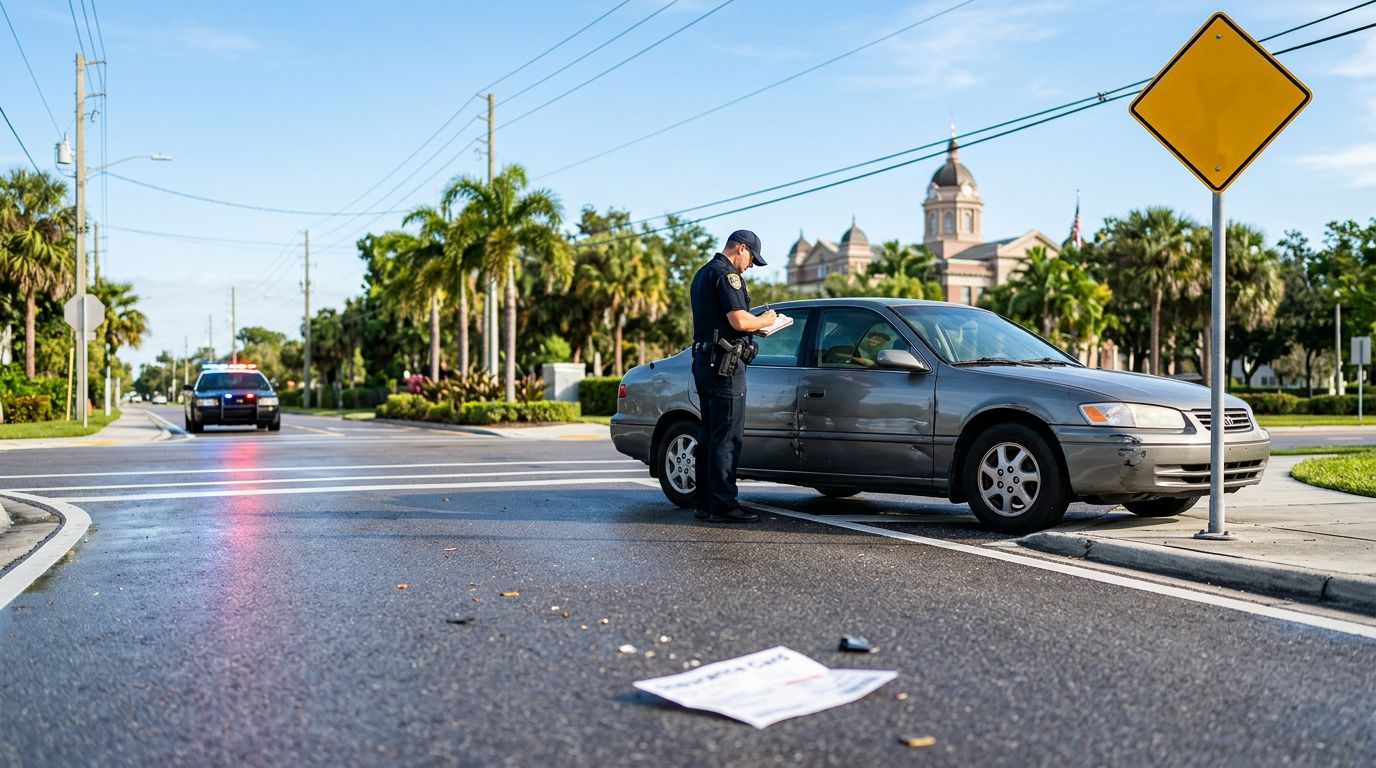
A yield sign crash can happen in a second, but the blame fight can last for months. Insurance companies often act as if both drivers share fault, even when one driver had the clear right of way.
After a Florida yield sign accident, the details matter more than the noise. Photos, witness names, car damage, and the police report can all shape the claim.
Florida law puts a simple duty on drivers at yield signs. The question is whether the other driver slowed down, gave way, and avoided an immediate hazard.
What Florida law requires at a yield sign
Florida Statute 316.123 says drivers approaching a yield sign must slow down and, if needed, stop for safety. They must let traffic go first when that traffic is already in the intersection or close enough to be an immediate hazard.
That rule matters because yield sign cases often turn on timing. A driver may say they “almost stopped” or “didn’t see” the other car. Still, the law asks whether they gave the other vehicle enough space and time.
When a driver goes through a yield sign and strikes another car, that crash can be strong evidence of failure to yield. The same idea applies when a driver hits a pedestrian in a crosswalk. The impact itself does not prove everything, but it often points in one direction.
The fault question gets even sharper when the crash happens in a small intersection with limited sight lines. One car may have been hidden by a curve, a parked truck, or traffic on the main road. That is why the scene matters. A good claim shows what each driver could see, when they saw it, and how much time they had to react.
Evidence that helps prove the other driver failed to yield
Strong claims do not rely on memory alone. They use facts that can be checked against each other.
The best proof often comes from the first hour after the crash. That evidence fades fast, so the goal is to lock it down early.
A citation helps, but it does not decide civil fault by itself.
Here is the kind of proof that can move a claim forward:
| Evidence | What it can show | Why it matters |
|---|---|---|
| Police crash report | Where the crash happened, who was involved, and the officer’s first view of fault | It gives insurers and lawyers a starting point |
| Photos of the scene | Lane position, vehicle angles, debris, skid marks, and sign location | It helps show who entered the intersection first |
| Witness statements | What neutral people saw before impact | It can support your version when the drivers disagree |
| Vehicle damage | Impact points and force of collision | It can show which car struck the other and from what angle |
| Dashcam or traffic video | The moments before the crash | It can settle the biggest disputes fast |
Repair photos matter too. A side impact, front corner damage, or crushed bumper can tell a story that words cannot. So can skid marks and debris patterns, especially when they line up with one driver’s account.
Medical records also matter, even though they do not prove fault by themselves. They connect the crash to your injuries. That link becomes important when the insurer starts questioning whether the collision caused the treatment you needed.
If the driver who failed to yield also told police, “I didn’t see the other car,” that statement may help your claim. In a claim, small details often work like puzzle pieces. One piece may not say much on its own, but several pieces together can show what happened.
Common excuses insurers use after a yield sign crash
Insurers often look for ways to split blame. They may argue that you were speeding, distracted, or driving too close to the intersection. Sometimes they say the other driver had limited visibility, so fault should be shared.
Those claims are not the end of the story. They are just arguments that need proof.
The first excuse is usually speed. If the insurer says you were going too fast, the damage pattern, skid marks, and witness statements can help answer that claim. A fast-moving car may leave different evidence than a car that was moving normally.
Another excuse is that the other driver “thought it was clear.” That statement does not help them much if traffic was already close enough to be an immediate hazard. Yield signs do not give a driver the right to guess and hope.
A third excuse is that no one saw the exact moment of impact. That happens often. Even then, photos, the police report, and nearby video can fill in the gap. A claim does not need perfect footage to be strong. It needs evidence that holds together.
The traffic ticket matters, but it is not the final word in a civil injury case. A ticket can support your claim. It can also be challenged. That is why the broader evidence matters more than the citation alone.
Florida law and insurance rules do not reward vague blame. They reward proof. The more the facts line up, the harder it is for the insurer to move fault away from the driver who ignored the yield sign.
Steps to protect your claim after the crash
What you do after the wreck can shape the rest of the case. These steps help preserve proof before it disappears.
- Call 911 and report the crash.
That creates an official record and brings help to the scene. - Get medical care right away.
Some injuries show up later, but the treatment timeline should start early. - Take photos before the vehicles move, if you can do it safely.
Capture the sign, the intersection, the damage, and the road layout. - Get names and phone numbers from witnesses.
Neutral witnesses can matter more than either driver’s memory. - Do not guess about fault in a recorded statement.
Stick to facts, because rushed statements can get used against you later. - Keep every bill, note, and repair estimate.
These records help show the full cost of the crash.
The days after a crash can feel scattered. Still, a clean paper trail makes the claim easier to prove. It also makes it harder for the other driver to rewrite what happened.
If your car is drivable, keep the repair estimates and damaged parts. If it is not drivable, save the towing and storage records too. Those documents often become useful later.
Why legal help matters when fault is disputed
A disputed intersection crash can turn into a paperwork fight fast. One insurer may blame the other driver. The other side may blame you. Meanwhile, medical bills keep arriving.
That is where focused legal help can make a real difference. A lawyer can preserve photos, pull the crash report, speak with witnesses, and compare the facts with Florida traffic law. If the case involves injuries and a fault dispute, Florida car accident attorneys can help build a record that matches the evidence, not the insurer’s version of events.
This matters most when the injuries are serious. Lost wages, treatment costs, and pain can add up quickly. If the claim stays weak on proof, the insurer may offer less than the case is worth.
A lawyer can also spot problems early. Maybe the police report leaves out a key detail. Maybe a witness saw the other car roll through the sign. Maybe the damage pattern supports your version better than the insurance adjuster admits. Those details can change the direction of the claim.
The key is speed. Video gets erased, cars get repaired, and witnesses forget details. The sooner the evidence is organized, the better the chance of showing what really happened.
Conclusion
The strongest proof in a yield sign claim is usually simple. It shows who entered the intersection first, who slowed down, and whether the other driver had time to avoid the crash.
A ticket can help, but it is only one piece. Photos, witness accounts, repair evidence, and prompt medical care often do more to prove a not-at-fault driver was hit because someone else failed to yield.
When the blame gets disputed, the best case is built on facts that line up. That is what turns a confusing crash into a clear claim.