
Florida Parking Lot Accident Claims and Camera Proof
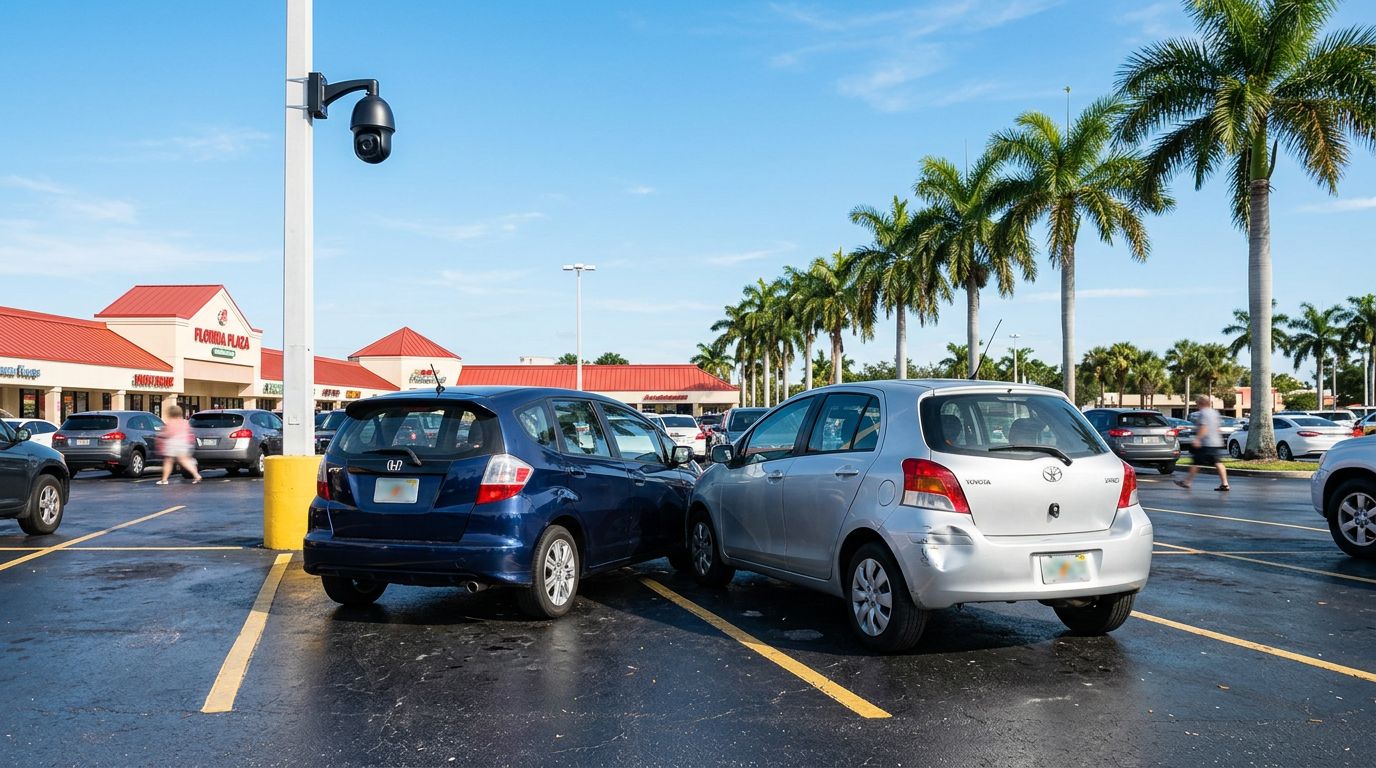
Parking lot crashes often look minor until the insurance fight starts. A slow backing collision can still leave you with pain, missed work, and repair bills that add up fast.
In Florida, these claims often turn on small details, such as who moved first or whether a driver checked a blind spot. Camera proof can settle those details when memories clash.
The problem is that video does not wait. It can be overwritten, deleted, or lost before anyone asks for it.
Why parking lot crashes turn into fault fights
Parking lots are crowded, tight, and full of blind spots. Drivers back out of spaces, cut across lanes, circle for parking, and cross paths with shoppers on foot.
That mix makes fault hard to sort out. One driver may say the other came out too fast. The other may say the lane was blocked or the stop sign was ignored. In many Florida parking lot accident claims, both sides tell a different story from the first phone call to the insurer.
Faded lane arrows, broken lights, and missing signs make the dispute worse. So do mirrors that show only part of the scene. A crash that happens at five miles per hour can still trigger a serious claim if the vehicles, the people, and the memories do not line up.
Fault also matters because Florida claims can change based on who bears more blame. When responsibility is split, the value of the claim can shift too.
If you were hit in South or Central Florida, a Florida car accident lawyer can move fast to look for proof before it disappears.
What camera footage can show in a Florida claim
Video often tells the part of the story that drivers miss. It can show speed, direction, timing, and where each car was before the impact.
The moments before impact
Footage is most useful when it shows who was moving and who was standing still. It can reveal a driver backing out without looking, rolling through a stop, or pulling through a lane too quickly. It can also show a pedestrian crossing behind a vehicle or a cart blocking the view.
That matters because parking lot claims often depend on the seconds before contact. If a driver says the crash came out of nowhere, video may show that the other car had time to stop. If the other side says you reversed into traffic, the recording may show the opposite.
Signs, markings, and careless moves
The best clips also show the lot itself. Arrows, stop signs, yield signs, and painted lane lines can all matter. So can the angle of the parked cars and the space between them.
A few seconds before impact can explain the whole crash better than the impact itself.
Camera footage may also show careless behavior, such as speeding through an aisle, opening a door into traffic, or turning without looking. Even when the picture is grainy, it can still answer a key question, which is who had room to avoid the collision.
A single clip, though, can be incomplete. If it starts late or ends too soon, the missing seconds can give the other side room to argue. That is why full video matters more than a short saved clip.
How to preserve parking lot video before it disappears
Some camera systems keep footage for a short time only. Once that window closes, the recording may be gone. Waiting a few days can cost you the best evidence.
Use these steps right away:
- Save the video without editing it.
Do not trim, crop, or add commentary to the original file. - Ask for the full recording.
A clip is helpful, but the full video gives context before and after the crash. - Get the camera owner’s name and location.
Store security, an apartment office, or a nearby business may control the footage. - Make a backup copy.
Save it in more than one place so the file does not get lost. - Note the time and place.
Write down the exact lot, aisle, and space number if you know them. - Tell your insurance company and lawyer fast.
Early notice helps preserve the recording before anyone overwrites it.
A written request matters when the video belongs to a private business. The owner may not hand it over from memory alone. The sooner the request goes out, the better the chance of keeping the full record.
What supports the video when the insurer pushes back
Camera footage is strong, but it works best with other proof. Insurance adjusters often look for gaps, bad angles, or missing seconds. If they find one weakness, they may try to shift blame.
That is why the rest of the file matters too. Start with the scene itself.
- Photos of the vehicles, the lot, and any signs or lane markings
- Witness statements from people who saw the crash
- A police report or incident report, if one was made
- Repair estimates that match the point of impact
- Medical records if you were hurt
- Dashcam video or cell phone video from a witness
Each item adds weight to the claim. Together, they create a clearer picture than one camera alone. For example, a store camera may show the collision, while a witness can explain which car entered the lane first.
That matters when the damage looks small but the injuries do not. Neck pain, back pain, and headaches can show up after the scene is cleared. If the crash led to treatment, missed work, or lasting pain, Florida personal injury attorneys can connect those losses to the accident record.
The goal is simple. Build one story from several sources, so the insurer has less room to argue.
When a Florida parking lot claim needs legal help
Some parking lot crashes stay simple. Others turn messy fast.
Legal help becomes important when the other driver denies fault, the video is in someone else’s hands, or the insurer blames you before the facts are sorted out. It also helps when injuries appear later, because pain often reaches beyond the repair bill.
A lawyer can request the footage, follow up with the camera owner, and compare the recording with photos, witness accounts, and vehicle damage. If the parking lot belongs to a store, apartment complex, or office building, speed matters because those systems may overwrite video on a short cycle.
An attorney also helps with the insurance side. Adjusters may ask for statements that put more blame on you than the facts support. With the right evidence in place, those claims are easier to challenge.
In a disputed crash, a strong file is more useful than a long argument. The video, the photos, and the records should all point in the same direction.
Conclusion
Parking lot crashes often start with a simple bump, then grow into a fault fight. The best proof is usually the kind that gets saved early, before the footage is lost.
Camera proof can show who moved first, who backed out, and what the lot looked like at the time. When you add photos, witnesses, and medical records, Florida parking lot accident claims become much easier to support.