
Florida Exit Ramp Crash Claims: Late Merge Proof That Matters
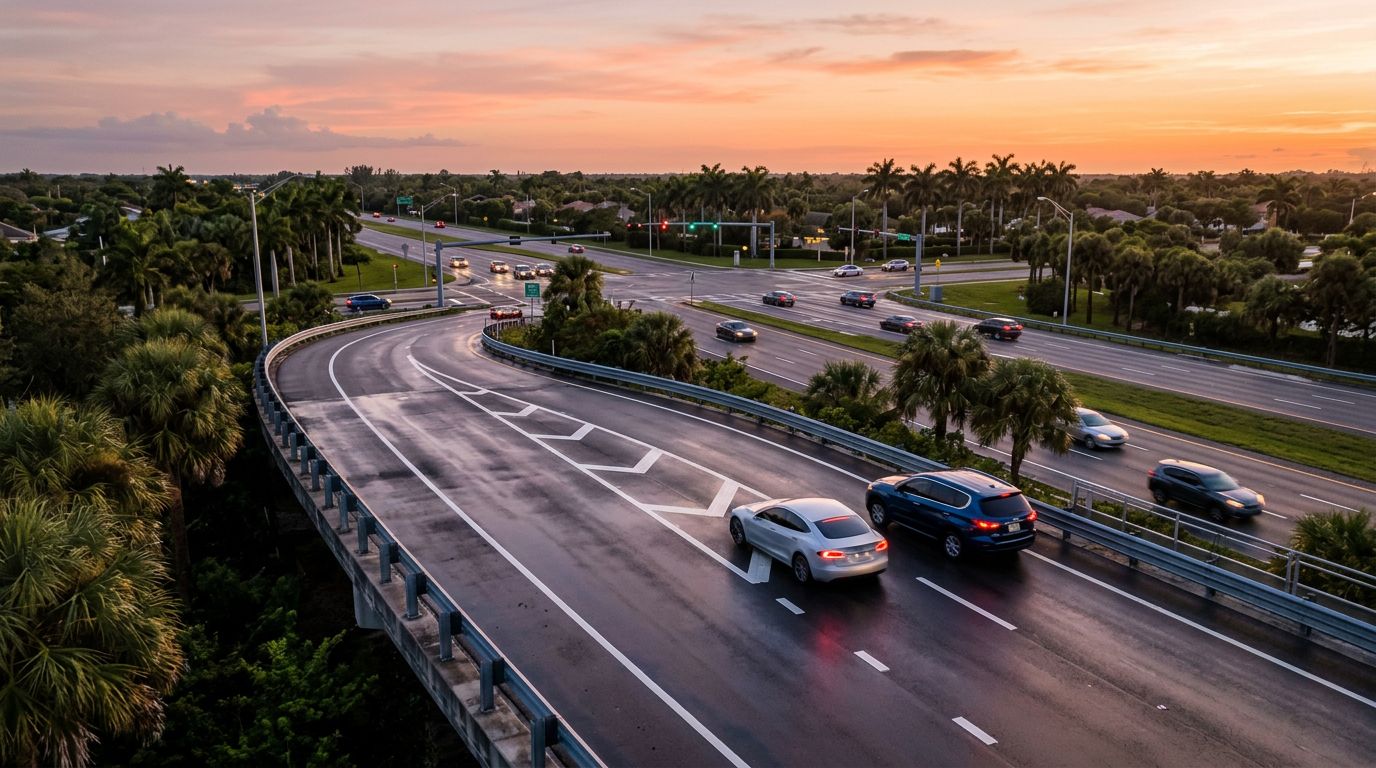
A crash at a Florida exit ramp can look simple from the outside. One driver says the other cut in too late, the other says there was room to merge, and the story changes as soon as the insurance company gets involved.
That is where late merge proof matters. Florida exit ramp crash claims often turn on small details, like lane lines, turn signals, traffic speed, and who had the right space at the moment of impact.
If you were hit near an exit ramp, the first version of events is rarely the last one. The strongest claims are built with proof that shows what happened before the cars touched.
Why exit ramp crashes turn into blame fights
Exit ramps create short decision windows. Drivers slow down, shift lanes, and watch for signs at the same time. When traffic is heavy, one mistake can turn into a side swipe, rear-end impact, or a hard shoulder collision.
Insurance companies know this. They often argue that the merging driver waited too long, changed lanes without warning, or forced another car to brake. In other cases, they say the other driver sped up or failed to give enough room.
That is why Florida exit ramp crash claims can become proof battles fast. The issue is not only who felt wronged. The issue is what can be shown with facts.
Common dispute points include:
- whether a signal was on long enough
- whether the driver had enough space to merge
- whether traffic slowed suddenly
- whether lane markings made the move legal or risky
- whether the impact pattern matches the story each driver gives
A good claim shows the lane position, the timing, and the damage pattern together. When those pieces line up, the argument gets much stronger.
What late merge proof actually looks like
Late merge proof is not one item. It is a group of details that build the same picture. The goal is to show where each vehicle was, how fast it moved, and whether the move was safe.
If you need a broader evidence roadmap, Florida merge accident liability checklist covers the kind of proof that often decides who pays.
The best proof often comes from the first few minutes after the crash. That is when the scene is unchanged and memories are fresh.
Photos and video from the first hour
Photos can do more than show damage. They can show lane lines, traffic flow, sign placement, skid marks, guardrails, and the distance between vehicles.
Video helps even more. Dashcam footage, business security video, toll booth cameras, and nearby traffic cameras may show the merge itself. Even a few seconds can answer questions that arguments cannot.
Try to capture:
- both cars from several angles
- the exact lane or shoulder where the crash happened
- road signs, arrows, and exit markings
- debris, tire marks, and fluid on the pavement
- weather and lighting conditions
Small details matter here. A photo taken from the wrong angle can hide lane lines or make the move look cleaner than it was.
Witnesses, vehicle damage, and scene details
Witnesses can fill gaps in the story. A driver behind you may have seen the signal. A passenger in another car may have seen the speed change. Their memory is best when it is recorded early.
Damage location also helps. A scrape along the side tells a different story than a direct rear impact. So does a hit that starts near the rear quarter panel and runs forward. Those marks can show whether the move was still in progress.
A short note written after the crash can help too. Include the time, the exit name, the direction you were traveling, and what the other driver said. That kind of record may seem small, but it often becomes useful later.
How insurers try to shift fault after a late merge crash
After a ramp crash, the insurer may focus on your move instead of the other driver’s. That is common in crashes that happen near lane shifts, including situations similar to Florida lane change fault disputes.
The company may say you:
- merged too late
- changed lanes without enough room
- failed to signal
- braked without reason
- caused the collision by slowing too soon
These arguments work best when the proof is thin. They also get stronger when there is a delay in treatment or a gap in the story.
Recorded statements can add more problems. A simple answer about speed or distance can be used later as an admission. People often guess after a crash, especially when they are shaken. Guessing is risky.
Medical records matter too. If you wait too long to get checked, the insurer may argue that the injuries came from something else. Early treatment ties the pain to the crash and creates a clean record.
The first statement after a crash can shape the whole claim. If it is incomplete, the insurer may treat it like the full story.
Steps that protect a Florida exit ramp crash claim
The best time to protect a claim is right after the crash. That does not mean you need to know every legal issue on day one. It means you need to avoid losing proof.
Get medical care quickly
Even if the pain feels mild, get checked out. Neck pain, back pain, shoulder pain, and headaches often show up later. A quick exam creates a record and helps protect your health.
If the doctor orders follow-up care, go. Gaps in treatment often become a problem later.
Save every piece of evidence you can
Keep the tow report, repair estimate, photos, and contact information for witnesses. If you have a dashcam, save the file in more than one place. Phone storage gets lost, broken, or overwritten.
A short evidence file can include:
- crash photos
- witness names and numbers
- medical visit dates
- insurance claim numbers
- repair and towing documents
That file can help your lawyer and reduce the chance of missing something important.
Avoid statements that box you in
Be careful with what you tell the other driver, the insurer, and social media contacts. A simple apology can be twisted into a fault admission. A guess about speed can become a fixed fact in the claim file.
You do not need to argue at the scene. You need to exchange information, get help, and preserve proof.
Get legal help before the paper trail hardens
Ramp crashes often move fast, but the paperwork can move even faster. Once the insurer writes its version, it may be hard to pull it back apart. A Florida personal injury lawyer can review the scene evidence, request records, and stop missing details from becoming lost details.
That matters most when the other side claims you merged late and caused the wreck. The earlier the proof gets protected, the better the claim stands.
Conclusion
Florida exit ramp crashes often look like split-second mistakes. In a claim, though, they become proof problems. The question is not only who says they had the right of way, but who can show it.
Late merge proof, including photos, video, witness accounts, damage patterns, and prompt medical records, can change the whole case. When the first story is wrong, objective evidence is what puts the claim back on solid ground.