
Florida Monitor Alarm Negligence After Post-Op Respiratory Arrest
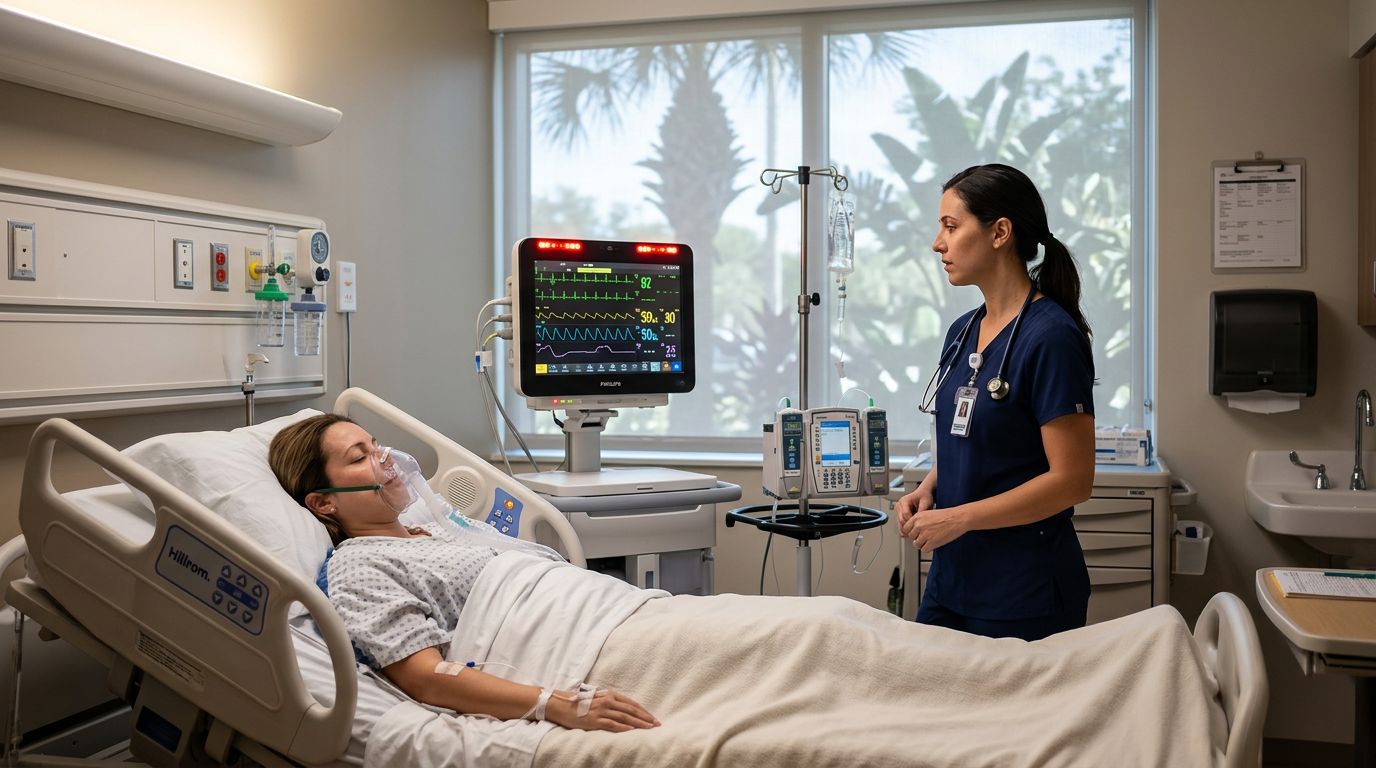
A post-op respiratory arrest can happen fast, and the warning signs often show up first on a monitor. When alarms are ignored, silenced, or set up badly, the harm can be far worse than a missed beep. For a family in Florida, that raises a hard question: was this a tragic complication, or was it monitor alarm negligence?
After surgery, patients depend on close observation. Nurses, techs, and anesthesia staff are supposed to catch danger early, then act before a slow decline becomes an emergency. When that chain breaks, the case can turn into a medical malpractice claim.
How post-op monitor alarms are supposed to protect patients
After surgery, a patient may still be under the effects of anesthesia, pain medicine, or sedation. Breathing can slow, oxygen levels can fall, and a patient may stop protecting their airway. Monitors are meant to catch those changes early.
Typical post-op monitoring may include pulse oximetry, heart-rate tracking, blood pressure checks, and sometimes capnography. Each tool gives staff a clue. Together, they help spot a problem before the patient reaches respiratory arrest.
That is why monitor alarms matter so much. A low oxygen alarm is not background noise. It is a warning that the body may be heading toward a crisis.
Sometimes the machine works, but people fail to respond. Other times the alarm settings are wrong, the sound is turned down, or no one is paying attention. In each case, the issue is not just the technology. It is the care around it.
When a missed alarm may point to negligence
Not every bad medical outcome is malpractice. Surgery carries risk, and some patients suffer complications even when staff do their jobs correctly. Still, a missed alarm can point to negligence when the warning signs were clear and the response was poor.
Common red flags include a monitor that was muted for too long, alarm limits set outside safe ranges, or a patient left without proper observation. A nurse may also chart normal vital signs while the patient is actually declining. That gap matters.
A few examples can help show the difference:
- A pulse oximeter alarm sounds repeatedly, but no one checks the patient.
- A nurse lowers the alarm volume during a busy shift and never restores it.
- Staff notice shallow breathing, yet wait too long to call for help.
- A patient on opioid pain medicine stops breathing, and the monitor data is not reviewed in time.
- A central monitor shows trouble, but no one assigned to watch it acts on the alert.
A monitor alarm is only useful if someone responds. A silent room, a busy nurse station, or a chart with missing entries can all become part of the proof.
In a Florida case, the key question is whether the care team met the accepted standard of care. If the answer is no, and that failure led to post-op respiratory arrest, the hospital or surgical team may be responsible.
Why respiratory arrest after surgery becomes so dangerous
Breathing problems after surgery are often a race against the clock. Oxygen can drop in minutes. Brain injury can begin soon after. The longer the patient goes without air, the more severe the harm becomes.
That is why early detection matters so much. A patient may show warning signs before arrest, such as confusion, low oxygen saturation, snoring or gurgling sounds, slow respirations, or a hard-to-wake condition. These signs should prompt action, not delay.
Post-op respiratory arrest may lead to:
- Brain injury from lack of oxygen
- Cardiac arrest
- Longer ICU stays
- A tracheostomy or long-term breathing support
- Permanent disability
- Wrongful death
The chain often starts small. Maybe the patient was oversedated. Maybe staff failed to reassess after pain medication. Maybe the alarm sounded, but nobody came fast enough. One missed step can quickly become a life-changing event.
Families often know something went wrong before they understand the details. A loved one was fine after surgery, then became unresponsive. Or the hospital gave vague answers. Those instincts are worth taking seriously.
What helps prove a Florida malpractice claim
A strong case depends on records, timing, and expert review. Florida medical malpractice claims also follow special legal rules, so early fact gathering matters. If you want the framework behind those rules, Florida medical malpractice laws explain the state’s process in more detail.
The most useful evidence often includes the following:
- The anesthesia record
- Nursing notes from recovery and the floor
- Vital-sign printouts and alarm logs
- Medication charts, especially opioid doses
- Rapid response or code blue records
- Transfer notes and ICU records
- Witness statements from staff or family
- Discharge paperwork and incident reports
Each item can fill in a different part of the timeline. Together, they may show when the patient began to decline, who saw the warning signs, and how long it took to act.
Timing is especially important. If the chart says the alarm went off at one time, but the code team was not called until much later, that gap may matter. So can a sudden change in oxygen levels, respiratory rate, or sedation level with no matching response.
A lawyer may also compare the hospital’s actions with accepted medical practice. That usually requires a qualified medical expert who can review the file and explain whether the team should have acted sooner.
Who may be responsible for the harm
Liability in these cases is not always limited to one person. A nurse may have failed to watch the monitor. A physician may have ordered too much sedation. A hospital may have understaffed the unit or failed to train staff on alarm response.
Sometimes equipment is part of the problem. A monitor may have been maintained poorly, calibrated wrong, or used with unsafe settings. Other times, the issue is policy. If the hospital had weak alarm procedures, the harm may trace back to that system failure.
That matters because the legal claim should match the facts. One case may focus on a single missed bedside response. Another may involve a broader breakdown in postoperative care. A careful review can separate those issues.
Florida law also gives hospitals and medical groups a chance to respond before a lawsuit is filed. That pre-suit process can shape the case early, which is one reason the first records review is so important.
What compensation can cover after a post-op arrest
A respiratory arrest can leave a patient with bills, lost income, and long-term care needs. When the injury is severe, the costs may last for years.
Compensation in a Florida malpractice claim may include:
- Medical bills
- Rehabilitation and therapy
- Future care needs
- Lost wages
- Loss of earning ability
- Pain and suffering
- Wrongful death damages, in fatal cases
The size of a claim depends on the injury and the proof. A brief recovery delay is one thing. Permanent brain injury is another. The legal value changes with the facts, the records, and the medical impact.
Families should also keep track of out-of-pocket costs. Travel, home care, medical equipment, and missed work can add up fast. Those details may matter later.
Choosing a Florida lawyer after a monitor alarm failure
These cases are medical, technical, and time-sensitive. You want a lawyer who has handled Florida malpractice claims before and knows how to read hospital records.
When you compare firms, look for qualities of a good medical malpractice lawyer, including experience with hospital cases, access to medical experts, and a clear plan for the records review. A lawyer should also explain the process in plain language. You should not have to guess what comes next.
Ask direct questions about the case work:
- Who will review the chart?
- How will the lawyer get the alarm data?
- What deadlines apply?
- How does the firm handle the pre-suit process in Florida?
- Has the firm handled post-op injury cases before?
Clear answers matter. A firm that treats your concerns like a checklist usually misses the human side of the claim. A firm that listens carefully can spot the details that matter most.
The first meeting should leave you with a better sense of what happened, what proof exists, and whether the case has legal merit.
Conclusion
A missed alarm after surgery can look small on paper and devastating in real life. In a post-op respiratory arrest case, the question is often whether staff saw the warning signs and failed to act in time.
If that happened in Florida, the records may tell the story. They can show whether the alarm was ignored, the patient was not watched closely enough, or the response came too late. That is the kind of proof that can support a malpractice claim and help a family understand what went wrong.