
Florida No-Contact Motorcycle Crash Claims and the Proof That Counts
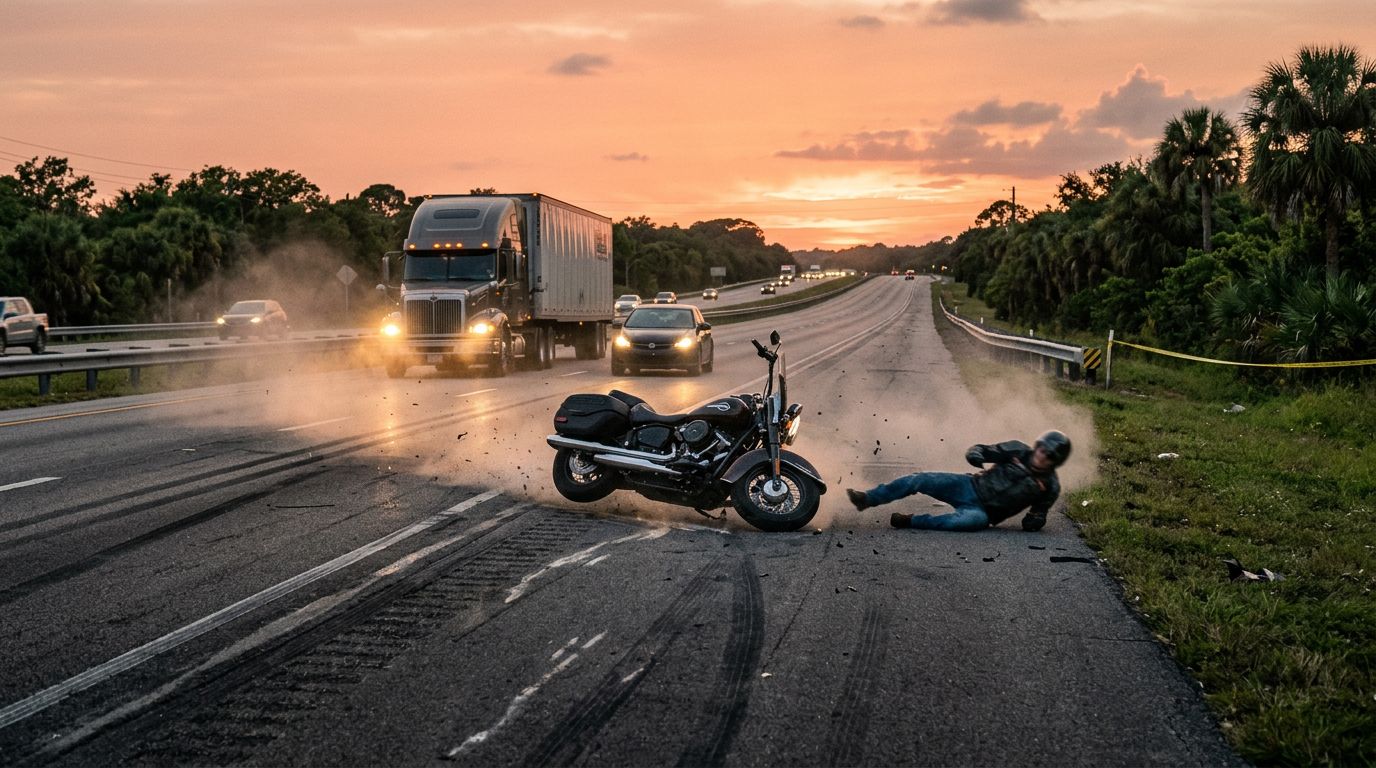
A rider can be forced off the road without ever touching another vehicle. That single detail can make a case harder, because insurers often treat Florida no-contact motorcycle crash claims like a blame puzzle instead of a safety issue.
If a driver cut you off, drifted into your lane, or braked hard enough to make you lay the bike down, the missing impact does not erase the crash. The real question is whether the driver’s actions caused you to lose control.
The best claims tell that story clearly. The proof does the heavy lifting, and the right evidence can make the difference between denial and payment.
What a no-contact motorcycle crash looks like in Florida
A no-contact crash happens when another driver’s conduct forces a rider down, even though the vehicles never collide. The driver might swerve into your lane, crowd you at an intersection, make an unsafe turn, or create a road hazard that leaves you nowhere to go.
These crashes often happen fast. A rider sees a truck drift left, taps the brakes, and hits loose gravel at the edge of the lane. Or a car cuts across traffic, and the rider lays the bike down to avoid a side impact. The result still comes from someone else’s careless driving.
That is why these claims can be so frustrating. There may be no dent on the other car, no broken mirror, and no obvious point of impact. Still, the law does not require a physical bump to prove a driver caused the wreck.
Florida riders also face a common problem after the crash, people assume the bike “just went down.” That guess can be wrong. A careful case looks at the roadway, the timing, the path of travel, and the driver’s choices in the seconds before the fall.
A no-contact crash is still a crash if another driver forced the loss of control.
Proof that a driver forced you down
In Florida no-contact motorcycle crash claims, proof matters more than drama. Insurance adjusters want facts they can verify. That means the claim should connect the other driver’s conduct to your loss of control in a way that feels solid and plain.
The strongest cases often combine several kinds of evidence. No single item has to carry the whole file.
| Evidence | What it can show | Why it matters |
|---|---|---|
| Witness statements | The other vehicle cut you off, merged unsafely, or drove erratically | Helps confirm your account |
| Dashcam or helmet video | The driver’s movement before the crash | Shows how fast the situation changed |
| Police report | The scene, statements, and officer observations | Creates an early record |
| Photos of the roadway | Skid marks, debris, lane position, shoulder conditions | Helps explain how you lost control |
| Medical records | Timing and type of injuries | Links the crash to the harm |
| Nearby camera footage | Traffic lights, lane changes, or sudden braking | Can confirm fault when no contact happened |
The most useful evidence often disappears first. Security video gets erased. Skid marks fade. Witnesses leave the scene. That is why quick action matters.
A strong claim also looks at the shape of the crash itself. For example, damage to the bike may match a sudden swerve or a ditch entry. Your helmet, riding gear, and body injuries may also fit the way you went down. Those details help fill the gap left by the missing collision.
The police report can help, but it should not be treated as the final word. Officers arrive after the fact. They rely on what they can see and what people say. If the report is thin or wrong, other evidence can still support your case.
Why fault can still rest with the other driver
Florida uses a fault-based system for injury claims, so the key issue is who caused the harm. A driver does not get a pass because the bike did not touch their car. If their unsafe move caused you to crash, they can still be responsible.
That said, insurers often push back harder in these cases. They may argue that you were speeding, braking too late, or riding too close to the edge of the lane. They may also say no one can prove the other driver was involved at all.
That is where the facts matter. If a car cut into your lane and forced evasive action, the lack of contact is only one detail. It does not erase the driver’s role. Florida comparative fault rules can still apply, but shared fault is not the same as no recovery. A claim can still have value when the evidence shows the other driver started the chain of events.
Consider the difference between a guess and a documented story. A guess sounds like, “I went down and a car was nearby.” A documented story says, “The driver entered my lane, I swerved to avoid a collision, the bike slid on the shoulder, and three witnesses saw it happen.” The second version gives the claim structure.
That structure also helps with insurance negotiations. Adjusters are less likely to dismiss a case when the facts line up from multiple directions. They may still argue about value, but the conversation changes once fault is clearer.
What to do after the crash to protect the claim
The first hours after a crash can shape the entire claim. If you are able, move with care and focus on proof before it disappears. If you need a quick checklist, steps to take after a motorcycle accident can help you preserve the record early.
Start with medical care. Even if you think the injuries are minor, get checked. Motorcycle injuries often get worse after the shock fades, and medical records tie your symptoms to the crash date.
Then protect the scene details. Take photos of the roadway, your bike, the shoulder, skid marks, broken parts, and any visible hazards. Get names and phone numbers from witnesses. If traffic cameras or nearby businesses may have seen the event, note the location right away.
A short list can help keep the next steps clear:
- Get medical help and follow through with treatment.
- Ask law enforcement for the crash report number.
- Photograph the scene, the bike, and your gear.
- Write down what the other driver did before you went down.
- Save damaged equipment, helmets, and clothing.
Do not repair or discard anything too soon. A broken mirror, bent lever, or torn jacket may support your version of events. The physical items matter because they help tell the story of force, direction, and impact.
Also be careful with insurance calls. A recorded statement given too early can create problems if you are still in pain or unsure of the details. Short, accurate facts are better than guesses.
How a Florida motorcycle accident lawyer builds a no-contact case
These claims often need fast investigation. A lawyer can move quickly to preserve video, interview witnesses, and ask for records before they vanish. That early work is often the difference between a weak file and a strong one.
A good case build usually includes scene work, vehicle inspection, and a review of the medical timeline. It may also include traffic camera requests, cell phone records when relevant, and help from crash reconstruction professionals. When the evidence is assembled well, the claim becomes easier to explain and harder to dismiss.
That is one reason many riders look for hiring a Florida motorcycle accident attorney soon after the crash. The sooner someone starts collecting proof, the better chance the case has of showing what the driver did and how it forced the bike down.
A lawyer also handles the pushback. Insurers may focus on the missing contact and ignore the rest of the scene. Counsel can respond with witness accounts, photos, police records, and medical proof that ties the crash to your injuries. If settlement talks stall, the case can be prepared for litigation.
For riders, that matters because the injury burden is often heavy. Bills grow. Work time is lost. Pain can make every task harder. A claim should account for all of that, not only the first ER visit.
What holds a no-contact claim together
The heart of the case is simple. You need proof that another driver’s unsafe move caused you to lose control. Once that connection is clear, the lack of physical contact stops being the headline.
Florida no-contact motorcycle crash claims rise or fall on evidence, timing, and consistency. Photos, witnesses, video, medical records, and a clear account of the driver’s behavior all help build that link. The sooner those pieces are preserved, the stronger the claim stays.
If a driver forced you down, the absence of a collision does not close the door. It just means the facts have to speak clearly.