
Florida Traffic Light Outage Crash Claims: Signal Logs That Help
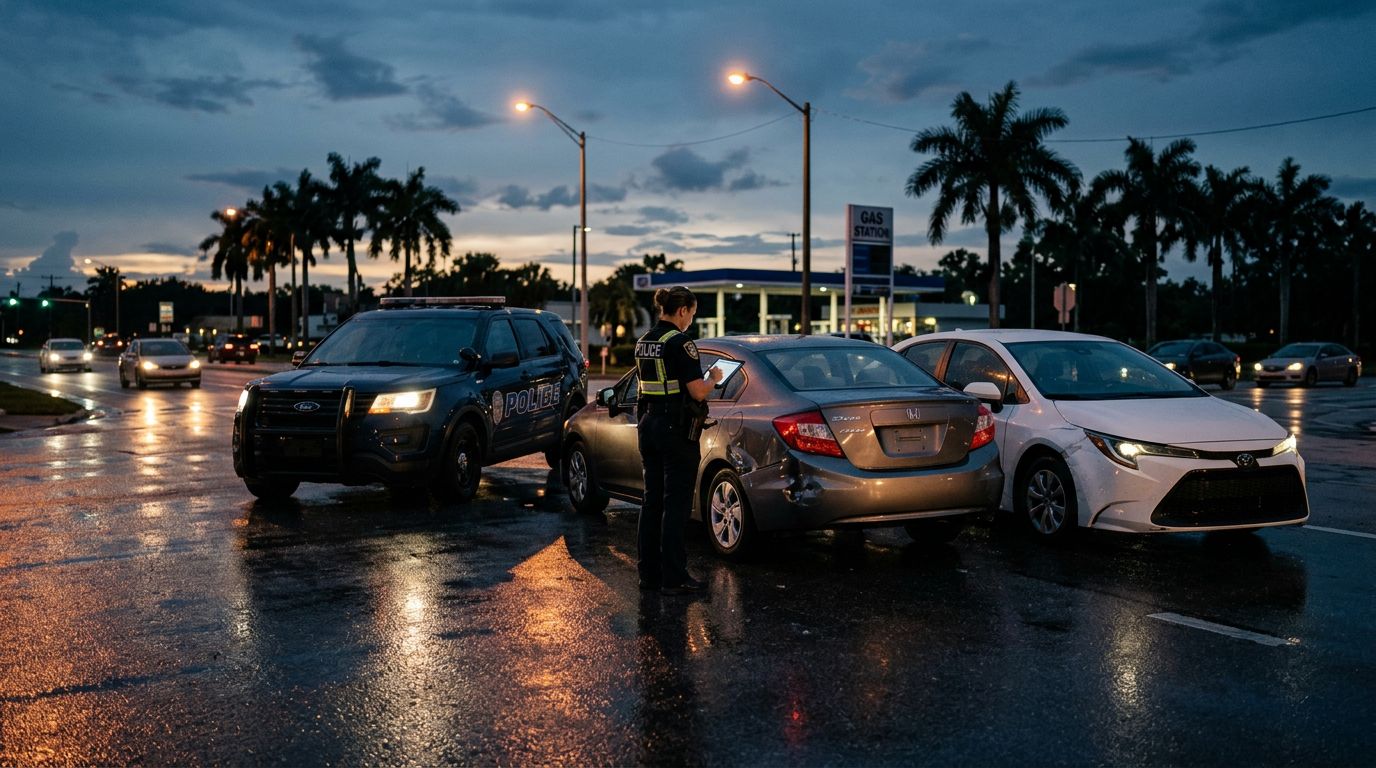
A dark intersection can turn a normal drive into a hard fault fight. Who had the right of way when the signal was out, and what does the proof actually show?
That answer often decides Florida traffic light outage crash claims. Drivers may remember the scene differently, and insurers may look for any reason to shift blame.
The strongest cases usually start with time-stamped records. Signal logs, maintenance notes, and nearby video can do what memory cannot.
Why a dead signal changes the fault fight
A working light gives drivers a clear order. Red means stop, green means go, and yellow means slow down with care. When the light goes out, that order disappears.
Then the whole crash story gets messy fast. One driver may say the other ran a red light. Another may say the signal was dark. A police report may capture the scene, but it may not pin down the exact status of the light at the instant of impact.
That missing detail matters because insurers look for fault. If the crash happened at a busy Florida intersection, even small details can change the outcome. Speed, distraction, turning movements, and lane position all matter more when the signal failed.
A broken light does not end the claim. It raises the need for better proof.
A dead signal also changes how people react. Drivers may hesitate, brake late, or enter the intersection at the wrong time. That is why witnesses often give clashing accounts. One person saw a green arrow. Another saw flashing lights. Someone else only heard the crash.
When that happens, the case can stall unless someone pulls the records tied to the intersection itself.
What signal logs can show after a crash
Signal logs are the traffic system’s memory. They can show when the light failed, how long it stayed down, and when repairs began. In many cases, they also show whether the system was running on backup mode or had gone completely dark.
Those details help in a few ways. First, they can confirm that the outage existed before impact. Second, they can show whether the problem had already been reported. Third, they can reveal whether a repair crew arrived after the crash or hours before it.
For a broader checklist, what evidence strengthens a car accident lawsuit shows how these records fit into the rest of the proof.
The log may come from a city traffic office, a county department, FDOT, or a private maintenance vendor. Some intersections also keep controller data inside the signal cabinet. That data can show power loss, reset times, and fault alerts.
A simple way to think about it is this, the log tells you when the light stopped behaving like a normal light.
The timeline is often more valuable than the argument.
That is why quick action matters. Some systems keep detailed records for only a short time, and some are overwritten during routine work. If the right person does not ask early, the proof may be lost before the claim gets moving.
Records that work beside the signal log
Signal logs are powerful, but they work best with other records. A strong file usually connects the crash scene to the exact time of the outage.
For a claim built around a malfunctioning light, these records often help most.
| Record | What it can show | Why it matters |
|---|---|---|
| Signal controller log | Outage time, reset time, fault alerts | Ties the crash to the light’s status |
| Repair ticket or work order | When the problem was reported and fixed | Shows how long the intersection may have been unsafe |
| Police crash report | Officer notes, witness names, scene details | Captures what was visible right after the crash |
| Dashcam or security video | Signal color, traffic flow, impact sequence | Gives a second-by-second account |
| Witness statement | What people saw before and after the collision | Helps when video is missing |
| Scene photos | Signal heads, damage, skid marks, road signs | Locks the scene in place before cleanup |
Together, these records can show more than one detail at a time. They can show whether the light was dark, whether it flashed, and whether another driver entered carelessly anyway.
They also help against bad memory. People often blur time after a crash. A witness may be honest and still be wrong about the sequence. A camera or log fixes that gap.
If the crash involved an injury, the records matter even more. They can help tie the scene to the medical claim and protect the case from guesswork.
How Florida fault rules affect a dead-light collision
Florida fault rules can make a traffic light outage claim more than a basic insurance dispute. If the injured driver is accused of causing the crash, the defense may point to speed, distraction, or a late response at the intersection.
That is why signal logs matter in a state that uses comparative fault. If a jury finds a claimant more than 50 percent at fault in a negligence case, recovery can be blocked. So the evidence has to do more than show the light was broken. It has to show what each driver did before impact.
Recent changes to Florida car accident laws make fault proof even more important in mixed-liability crashes.
A dark signal does not excuse unsafe driving. Drivers still have to slow down, watch the road, and enter with care. At the same time, a motorist who approached cautiously can still get blamed if the other side controls the narrative.
That is where the records help again. A log can support the claim that the intersection was down. Video can show the approach speed. Witnesses can confirm which car entered first. Put together, the evidence can cut through a lot of noise.
The best cases show both parts of the story, the malfunction and the driver behavior. One without the other leaves room for dispute.
Steps that protect a claim after the crash
The first hours after a traffic light outage crash are important. Small choices can shape the whole claim later.
- Call 911 and report the signal problem. Give the exact intersection, direction, and time if you can.
- Photograph the scene before anything changes. Capture the signal heads, vehicle positions, skid marks, weather, and nearby signs.
- Get names and phone numbers from witnesses. Nearby businesses may also have camera footage that disappears quickly.
- Seek medical care right away. Gaps in treatment can weaken both the injury claim and the timeline.
- Ask a lawyer to send preservation letters. The city, county, FDOT, or a contractor may hold the most important records.
Once those pieces are in place, the claim can move on to notice, investigation, and settlement talks. If you want a general roadmap, the step-by-step guide to Florida car accident claims gives a useful structure for the next stage.
The point is simple. Do not rely on memory alone, because memory fades fast after a crash.
Conclusion
Traffic light outage crash claims rise or fall on proof, and the best proof is often hidden in the records. Signal logs, repair tickets, and video can show what the intersection was doing when the crash happened.
When the light goes dark, the timeline matters more than the guesswork. A clear record can protect a careful driver and expose a careless one.