
Florida CRNA Malpractice and Hospital Liability in Sedation Injury Cases
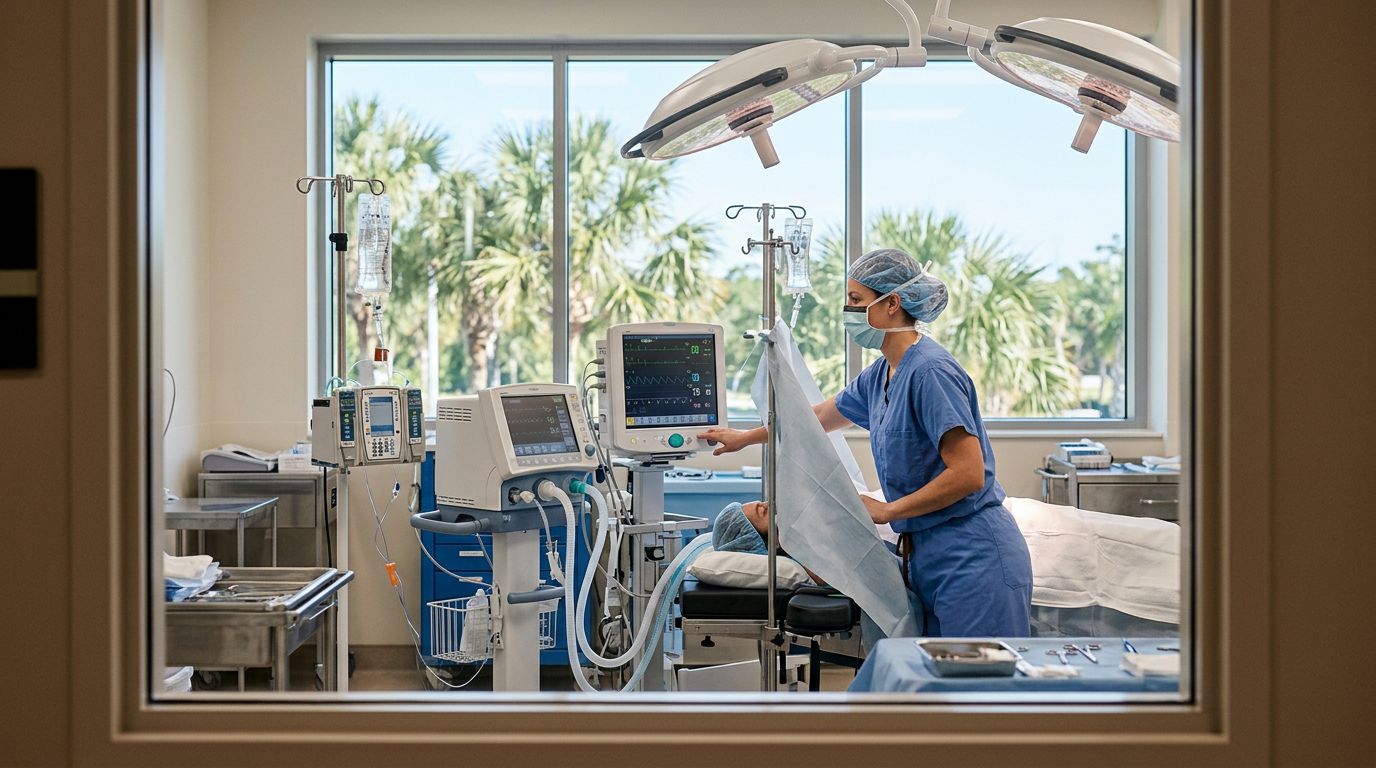
Sedation is supposed to make care safer and easier to tolerate. When a certified registered nurse anesthetist, or CRNA, misses a warning sign, the result can be a serious injury instead of a smooth recovery.
That matters because Florida CRNA malpractice claims often turn on two separate questions. Did the CRNA break the standard of care, and did the hospital also fail in its own duties?
The answer is not always obvious. The chart, the timing, and the staffing decisions usually tell the real story.
How sedation injuries happen in Florida hospitals
CRNAs manage medications, monitor breathing, track blood pressure, and watch for trouble during and after sedation. When that work goes well, the patient wakes up safely and moves through recovery without a problem.
When it goes wrong, the harm can be fast. A patient may stop breathing long enough to suffer brain injury. Medication may be given in the wrong dose. Oxygen levels may drop and no one reacts in time. In some cases, the patient aspirates stomach contents, wakes up confused, or falls in recovery because the team did not keep up with the level of sedation.
Many cases start before the first drug is given. A careful anesthetic plan should reflect the patient’s history, allergies, sleep apnea, heart issues, lung disease, and recent medications. If those facts are missed, the risk climbs before the procedure even begins.
A bad outcome by itself does not prove malpractice. A preventable injury with ignored warning signs often does.
After the procedure, the danger can continue. A sedated patient needs close observation until alertness and breathing are stable. If discharge comes too early, or if the handoff between the operating room and recovery room is sloppy, the patient can end up hurt hours later.
When a CRNA can be liable for malpractice
A CRNA can be sued when the care falls below the accepted standard and causes harm. That sounds simple, but the proof often lives in the details.
A claim usually has to show four things:
- The CRNA had a duty to provide careful care.
- The CRNA breached that duty.
- The breach caused the injury.
- The injury caused losses, such as medical bills, disability, or pain.
The most common CRNA mistakes are often easy to describe and hard to dismiss. The medication may be wrong. The dose may be too high. Oxygen levels may be ignored. Airway problems may be treated too late. The patient may be discharged before the sedation has fully worn off.
Here is a quick look at how those claims often compare:
| Possible claim against the CRNA | Common example | What it may show |
|---|---|---|
| Medication or dosing error | Too much sedative, or the wrong drug | Respiratory depression, low blood pressure, delayed recovery |
| Monitoring failure | Falling oxygen levels were missed | Delayed response and preventable injury |
| Poor airway management | Trouble breathing was not handled fast enough | Brain injury, aspiration, cardiac stress |
| Unsafe recovery decision | The patient was sent out too soon | Confusion, fall risk, re-sedation |
The key point is that the injury must connect to the mistake. If the patient had a rare complication that could not be prevented, that may not be malpractice. If the CRNA ignored clear signs of distress, the case looks different.
A Florida case may also involve more than one provider. Depending on the facts, the anesthesiologist, surgeon, pharmacist, or other staff members may share responsibility if their actions contributed to the injury.
When the hospital can share liability after sedation injuries
Hospitals are not automatically liable just because the injury happened on their property. Florida law usually requires proof that the hospital did something wrong itself, or that the provider’s conduct can be tied to the hospital under the facts of the case.
That can happen in several ways. The hospital may hire someone without proper review. It may fail to supervise staff. It may use weak policies for monitoring sedated patients. It may understaff the recovery area. It may leave out needed equipment. It may also fail to respond when alarms, charts, or staff reports show that the patient is slipping into trouble.
Common hospital failures include:
- poor credentialing or hiring decisions
- weak supervision of anesthesia care
- broken communication between the operating room and recovery room
- understaffing in PACU or post-op care
- missing or faulty monitoring equipment
- unsafe discharge procedures after sedation
The recovery room matters a great deal. A sedated patient who is left alone may fall, pull out lines, or stumble before steadiness returns. When that happens, the claim can overlap with liability for patient falls due to medical negligence, especially if staff knew the patient needed more help.
Hospital liability also becomes more likely when the harm comes from a system failure, not just one person’s bad choice. A single mistake can still be enough for a claim against the provider who made it. A larger breakdown can open the door to the hospital itself.
The record matters here too. If the hospital’s own notes show understaffing, delayed response times, or missing orders, those details can support the claim. If the hospital tries to shift blame to an outside anesthesia group, the case may still survive if the hospital’s own negligence played a role.
Evidence, deadlines, and consent issues that can make or break a claim
The first move after a sedation injury is often the most important one: preserve the proof. Medical records can disappear into different systems, and memories fade fast.
Start with the anesthesia record, the PACU chart, medication logs, vital sign trends, discharge papers, and any notes about emergency response. Those records can show when the patient’s condition changed and who responded, or failed to respond. A detailed guide on collecting evidence for Florida anesthesia errors explains why time stamps and recovery notes matter so much.
A clear timeline is often stronger than a general complaint. If the oxygen level dropped, when did it happen? If the patient became confused or unsteady, who knew about it? If the discharge came too early, what did the chart say about the patient’s condition at that moment?
If the injury involved a consent problem, that may create another layer of the case. Consent becomes a serious issue when the patient never got a fair explanation of the risks, alternatives, or likely effects before sedation began. It can matter even more if the consent discussion happened after medication was already given. In those situations, informed consent rights for surgical patients may become part of the claim.
Florida malpractice cases also have strict pre-suit steps. That usually includes an investigation, a notice of intent to sue, and support from a qualified medical expert. Deadlines are short, often two years from when the injury was discovered, with other limits and exceptions. Waiting too long can make a strong case harder to use.
What a strong sedation injury claim usually shows
The best claims are not built on anger alone. They are built on facts that line up with the medical record.
A strong case often shows that the patient was stable enough for ordinary care, but the team failed to provide it. It may show that warning signs were present and ignored. It may also show that the hospital’s staffing, supervision, or discharge process made the injury more likely.
That is why a Florida CRNA malpractice claim often ends up being a careful search for responsibility. The CRNA may be the main defendant. The hospital may share the blame. Sometimes both do.
Conclusion
A sedation injury can turn a routine procedure into a long recovery. When that happens, the main question is not whether the result was painful. The question is whether the CRNA, the hospital, or both failed to meet the required standard of care.
The strongest cases usually start with the records, the timing, and the facts in the chart. They also move quickly, because Florida’s malpractice rules and deadlines do not wait for a patient to feel ready.
If the injury involved breathing trouble, a medication mistake, a recovery-room fall, or a rushed discharge, the next step is to get the case reviewed before key evidence gets harder to find.