
Florida Elevator Fall Claims: Misleveling and Maintenance Records
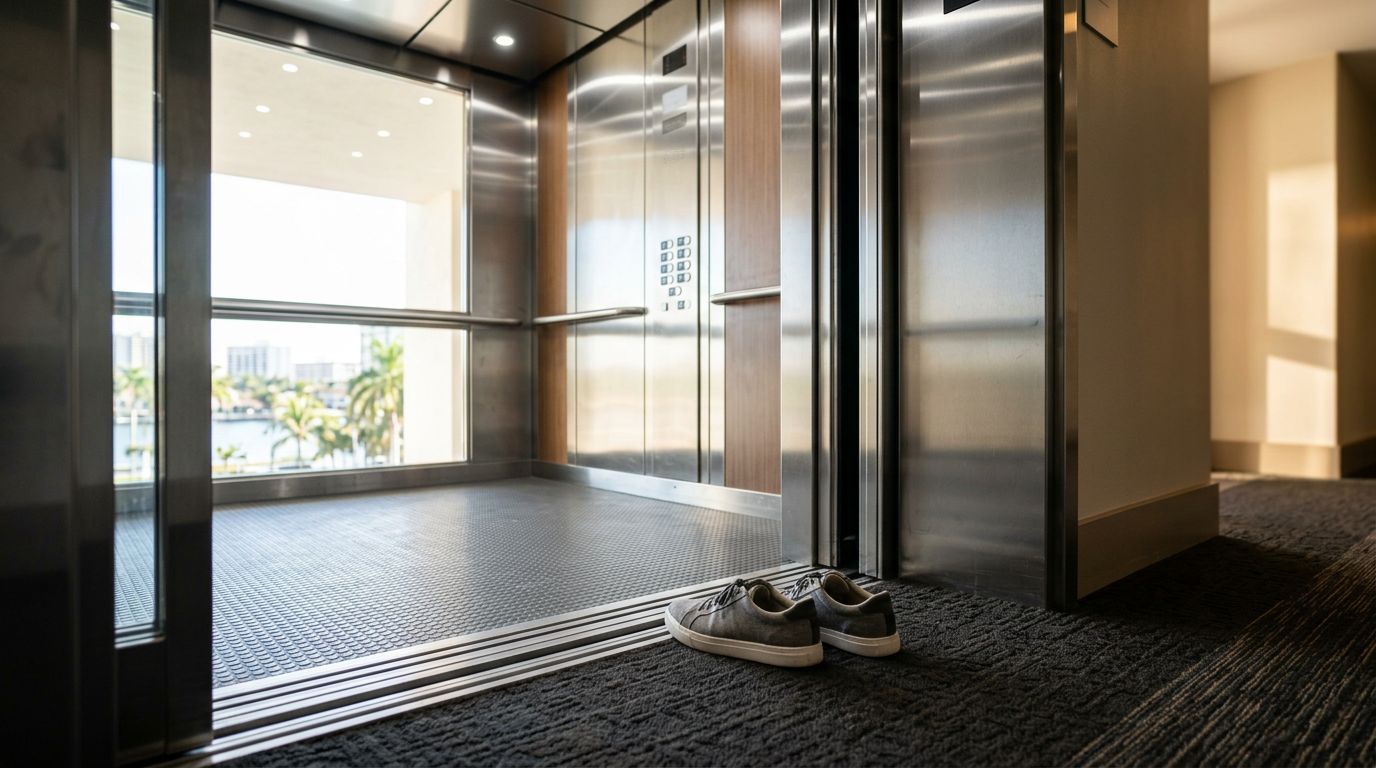
A one-inch gap between the elevator cab and the floor can send someone hard to the ground. That tiny change can twist an ankle, break a wrist, or knock a rider backward before they know what happened.
In Florida, these cases often turn on two questions. Did the elevator mislevel, and did someone fail to keep proper maintenance records? That paper trail can decide whether a fall looks like a random accident or a preventable safety failure.
How elevator misleveling turns a short ride into a fall
Misleveling happens when the elevator stops above or below the landing floor. The difference may look small, but it can create a dangerous step at the doorway.
That gap is enough to catch a foot, cane, walker, cart wheel, or shoe heel. People carrying groceries or luggage are also at risk, because they may not see the height change before they move forward.
The landing area is where many injuries happen. A rider steps out expecting a flat surface, then lands awkwardly or falls into the hallway. Some falls happen inside the cab, while others happen as the person exits.
Common injuries include:
- ankle sprains and fractures
- knee and hip injuries
- wrist and shoulder injuries from trying to catch a fall
- head injuries when the rider strikes the floor or wall
- back injuries from the sudden twist or impact
Older adults often face the highest risk, but misleveling can injure anyone. The danger grows when the elevator has a history of uneven stops, slow leveling, or repeated service calls.
A cab that stops even slightly above or below the floor can create a fall hazard in an instant.
When that problem keeps showing up, it points to more than bad luck. It points to a safety issue that should have been found and fixed.
Why maintenance records matter so much in elevator injury claims
Maintenance records are often the strongest proof in an elevator case. They show what the owner or repair company knew, when they knew it, and what they did next.
Those records can include inspection dates, repair notes, work orders, service calls, parts replaced, and complaints from tenants or guests. They may also show whether the elevator had the same leveling problem before your fall.
A few missing pages can matter as much as a broken part. If the records are incomplete, inconsistent, or show repeated delays, that can support a negligence claim. It may also raise questions about how carefully the elevator was monitored.
Records often help answer these questions:
- Was the elevator inspected on schedule?
- Did technicians note misleveling before the fall?
- Were worn parts replaced, or only adjusted?
- Did the owner ignore repeat complaints?
- Was the elevator put back in service too soon?
Electronic logs can matter too. Some systems track faults, door events, brake issues, or controller errors. Those entries may line up with the time of the injury.
For injured riders, the record trail often tells a clearer story than witness memory. People forget details. Logs do not. That is why early evidence collection matters so much in elevator fall claims.
Who may be liable after a Florida elevator fall
More than one party may share responsibility. The building owner, property manager, maintenance contractor, and sometimes the company that installed or serviced the elevator can all come into the picture.
The building owner usually has a duty to keep the premises reasonably safe. If staff knew about misleveling and did nothing, that can support liability. The same is true when complaints kept coming in and no meaningful repair followed.
A maintenance company can also be responsible if it missed a known issue, used the wrong repair, or failed to test the system properly after service. In some cases, the problem may involve faulty parts or poor installation, which can raise claims against other companies in the chain.
A broader look at the claim process is in the Florida elevator injury claims guide, which explains how negligence is usually shown in these cases.
Florida claims often depend on notice and control. If a business had notice of the defect, or should have found it during routine service, that can matter. The same goes for repeat complaints from tenants, workers, or guests.
Shared fault is common in elevator cases. One company may own the building, while another handles maintenance. The injured person still needs to prove that a safety lapse caused the fall, but the final responsibility may rest with more than one defendant.
Evidence that strengthens an elevator fall case
The best cases are built with records, photos, and prompt reports. The sooner the evidence is preserved, the harder it is for anyone to rewrite what happened.
A quick chart helps show how each piece fits together.
| Evidence | What it can show | Where it comes from |
|---|---|---|
| Photos of the landing | The gap between the cab and the floor | Phone photos, building cameras |
| Witness statements | How the fall happened and what others saw | Riders, tenants, employees |
| Incident reports | Whether the building documented the event | Management, security, front desk |
| Medical records | The nature and timing of the injuries | ER, urgent care, follow-up doctors |
| Maintenance logs | Prior complaints, repairs, and repeat misleveling | Owner, contractor, service company |
That evidence tells a cleaner story than a memory fight. It can show a pattern, not just a single bad moment.
Surveillance video is especially useful if the building has it. It may capture the elevator opening at the wrong level, the rider stumbling, or staff responding after the fall.
Repair notes can also matter because they may show whether the elevator had been adjusted several times without a real fix. If the same problem keeps returning, that history becomes hard to ignore.
What to do right after an elevator fall
A person who gets hurt in an elevator should act fast. Pain can mask the full injury, and the building may move quickly to control the scene.
Start with these steps:
- Get medical care right away, even if the injury seems minor.
- Report the fall to building staff or management before leaving.
- Take photos of the floor gap, doorway, cab, and any warning signs.
- Ask for witness names and phone numbers.
- Keep the shoes, clothes, or items you were carrying.
- Avoid signing a statement until the facts and records are reviewed.
If you can, write down the time, floor, and what the elevator did. Did it stop above the landing? Below it? Did the doors reopen or close too fast? Small details can become important later.
Do not assume the building will keep all the records for you. Maintenance logs, camera footage, and incident reports can disappear if no one asks for them quickly.
Conclusion
A misleveled elevator may look like a small defect, but the injuries can be serious. The real answer often sits in the maintenance file, where inspection dates, repair notes, and repeated complaints may show how the problem developed.
That is why maintenance records matter so much in these claims. They can support the injured person’s account, identify who failed to act, and show whether the fall was preventable.
When an elevator stops above or below the floor, the gap can speak for itself. The records usually tell the rest of the story.