
Florida Workers’ Comp Drug Tests After a Job Injury
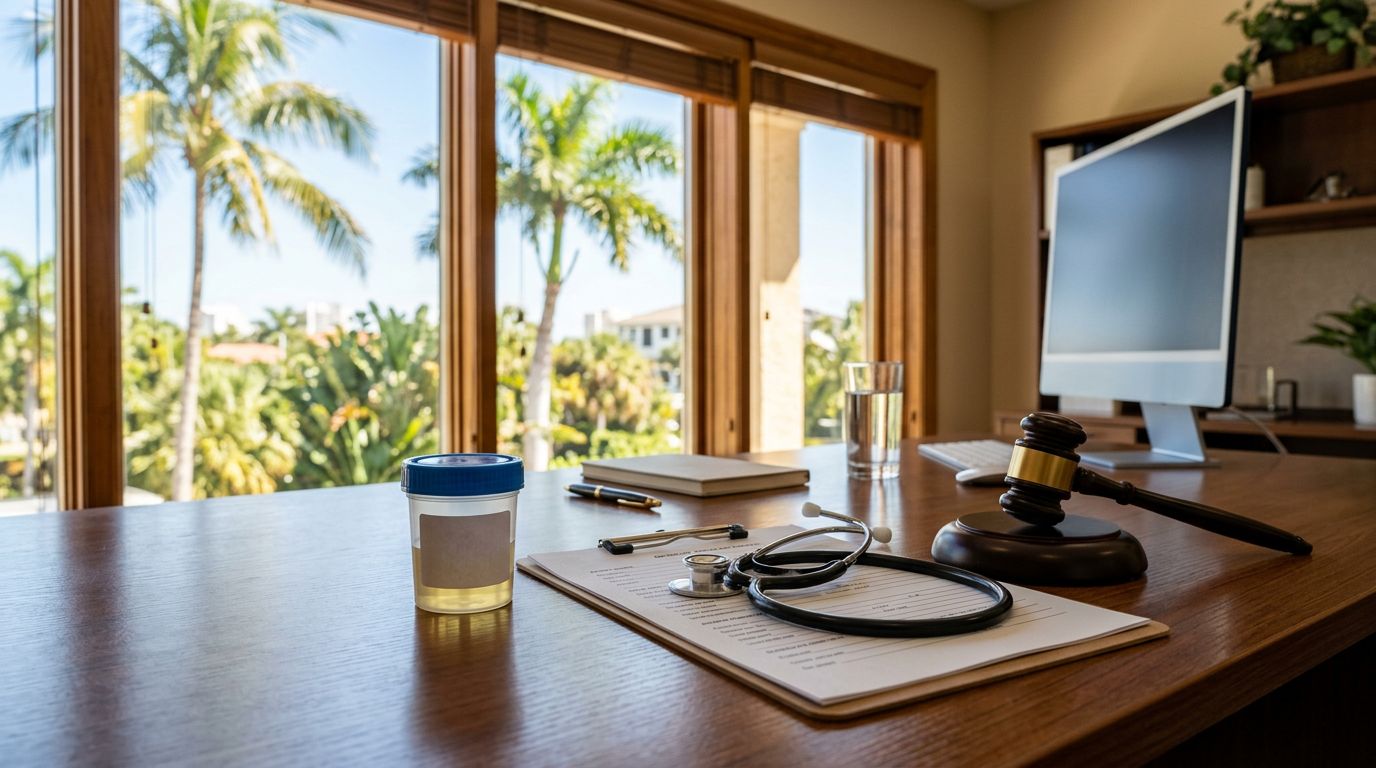
A Florida workers comp drug test can feel like a second accident. The injury hurt your body, and the test can put your benefits at risk.
In Florida, a post-injury test can change the direction of a workers’ comp claim, especially when the employer has a valid drug-free workplace program. That does not mean every injured worker loses benefits, but it does mean the details matter fast.
If you’ve been sent for testing, the timing, the paperwork, and the employer’s policy all matter. The next step is knowing when the test counts and what it can do to your claim.
When a Florida employer can require testing after an injury
Florida law allows some employers to require drug testing after a workplace accident, but only when they have a proper drug-free workplace program in place. The program has to follow state rules and treat covered employees the same way.
That matters because a test is not just a medical event. It can become part of the legal record. If the employer has the right policy, the carrier may use the result to argue that drugs caused the injury or made it worse.
The timing also matters. A test ordered right after a serious accident carries more weight than a vague request made later. Still, an employer cannot rely on a test if it skipped required steps or applied the policy unfairly.
A test result only carries the weight Florida law gives it, and that weight depends on the employer’s compliance.
If you are hurt, the first hours after the accident still count. Report the injury, get medical care, and write down what happened. A solid start can help later if the claim turns into a dispute, and reporting a work injury in Florida within 24 hours is often where that protection begins.
What a positive or refused test can mean for your claim
A confirmed positive test can give the insurer a legal presumption that drugs caused the injury. That is a serious obstacle. A refusal can be treated the same way.
The practical effect is simple. The carrier may deny medical care, deny wage benefits, or question whether the injury happened as claimed. A preliminary screen alone does not tell the whole story, though. The test has to be handled correctly, confirmed properly, and tied to a valid policy.
Here is a quick look at the usual outcomes:
| Test result or event | Common effect on a claim | Important limit |
|---|---|---|
| Negative test | The claim may move forward normally | Other issues can still delay benefits |
| Positive confirmed test | The insurer may argue drugs caused the injury | The employer must have a valid drug-free workplace program |
| Refusal to test | It can be treated like a positive result | The facts around the refusal still matter |
| Improperly handled sample | The result may carry less weight | Chain of custody and policy compliance matter |
A refusal needs special care. If the worker leaves before the sample is collected, or declines the test without a clear reason, the insurer may treat that as a refusal. That can be just as damaging as a confirmed positive result.
The key point is that the result is not the only issue. The process matters too. If the employer rushed the test, skipped required notices, or handled the sample badly, the defense may not hold up.
Why a positive result does not always end benefits
A positive result is serious, but it does not automatically end every Florida workers’ comp claim. The employer still has to show that its program was valid and that it followed the rules.
If the employer did not have a proper drug-free workplace program, or if it did not apply the rules equally, the result may not block benefits the way the insurer hopes. The same is true if the test was mishandled or the paperwork is weak.
Prescription medication can also matter. Some injured workers take medicine that may affect a result, and those records deserve a close look. A lawyer can compare the test, the medical records, and the employer’s policy to see whether the carrier is overreaching.
A worker may also request a retest of part of the sample within 180 days, usually at the worker’s expense. That request does not erase the first result, but it can matter if the first test is disputed.
The employer must also keep the test information confidential. A workers’ comp file is not a gossip sheet for the office. If someone starts sharing test details with coworkers, that is a problem on its own.
Florida’s core workers’ comp testing rules still control these cases, even as some employer rules continue to change. The important part is this, the insurer cannot skip the legal steps and still expect a clean denial.
What to do after the test
The hours after testing are easy to waste. That is when workers get confused, sign forms too fast, or assume the result will sort itself out.
Start by keeping every piece of paper you get from the employer, the clinic, or the hospital. Write down the time of the test, who sent you, and what you were told. If you took prescriptions or over-the-counter medicine, make a list now, while the details are fresh.
Use this short checklist:
- Ask for the test order or written notice.
- Keep the name of the clinic, lab, or hospital.
- Write down every medication, including prescriptions and supplements.
- Save discharge papers, work status notes, and witness names.
- Do not guess about the result before you see the paperwork.
- Ask about the retest process if you want to challenge the sample.
The earliest steps after an injury often decide how much trouble follows. A clear record helps if the insurer later claims you refused the test or that your story changed. For a fuller roadmap, the Florida workers’ compensation first 24 hours checklist can help you keep the right documents in order.
If the employer says the test was positive, ask for the basis of the decision. Was it a confirmed result, or just a screen? Was the policy followed? Was the chain of custody complete? Those answers matter because a weak file can turn a strong denial into a weak one.
How drug tests affect medical care and wage checks
A bad test result can do more than slow your case. It can also interrupt care and delay pay.
Florida workers’ comp can cover medical treatment and wage benefits when the claim is accepted. If the insurer denies the claim after a test, both of those pieces can stop at the same time. That is why workers often feel the pressure right away.
If you miss work, wage benefits matter. Some injured workers qualify for temporary total disability, while others may receive temporary partial disability if they can do light duty or reduced hours. The exact benefit depends on the medical restrictions and the facts of the claim, and how Florida workers’ compensation wage replacement works breaks down those differences.
A denial tied to drug testing can also force a fast legal response. Deadlines still run, bills still arrive, and treatment still needs approval. If the carrier refuses to pay after the test, how to handle a denied Florida workers’ comp claim can help frame the next fight.
The main lesson is simple. A drug test can affect payment, but it does not replace the rest of the evidence. Medical records, witness statements, the employer’s policy, and the timing of every step still shape the outcome.
Conclusion
A Florida workers’ comp drug test can change a claim fast, but it does not decide everything by itself. The employer needs a valid policy, the test has to be handled correctly, and the facts still matter.
If you’re facing a positive result or a refusal issue, move quickly and keep every record. The best defense is often a clean paper trail and a close look at the employer’s compliance.
When a drug test follows a job injury, the details can make the difference between a denied claim and a claim that keeps moving.