
Florida Self-Storage Assault Claims: Why Gate Logs Matter
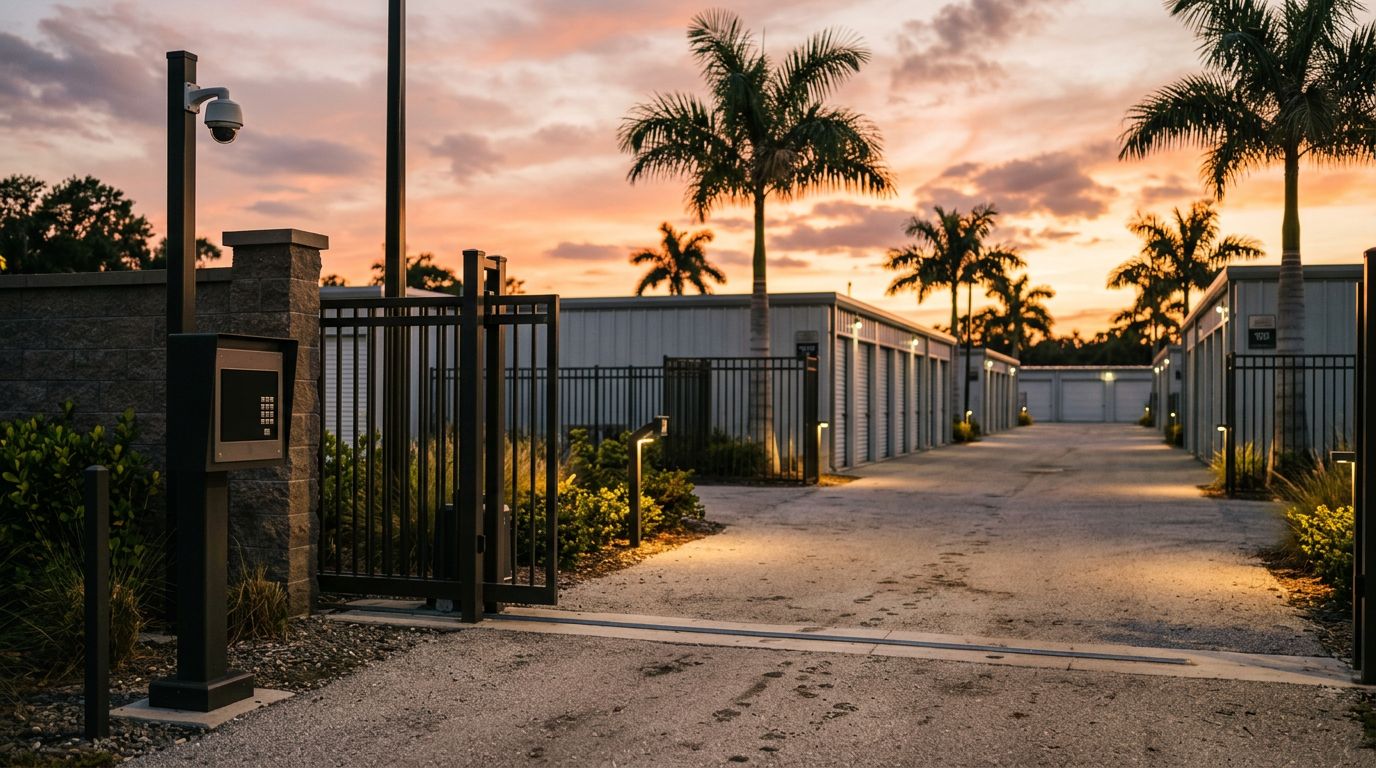
A locked storage gate can leave a trail, and that trail often shapes a Florida assault claim. When an attack happens at a self-storage facility, the biggest question is often simple: who had access, and when?
That answer is rarely obvious at first. People remember fear, injuries, and confusion, but security records can show a timeline that memory cannot.
Florida self-storage assault claims often turn on those records. Gate access logs, camera footage, and incident reports can point to failures in security or help identify the person who entered the property.
Why gate access logs matter after a storage facility assault
Gate access logs are more than a list of codes and times. They can show who entered the property, which unit code was used, and whether staff opened the gate for someone.
That matters because a self-storage assault usually happens in a place where access should be limited. If the gate opened for the wrong person, or if someone followed another vehicle in, the log may help show how that happened.
Logs can also reveal patterns. Repeated after-hours entries, several failed code attempts, or staff overrides can point to weak security practices. When those details line up with an assault, they can support a claim that the facility did not protect tenants and visitors as it should have.
Here is a simple way to think about the records that often matter most:
| Record | What it may show | Why it matters |
|---|---|---|
| Gate access logs | Entry and exit times, code use, staff overrides | Helps place a person on the property |
| Surveillance footage | Movement near gates, units, parking areas | Can match log entries with faces or vehicles |
| Incident reports | What staff knew and when they knew it | May show delayed response or poor reporting |
| Maintenance records | Broken gates, bad locks, faulty keypads | Can show known security problems |
The log itself rarely tells the whole story. It works best when it is matched with other proof, like video or witness accounts.
If the gate log disappears, the timeline gets harder to prove. That can change the pressure in a case.
Evidence that should be saved before it disappears
Time matters after an assault. Security systems overwrite footage, staff change shifts, and records get misplaced. The sooner the evidence is preserved, the better the chance of building a clear claim.
Start with the basics. Get medical care first, then report the assault to law enforcement and to the storage facility. After that, ask for copies of any incident reports, gate records, and written statements you can legally obtain.
Keep everything tied to the event. Save texts with the facility, photos of injuries, photos of broken locks or lights, and the lease agreement. The lease can matter because it may show who had access, what the rules were, and whether the facility promised certain security features.
Other records can help too:
- Police reports can confirm the time, location, and witnesses.
- Medical records can connect the assault to your injuries.
- Witness names and contact details can support your version of events.
- Emails or complaints can show whether you warned the facility before the attack.
- Repair records can show that the same security issue kept coming back.
A preservation request can also be important. That is a formal notice telling the facility not to delete logs or video. Once a request is sent, the facility should keep the records intact.
When the facility may be responsible under Florida law
A criminal attack does not automatically mean the storage company is liable. Still, a facility can face civil responsibility when poor security helped make the assault possible.
Florida premises liability cases often focus on whether the property owner knew, or should have known, about the risk. That can include prior break-ins, vandalism, repeated trespassing, broken gates, poor lighting, or complaints that went unanswered.
If a gate stayed broken for weeks, the owner may have ignored a clear warning. If staff shared codes without checking identity, that can create a different kind of risk. If cameras covered the entrance but nobody monitored them, the security system may have looked better on paper than it worked in real life.
A claim may also involve negligent security. That means the property did not take reasonable steps to keep people safe. The right steps depend on the site, but they often include working gates, proper lighting, functioning cameras, and real control over who gets inside.
This is where legal help matters. A lawyer who handles experienced personal injury attorneys can ask for records, compare them with witness accounts, and look for gaps in the facility’s security story.
What matters most is proof. A strong claim connects the facility’s failures to the attack itself. Without that link, the case can get stuck in guesswork.
How gate logs help build a stronger case
Gate logs can do more than show a timestamp. They can help narrow the list of people who were on site and reduce the room for excuses.
For example, a log may show that one code was used repeatedly near the time of the assault. It may also show that someone entered with a guest code when only tenants should have been inside. In another case, the records may reveal a staff override that never should have happened.
That kind of detail can help in several ways. It can test the storage company’s story. It can help a police investigator focus on a suspect vehicle or a specific user code. It can also support settlement talks because the facility may see that its records point to a weak security system.
Logs can also protect honest tenants. If the facility blames a victim or says the assault came from a random stranger, the access records may show something else. Maybe the attacker used a valid code. Maybe the gate was left open too long. Maybe the facility had known for months that the keypad failed at night.
When the records line up, the case gets clearer. When they do not, that mismatch can matter just as much.
Steps to take after a self-storage assault in Florida
A claim starts to get stronger when the right steps happen early. After medical treatment and a police report, focus on preserving facts.
- Write down the timeline while it is fresh. Note the date, time, gate number, unit number, and anyone you saw.
- Save photos and video. Take pictures of injuries, broken locks, dark areas, and any damage near the gate.
- Ask for written records. Request the incident report, lease agreement, and any contact with facility staff.
- Identify witnesses. Tenants, neighbors, or workers may have seen who entered or left.
- Get legal advice quickly. A lawyer can send a preservation letter and seek logs before they are erased.
Do not wait for memories to settle. The details that seem small now can become the key facts later.
If you already reported the incident, keep following up. Ask for copies of anything new. Keep every message, voicemail, and repair note. Those small pieces can show how the facility responded after the assault.
Conclusion
A self-storage assault can feel random at first, but the records often tell a different story. Gate access logs, video, and maintenance files can show whether the facility controlled access or let problems pile up.
The strongest Florida self-storage assault claims usually come down to one thing, proof. If the gate records, camera footage, and witness statements point to weak security, the case becomes much clearer.
If you were hurt at a Florida storage facility, move fast. The records that matter most may still be sitting on a server, and they may not stay there for long.