
Florida Appendicitis Misdiagnosis: CT Delay Records That Matter
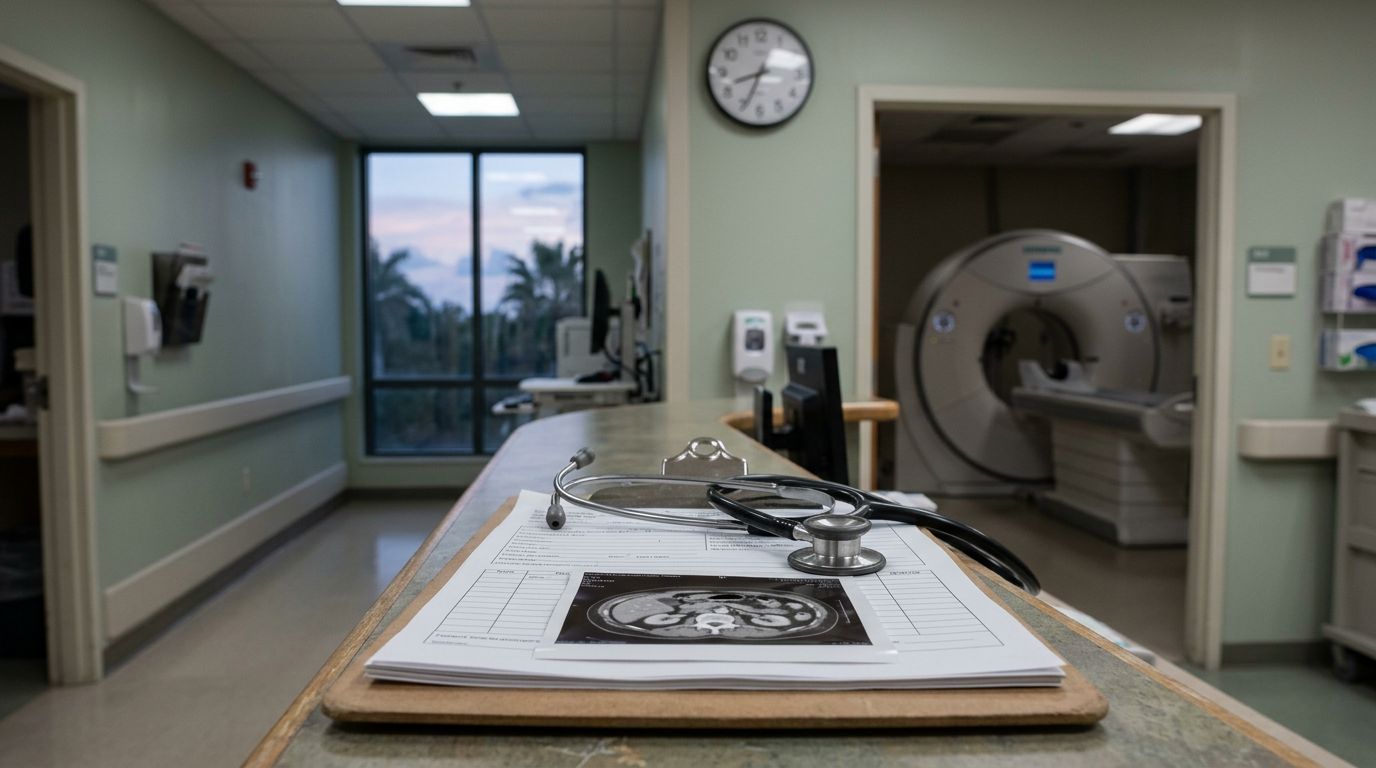
A missed appendicitis diagnosis can turn a routine ER visit into surgery, infection, and a much harder recovery. When the care happened in Florida, the chart often tells the real story.
That matters because pain changes fast, but records change slowly. If the CT scan was ordered late, read late, or never tied to the symptoms, the paper trail may show exactly where the delay began.
Why appendicitis gets missed in Florida ERs
Appendicitis does not always arrive with a classic textbook pattern. Some patients have sharp right-side pain. Others have nausea, vague stomach pain, fever, or pain that seems to come and go.
That is where trouble starts. A busy emergency room may first suspect stomach flu, constipation, urinary infection, kidney stones, or gynecologic pain. In adults, a CT scan often helps sort through those possibilities. When the scan is delayed, the patient may be sent home with instructions that do not match the warning signs.
Florida cases often turn on a simple question: what did the provider know, and when did they know it? The answer is usually buried in the file. Triage notes, nursing notes, physician exams, lab results, and imaging orders can show whether the symptoms were dismissed, overlooked, or re-labeled without enough follow-up.
A strong claim usually starts with the chart, not memory. That is why a Florida appendicitis misdiagnosis proof guide matters when the timeline needs to be rebuilt line by line.
CT delay records that reveal the timeline
A CT delay is not just a long wait. It is a chain of events. Each step leaves a mark in the record, and those marks can show where the delay happened.
The most useful records often look ordinary on their own. Together, they create a timeline that is hard to ignore.
| Record | What it can show | Why it matters |
|---|---|---|
| Triage sheet | Arrival time, pain score, and first complaints | Shows how serious the symptoms looked at the start |
| Nursing notes | Worsening pain, vomiting, fever, or repeat complaints | Shows whether staff saw the condition change |
| Physician exam note | Abdominal tenderness, rebound, guarding, and suspected diagnoses | Shows what the doctor thought was happening |
| CT order time | When imaging was requested | Shows whether the scan was ordered right away or after a delay |
| Transport and completion logs | When the patient left for CT and when the scan was done | Shows how long the patient waited before imaging |
| Radiology report time | When the image was read and communicated | Shows whether the result reached the care team late |
| Discharge paperwork | Return instructions and diagnosis given at release | Shows whether the patient was sent home despite red flags |
| Operative and pathology reports | Rupture, perforation, abscess, or removed appendix findings | Shows what the condition looked like when surgery happened |
The CT order, the scan time, and the radiology read time are often the most important entries. If those timestamps do not line up with the symptoms, the delay becomes easier to prove.
If the chart cannot show when the CT was ordered, completed, and read, the delay is harder to defend.
A case built on delay is often a timing case. The minute-by-minute record matters because appendicitis does not pause for paperwork.
Records that connect the delay to the harm
A delay alone does not finish the job. The file also has to show that the delay caused real harm. In appendicitis cases, that harm often shows up as a ruptured appendix, peritonitis, abscess, sepsis, a longer hospital stay, or a more invasive surgery.
That is where lab results, imaging, and surgical notes come in. A rising white blood cell count can support the case, but it does not prove negligence by itself. A CT image may show inflammation before rupture, or it may show a perforation that developed after the first visit. The difference matters.
Surgery records are often the clearest proof. The operative report can describe whether the appendix was intact, perforated, or surrounded by infection. The pathology report may add more detail. Hospital admission records can also show how long the patient stayed, what antibiotics were given, and whether the condition worsened while the patient waited.
For a deeper look at how proof is built, the Florida appendicitis misdiagnosis proof guide explains the kind of timeline evidence that often drives these claims.
A Florida medical malpractice case still needs expert review. The legal question is not just whether the care felt slow. It is whether the delay fell below the standard of care and caused avoidable injury. Records make that analysis possible.
When the chart is messy or missing pages
Not every record set is neat. Some charts have late entries. Some repeat the same note across several visits. Others leave out the exact time a scan was ordered, or they use language that does not match what the patient said.
That is where the difference between a missed diagnosis and a delayed diagnosis can matter. One case may involve a provider missing clear warning signs. Another may involve a doctor suspecting appendicitis, but waiting too long to confirm it or act on it. The legal theory can shift with that distinction, so the file has to be read with care. misdiagnosis versus delayed diagnosis in medical malpractice helps separate those paths when the chart does not tell a clean story.
A clean chart is not the same as a correct chart. A polished discharge summary can still hide a dangerous delay. The timestamps, nursing notes, and radiology entries are often more honest than the final diagnosis line.
A note written later can sound tidy. The timestamps show what happened first.
When records conflict, lawyers often compare versions of the chart, portal entries, and hospital logs. That is where missing pages, copied notes, and delayed radiology communication can matter just as much as the diagnosis itself.
What to save before the record trail gets cold
If appendicitis was missed or delayed, the first step is to gather the full file. Do not rely on the discharge papers alone. Those papers are often the thinnest part of the story.
Save these records if you can:
- The ER triage sheet and nursing notes.
- The doctor’s exam note, including any differential diagnosis.
- Lab work, especially white blood cell results and related tests.
- The CT order, the radiology report, and the image disc or digital study.
- Discharge instructions, prescriptions, and return precautions.
- Follow-up visits, transfer records, surgery notes, and pathology reports.
- Your own notes about when pain started, when it changed, and what you told staff.
It also helps to keep texts, portal messages, and bills. Those items can confirm the timeline if the hospital file is incomplete. If a second ER visit happened, keep that record too. Repeat visits often show that the first visit missed something important.
The strongest files do one thing well. They show the path from symptom to scan, from scan to diagnosis, and from diagnosis to injury. That path is what a lawyer will study.
Conclusion
A Florida appendicitis case often turns on the record, not on memory. The key question is whether the chart shows a prompt response or a dangerous gap.
When CT was delayed, the most important evidence is usually the same across cases, the timestamps, the radiology report, the discharge papers, and the surgery records. Put together, they can show whether the delay changed the outcome. In a case like this, the timeline is the evidence.