
Florida Road Debris Claims: How to Trace the Vehicle
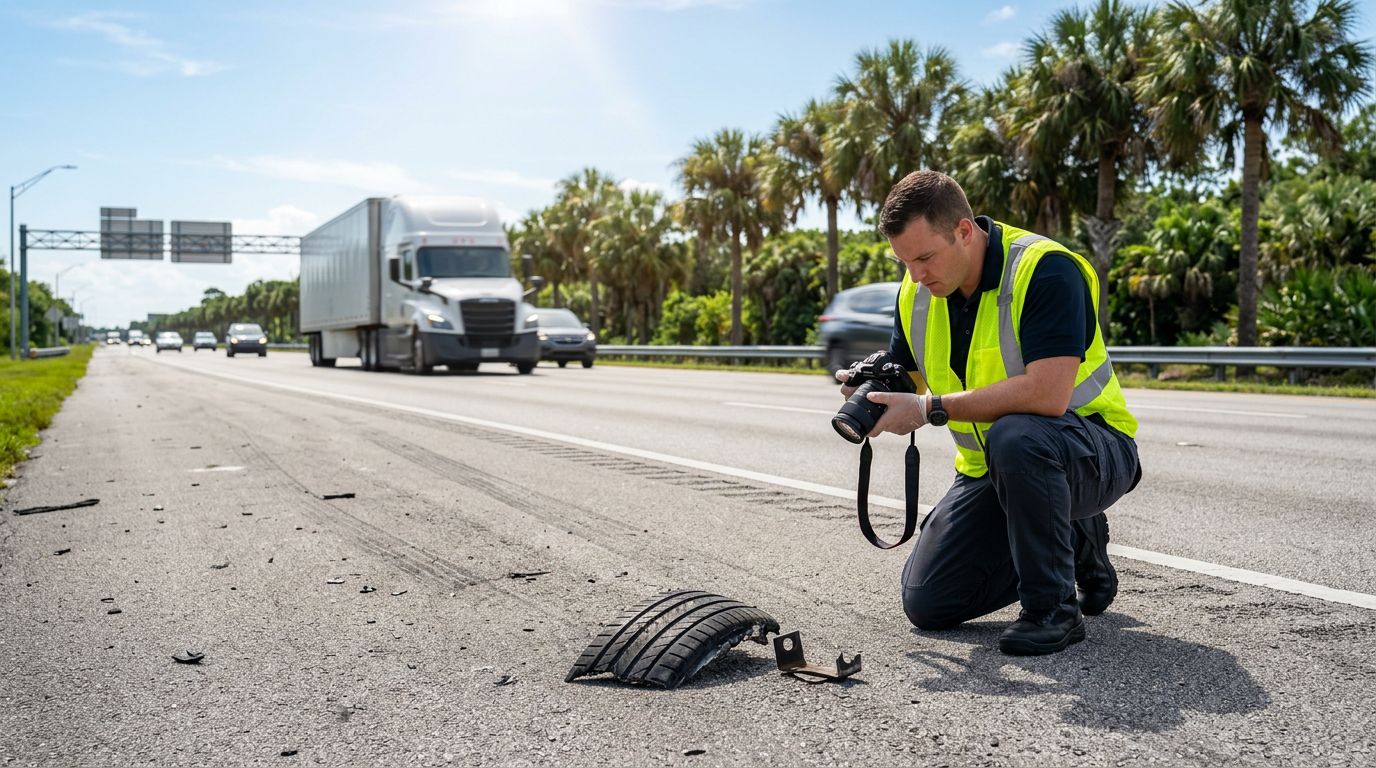
A road debris crash can leave you with one hard question and almost no answers. Something fell, something hit your car, and the vehicle that caused it may be gone before you can pull over.
That missing vehicle matters because Florida road debris claims often turn on proof. The faster you gather evidence, the better your chance of tying the debris to a specific driver, truck, trailer, or company vehicle.
Why the source of the debris matters
A loose tire tread, a fallen ladder, broken cargo, or a part that dropped from a trailer can all cause serious damage. However, a claim gets much stronger when you can show where the object came from.
That source can change the whole case. If the debris came from an unsecured load, a worn part, or a commercial vehicle, the person or company behind it may be responsible. If the vehicle cannot be identified, your own insurance may become part of the picture, depending on your coverage.
The injury side matters too. If the crash caused more than damage to your car, the claim can include medical care, missed work, and pain that follows a sudden impact. In that situation, Florida personal injury lawyers can help connect the crash evidence with the rest of the claim.
The scene usually tells the story first, but only if you preserve it before traffic and weather erase the details.
A debris crash is a bit like a dropped trail of breadcrumbs. The marks may be small, yet they can lead back to the vehicle if you know what to collect.
What to do at the scene before evidence disappears
The first minutes matter most. Debris gets moved, traffic rolls through, and witnesses leave. That makes the scene harder to rebuild later.
Start with the basics, then move fast.
- Call law enforcement if the crash has not already been reported. A crash report creates an official record.
- Take wide and close photos of the debris, your car, the road, lane markings, and any skid or impact marks.
- Save the debris if it is safe to do so. A broken part, strap, or label may point to the source.
- Ask witnesses what they saw and get names and phone numbers before they leave.
- Check for cameras nearby. Dashcams, nearby businesses, toll cameras, and traffic cameras may capture the vehicle or the object falling.
The police report also matters later. If the crash was reported, you can usually request it from the investigating agency. In some cases, Florida Crash Portal or FLHSMV records may also help when the report is available through the state system.
A quick note on timing
The longer you wait, the less likely the scene will help you. Rain can wash away marks. Tow trucks can move debris. Businesses often overwrite video fast.
If the debris appears to have come from a truck or company vehicle, the next step should happen quickly. Florida car accident attorneys can send preservation requests and start the trace before key footage disappears.
Clues that can point to the vehicle
Small details often do the heavy lifting. A paint smear alone may not identify a truck, but it can narrow the search. A broken part may reveal a make, model, or even a part number.
The table below shows the kinds of clues that often matter most.
| Clue found at the scene | What it can show | Why it helps |
|---|---|---|
| Paint transfer | Vehicle color or trim | Can match another vehicle that passed through the area |
| Broken light housing or body panel | Make, model, and part type | May point to a specific type of car, truck, or trailer |
| Straps, labels, or cargo tags | Carrier name, load source, or shipment details | Can lead to a company vehicle or contractor |
| DOT number or company mark | Commercial vehicle identity | Can help connect the debris to a business |
| Tire fragments or tread pieces | Tire failure or blowout | May show where the debris came from and what type of vehicle dropped it |
The best clue is often the one nobody thinks to save. A torn strap or a shipping label may matter more than the bigger chunk of debris.
When a commercial vehicle is involved, the trail may go beyond the crash scene. Dispatch records, maintenance logs, route data, and repair records can all help. If the evidence points toward a business vehicle, Florida car accident attorneys can use those records to press the insurance side harder.
Using reports, cameras, and records to trace the trail
Once the scene evidence is gathered, the next step is to build the path backward. That usually starts with the crash report and witness statements, then moves to video.
Dashcam footage can be gold. So can a gas station camera, a storefront camera, or footage from a nearby toll plaza. Sometimes the video shows the vehicle itself. Other times it shows the debris falling just before impact.
Witness statements also help fill gaps. A driver behind you may have seen the object fall from a pickup bed. A pedestrian may have noticed a truck losing cargo. Even small details, like company colors or trailer type, can matter later.
A camera clip that lasts 20 seconds can be more useful than pages of guesses.
A lawyer can also send a preservation letter to a business or trucking company. That request tells them not to delete records, repair logs, or video that may show the source of the debris. Without that step, valuable proof can vanish.
Florida law can also affect how a claim is valued once the source is known. Fault rules, injury proof, and settlement pressure can shape the case early. For a closer look at those changes, see how Florida tort reform affects car crash claims.
If the driver can’t be found
Some debris cases end with a strong suspicion and no plate number. That does not mean the claim is over.
If the source vehicle cannot be traced, your own insurer may still cover part of the loss, depending on the policy you carry. If you were injured, you may also have a separate injury claim if another vehicle or company can later be tied to the crash.
The important part is not to assume the trail is dead. Many cases start with a few fragments and end with a clear source after the records are reviewed. The claim gets stronger when you keep every photo, note, report number, and medical record in one place.
A clean file helps. So does fast action. The longer a debris case sits, the harder it becomes to prove who dropped what.
Conclusion
A debris crash can feel random, but the evidence is often traceable. The police report, scene photos, witness names, camera footage, and marks on the debris can all work together to point to the right vehicle.
If you were hit by road debris in Florida, treat the first hours like evidence collection time. Save what you can, report the crash, and keep the records that may help identify the source.
When the trail is thin, Florida personal injury lawyers can help sort the proof and move the claim forward before the details fade.