
Florida Dash Cam Evidence After a Crash: How to Preserve It
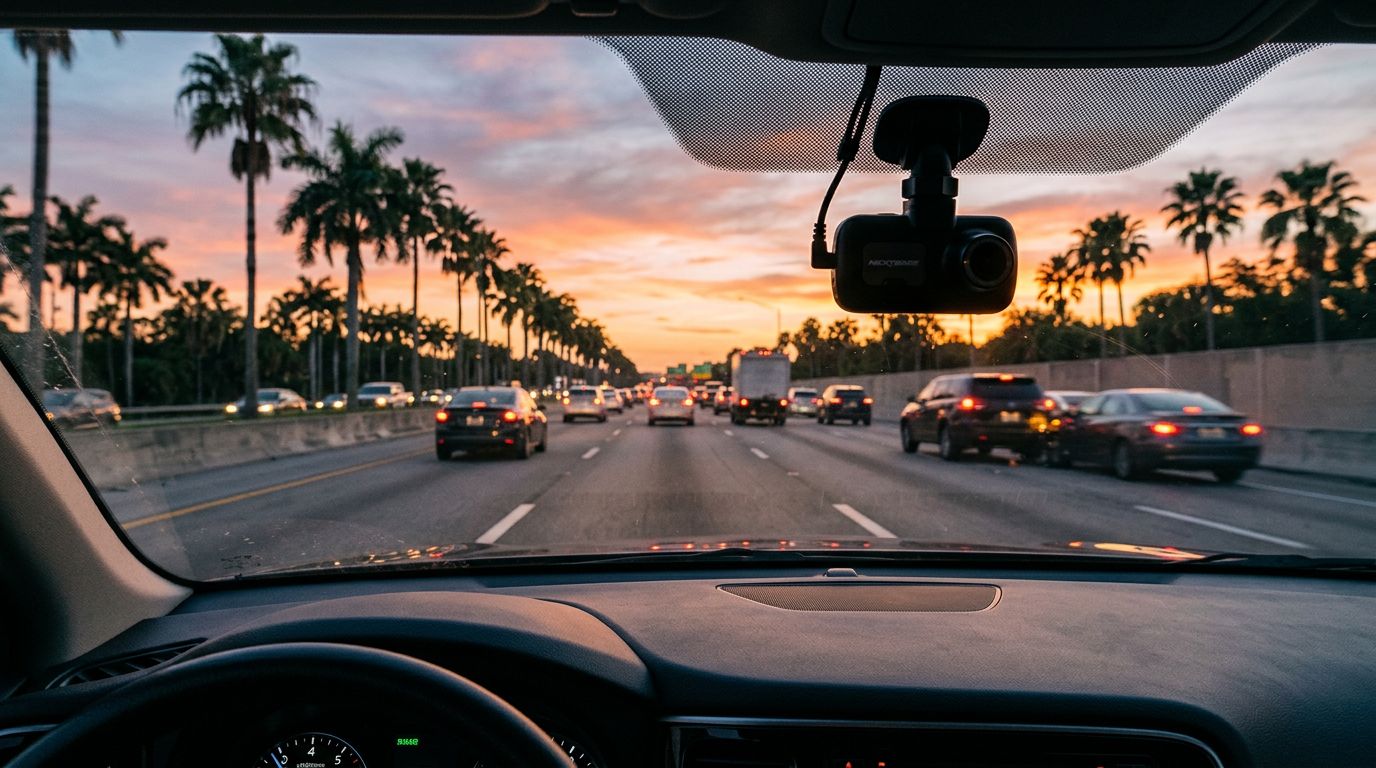
A crash can blur in seconds, but a dash cam can keep the scene clear. That video may show the lane change, the light, the impact, and the driver who tried to blame you.
Florida drivers often lose valuable footage before they realize it matters. Most dash cams record in a loop, so old clips can disappear fast if no one saves them.
Why dash cam video matters after a Florida crash
A clear recording can do what memory cannot. It can show speed, traffic flow, braking, turn signals, and the point of impact. It can also settle disputes that sound small at first, then turn into a major insurance fight.
That matters in crashes where fault is contested. A side impact, for example, often turns into a story of “I was in my lane” versus “you moved over too soon.” In those cases, proving fault in sideswipe collisions often depends on video, lane position, and the timing of the hit.
Dash cam footage also helps because it captures the crash as it happened, not as someone remembers it later. Memory fades. Stress changes details. A camera does neither.
Still, the clip is only one piece of proof. It works best when it lines up with the police report, photos of the vehicles, repair records, and medical care. Without that context, a short video can leave important gaps.
The safest habit is simple, save the file first, share it later.
What to do in the first hour
The first hour after a crash is the best time to protect Florida dash cam evidence. If you wait until the next day, the recording may already be gone.
- Save the original clip right away.
Export the video to another device, a computer, or cloud storage if you can do it safely. Keep the original file untouched. - Photograph the camera and the screen.
Take clear photos of the dash cam, memory card, mount, and any time or date display. Those details help show where the recording came from. - Write down the crash time and place.
Include the road, direction of travel, weather, and any unusual traffic pattern. Small details help match the footage to the crash. - Stop the footage from being overwritten.
If the camera uses loop recording, lock the clip if the device allows it. If not, remove the memory card and store it safely. - Do not trim, add text, or post it online.
Simple edits can create questions about whether the file is complete.
A fast response matters because dash cams are built for convenience, not evidence storage. They keep moving until the memory fills up. Then they replace the oldest clip with the newest one.
How to keep the original file usable in a claim
The original file matters because it can carry timestamps and other data that help show authenticity. Once that file changes, the defense or insurer may argue about what happened to it.
Here is a simple comparison that helps when you are rushed.
| Safe move | Why it helps | What to avoid |
|---|---|---|
| Copy the file to a second location | Keeps a backup if the card fails | Do not rely on one device |
| Keep the original card or camera file untouched | Preserves the original record | Do not edit or crop the clip |
| Store the file with crash notes | Helps connect the video to the event | Do not leave the date and time undocumented |
| Make a copy for sharing | Protects the original from mistakes | Do not send the only copy |
The main idea is simple. Keep one version frozen in place, then work from copies. That habit protects the recording and makes it easier to explain later.
If your dash cam records sound, be careful with that file too. Audio can raise separate privacy questions, so let a lawyer review it before you post or send it around.
Dash cam footage in sideswipes and pileups
Some crashes are straightforward. Many are not.
A sideswipe may happen during a lane change, a merge, or a turn. The other driver may say you drifted over first. In those claims, the angle of the camera can be as important as the video itself. The footage may show lane markings, signal use, and how close the vehicles were before contact.
Multi-car crashes create even more confusion. One driver hits another, then a third car joins the chain. Soon, everyone points in another direction. In those cases, handling Florida multi-vehicle crash claims often depends on early preservation of every camera clip, witness name, and scene photo.
Dash cam footage helps in these crashes because it can show the first move that set everything in motion. That can matter a lot when insurers try to split blame in a way that cuts down your claim.
It can also help prove what you did after impact. For example, it may show that you stayed in your lane, turned on hazards, or pulled over safely. Those details can support your account when the other driver tells a different story.
When a lawyer should step in quickly
Some drivers can save a clip and move on. Others need legal help right away.
You should get help fast if the other driver denies fault, if the insurer asks for the raw file, or if the crash involved serious injury. You should also act quickly if the camera belongs to a company vehicle or a rideshare driver, because more than one person may control the recording.
A lawyer can send a written request that tells the other side to keep its evidence. That step matters when the other vehicle may have its own video, telematics data, or event data recorder information. A lawyer can also help you avoid handing over a file that has been edited or stripped of useful details.
A preservation letter is often the right move when the footage could disappear or be overwritten. How to draft an evidence preservation letter matters because it puts the other side on notice before key proof is lost.
That kind of help is useful when the claim involves injury, missed work, or a serious dispute over fault. It is also useful when the crash happened on a busy Florida road and several drivers each tell a different story.
The proof you save today can shape the claim tomorrow
A dash cam clip can be the best witness you have, but only if it survives the first day. Save the original file, keep the card or copy safe, and avoid edits that weaken the record.
When the crash turns into a blame fight, the original footage can carry real weight. It can show the move that started the collision and help connect the video to the rest of the evidence.
If your Florida crash involved shared fault, a sideswipe, or a pileup, quick action matters. The camera may keep running, but the recording will not wait for you.