
Florida Balcony Collapse Claims and Inspection Records
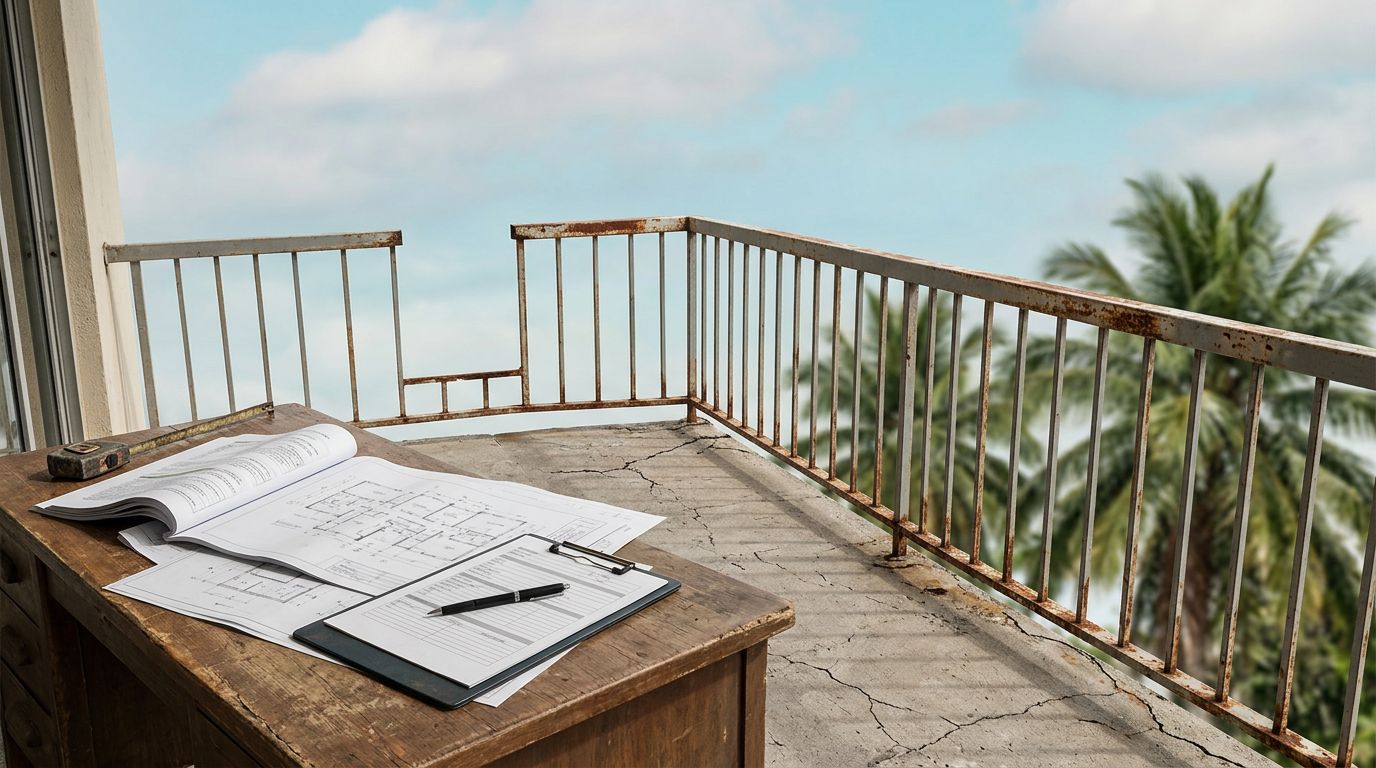
When a balcony fails, the first fight is often about paperwork. The scene may look chaotic, but the claim usually turns on what the building knew, when it knew it, and what it did next.
That is why Florida balcony collapse claims often rise or fall on inspection files, repair notes, permits, and board records. Families want answers, insurers want dates, and the documents usually tell the story that witnesses cannot.
If the collapse caused serious injury or a death in the family, speaking with legal help for Florida personal injury victims early can keep key files from disappearing.
Why inspection records matter after a balcony collapse
Inspection records do more than show whether someone checked a box. They can reveal cracks, rust, water intrusion, loose railings, sagging concrete, or ignored warnings long before the collapse.
That matters because a collapse rarely happens out of nowhere. In many cases, the danger builds over time, and the paper trail shows whether the building owner, condo board, manager, or contractor had notice.
A strong record can answer questions that matter in court and during settlement talks. Did an engineer raise concerns? Did the board approve repairs and then delay them? Did a vendor sign off on work that failed soon after?
A claim gets stronger when the file shows a known hazard and a missed fix.
The records also help separate a sudden accident from a pattern of neglect. That distinction can shape who pays and how much they owe.
The documents that tell the real story
Some files carry more weight than others. Together, they can show the condition of the balcony, the response from the association, and the timing of repairs.
| Record | What it can show | Why it matters |
|---|---|---|
| Milestone inspection report | Structural problems, corrosion, concrete spalling, or water damage | Shows whether a licensed engineer or architect warned of danger |
| Repair logs and work orders | What got fixed, delayed, or ignored | Helps prove notice and maintenance history |
| Board minutes and emails | Complaints, votes, reserve discussions, and repair delays | Can show knowledge before the collapse |
| Permits and contractor invoices | Approved repairs, replacement work, and code-related upgrades | Helps track whether the building followed the rules |
| Photos and video | Cracks, rust, sagging edges, and loose railings before the collapse | Captures conditions that may change after the event |
The best claims use more than one document at a time. A report may show a hazard, while emails and work orders show the building had time to act.
For Florida balcony collapse claims, the timeline matters as much as the damage itself. A repair order from last month means something different from a warning that sat untouched for two years.
Florida inspection rules that shape the paper trail
Florida has specific inspection rules for certain buildings, and those rules often create the very records that later support a claim.
Residential condo buildings that are three stories or higher must undergo a milestone inspection when they reach 30 years of age. If the building is within three miles of the coastline, the first inspection comes at 25 years. After that, the inspection repeats every 10 years.
There is one important cutoff. If a building turned 30 before July 1, 2022, the first milestone inspection had to be completed by December 31, 2024.
A licensed professional engineer or licensed architect must perform that work. The association also has a duty to tell unit owners within 14 days after it receives notice of the inspection report.
Florida also has a separate balcony inspection requirement for some public lodging properties, such as hotels and motels, under DBPR Form HR-7020. Those inspections repeat every three years. Standard residential condos usually do not need that same public-lodging certificate unless they also rent units to the public in that way.
That difference matters. Some owners assume a condo has no inspection duty when the law actually requires a milestone inspection, a regular structural review, or both.
The coastal environment makes these rules even more important. Salt air, moisture, and storms can break down concrete and metal faster than many owners expect. As a result, a file full of clean-looking records can still hide a serious problem if no one looked closely enough.
How those records can point to liability
A balcony collapse claim often asks a simple question with a hard answer, who had the duty to fix the danger and failed to do it?
Inspection records help trace that duty. They can show whether the condo association knew about the defect, whether the property manager passed along complaints, whether a contractor made a poor repair, or whether an engineer missed a warning sign.
Common records can support different parts of the case:
- A milestone report may show the building had visible structural issues.
- Emails may show the board discussed repairs but delayed them.
- Permits may reveal work that was approved but never completed.
- Invoices may prove the owner spent money on cosmetic fixes while ignoring the structure.
- Photos may show the balcony looked unsafe well before the collapse.
The claim may reach more than one defendant. In some cases, the condo association bears responsibility. In others, the owner, manager, engineer, contractor, or maintenance vendor may also be involved.
A paper trail does not prove fault by itself. However, it gives an attorney and structural expert a way to test the story being told by the other side. That is where the case becomes stronger.
If a report warned of corrosion and the board did nothing, that can matter a great deal. If a contractor repaired the wrong area and the balcony failed later, that can matter too.
What to gather right after a collapse
The hours after a collapse can feel rushed and confusing. Still, a few simple steps can protect the claim.
- Take photos and video of the scene if it’s safe to do so. Focus on debris, cracks, railings, warning signs, and nearby damage.
- Save any notices, repair letters, emails, or texts tied to the balcony or building.
- Get medical care right away and keep every bill, discharge paper, and follow-up note.
- Ask for copies of inspection reports, permits, work orders, and board minutes before they disappear into someone else’s file.
- Speak with a lawyer before signing insurance papers or giving a recorded statement.
Records can vanish quickly after a major accident. Maintenance staff leave, files get moved, and people start building defenses almost immediately.
That is why the sooner the paper trail gets preserved, the better. Once missing pages are gone, the case can turn into a fight over memory instead of facts.
How a lawyer uses inspection records in a Florida collapse case
A lawyer looks at these records with one goal, building a timeline that holds up under pressure. That timeline can show when the problem started, who saw it, who could fix it, and how long they waited.
A strong case may combine inspection reports with code records, witness statements, medical proof, and expert review. The inspection file often becomes the backbone of that effort because it connects the building’s condition to the injuries that followed.
That is especially important when an insurer argues the collapse was sudden or unavoidable. The records may show the opposite. They may reveal ignored warnings, missed repairs, or repeated problems that no one wanted to pay for.
The same files can also help families in wrongful death claims. In those cases, the question is not only what failed. It is also whether someone could have prevented the death with proper repairs and honest attention to the warning signs.
Conclusion
Balcony collapse cases are rarely solved by a single photo or a single statement. They depend on the inspection records, the repair history, and the timeline that those documents create.
When the file shows warnings, delays, and missed fixes, the claim gets much clearer. When the record is incomplete, the fight gets harder, which is why preserving every document early matters so much.