
Florida Parking Lot Pothole Fall Claims and Notice Proof
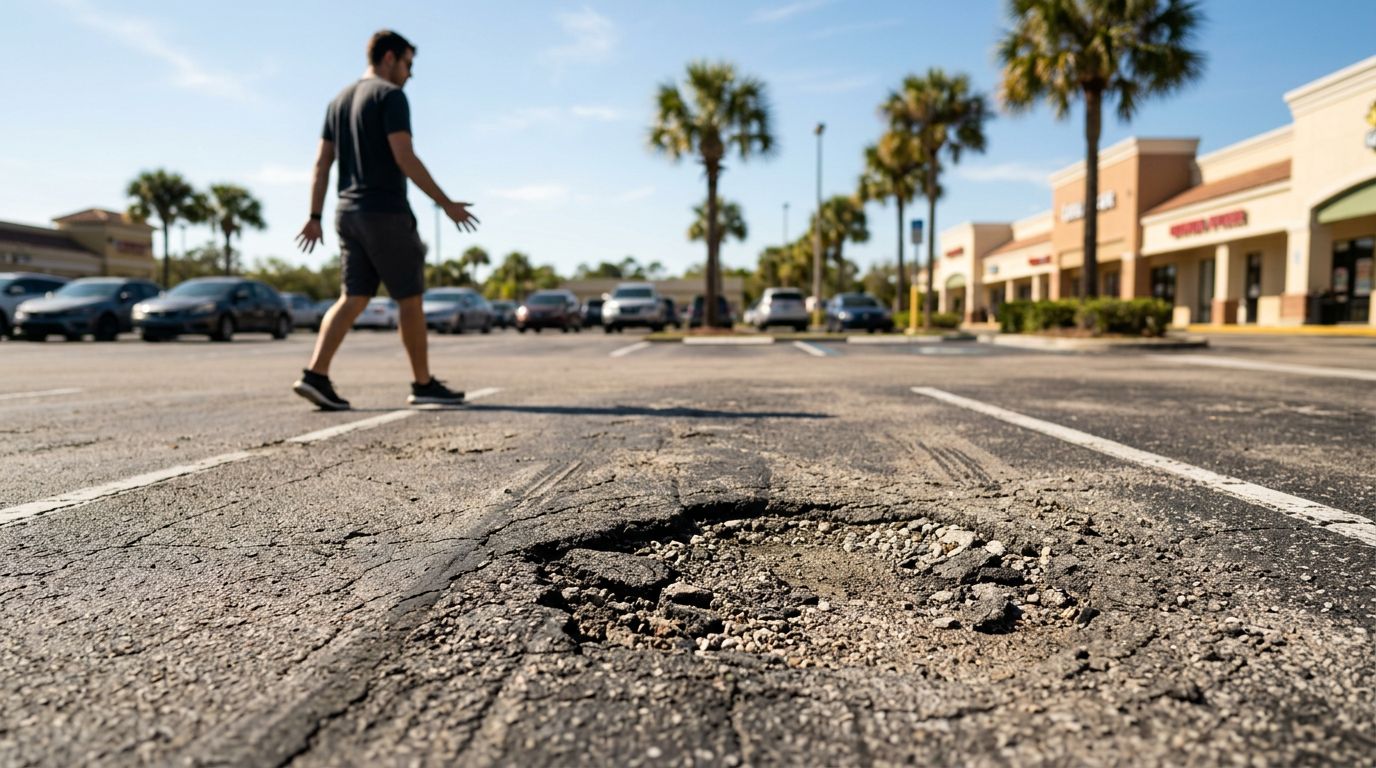
A parking lot pothole can do more than twist an ankle. It can leave you with a claim that turns on one hard question, did the owner know about the danger?
That question matters in Florida pothole fall claims because fault is not automatic. You need proof that the person or company in charge had notice of the bad pavement, or should have found it in time.
The good news is that notice often leaves a trail. Photos, witness statements, repair records, and past complaints can all matter. The details decide the case.
Why notice decides many Florida parking lot pothole cases
Florida premises cases often rise or fall on the owner’s knowledge of the hazard. In a parking lot, that means the pothole, broken asphalt, or crumbling edge has to be tied to the property owner or manager in a clear way.
A fresh pothole may not create the same claim as one that has sat there for weeks. A deep hole in a busy lot also raises different questions than a small crack near an unused corner. Context matters.
Florida law treats business property claims seriously. If the fall happened at a store, restaurant, office building, or similar place, the owner’s notice is a key issue. The law does not make owners insurers of every step you take. It does require them to act when a hazard was known, or should have been found through reasonable care.
A strong claim often starts with a simple fact pattern, the pothole was visible, old, or ignored.
Actual knowledge and constructive knowledge in plain English
Notice comes in two main forms. Actual knowledge means the owner or an employee knew about the pothole before the fall. Constructive knowledge means the danger existed long enough, or often enough, that the owner should have found it.
That difference sounds small. In court, it can decide everything.
Here is a simple comparison.
| Type of notice | What it means | Evidence that may help |
|---|---|---|
| Actual knowledge | The owner or worker already knew about the pothole | Complaints, repair requests, employee statements, prior reports |
| Constructive knowledge | The pothole was there long enough, or happened often enough, that the owner should have found it | Photos, videos, inspection gaps, repeated incidents, worn edges |
The table shows the basic split. Actual knowledge is direct. Constructive knowledge is built from facts around the scene.
Florida Statute 768.0755 is aimed at transitory foreign substances in business establishments, like spills. Even so, the same notice ideas often matter in parking lot cases involving broken pavement. The question stays the same, did the owner know, or should they have known?
Evidence that can prove a pothole was not a new problem
Good evidence can make a parking lot case much stronger. Small details matter because they help show how long the pothole existed and whether anyone had time to fix it.
Start with the scene itself. Photos taken right after the fall can show the depth, shape, and wear around the pothole. If the edges are worn down, the hole may have been there for a while. If water or dirt has collected inside, that can also help show the problem was not brand new.
Witnesses matter too. A shopper, employee, or delivery driver may have seen the pothole before the fall. They may also know if cones were absent or if the area had been a problem for weeks.
Maintenance records can be powerful. They may show:
- no recent inspection of the lot
- delayed repairs
- prior patch work in the same spot
- recurring complaints about the same area
Camera footage can help when it shows the pothole before the fall, or shows how people had to avoid it. In some cases, a store’s own incident report can reveal that staff knew the area was unsafe.
A claim gets stronger when the story is consistent. The hole was there. People saw it. The owner had time to fix it. That pattern is often more valuable than a single dramatic photo.
Parking lots owned by cities or counties follow different rules
Some pothole falls happen on public property, such as a city lot, county garage, or government building. Those claims do not follow the same path as a claim against a private business.
Different notice rules may apply. A notice-before-suit process can also come into play under Florida sovereign immunity rules. That means the claim may need extra steps before a lawsuit can move forward.
Public property cases can also depend on who controlled the area. A city, county, school district, or other public entity may be responsible if it owned or maintained the lot. Sometimes a contractor shared part of that duty. That question matters because the wrong defendant can slow everything down.
The safest move is to identify the owner fast. Get the name on the property, the public department in charge, and any contractor signs or repair notices. Those facts can disappear quickly after a fall.
What to do after a pothole fall in Florida
The first hours after a fall often shape the whole case. Pain can make it hard to think clearly, so a simple plan helps.
- Get medical care right away.
Even a minor fall can cause a bad sprain, fracture, or back injury. - Photograph the pothole and the lot.
Take wide shots and close-ups. Capture lighting, paint marks, and nearby store signs. - Report the fall to the property owner or manager.
Ask for a copy of the incident report if one is made. - Write down names and contact details.
Witnesses, workers, and nearby customers may later help show notice. - Save your shoes and clothes.
They may matter if the condition of the ground or your fall path becomes disputed. - Do not fix or clean the photos.
Keep the original images and note the date and time. - Track your pain, treatment, and missed work.
A short journal can help show how the injury affected your daily life.
These steps are simple, but they carry weight. They help prove the hazard, the timing, and the harm.
When legal help matters in a Florida pothole claim
A pothole claim can look simple at first. Then the owner denies notice, the insurer blames your shoes, or the property changed after the fall.
That is where a lawyer can help sort the proof. An attorney can request inspection logs, preserve video, contact witnesses, and compare the scene against the owner’s records. If the lot belongs to a business, a lawyer can also focus on the notice proof that Florida law requires.
If you want help with that process, start with experienced personal injury attorneys in Florida. You can also review factors in hiring a personal injury attorney in Florida before you choose counsel.
The right help matters most when the hazard is ordinary but the proof is not. Potholes are common. Proof of notice is not.
Conclusion
A parking lot pothole claim in Florida often comes down to one thing, proof that the owner knew, or should have known, about the danger. Without that link, even a painful fall can be hard to value.
Strong photos, witness accounts, maintenance records, and quick medical care can all help build that link. The earlier you gather them, the better the picture becomes.
When the pavement gave way under you, the case did not end there. It started with notice, and notice is where many claims are won or lost.