
Florida Chain Reaction Crash Claims and How Fault Shifts
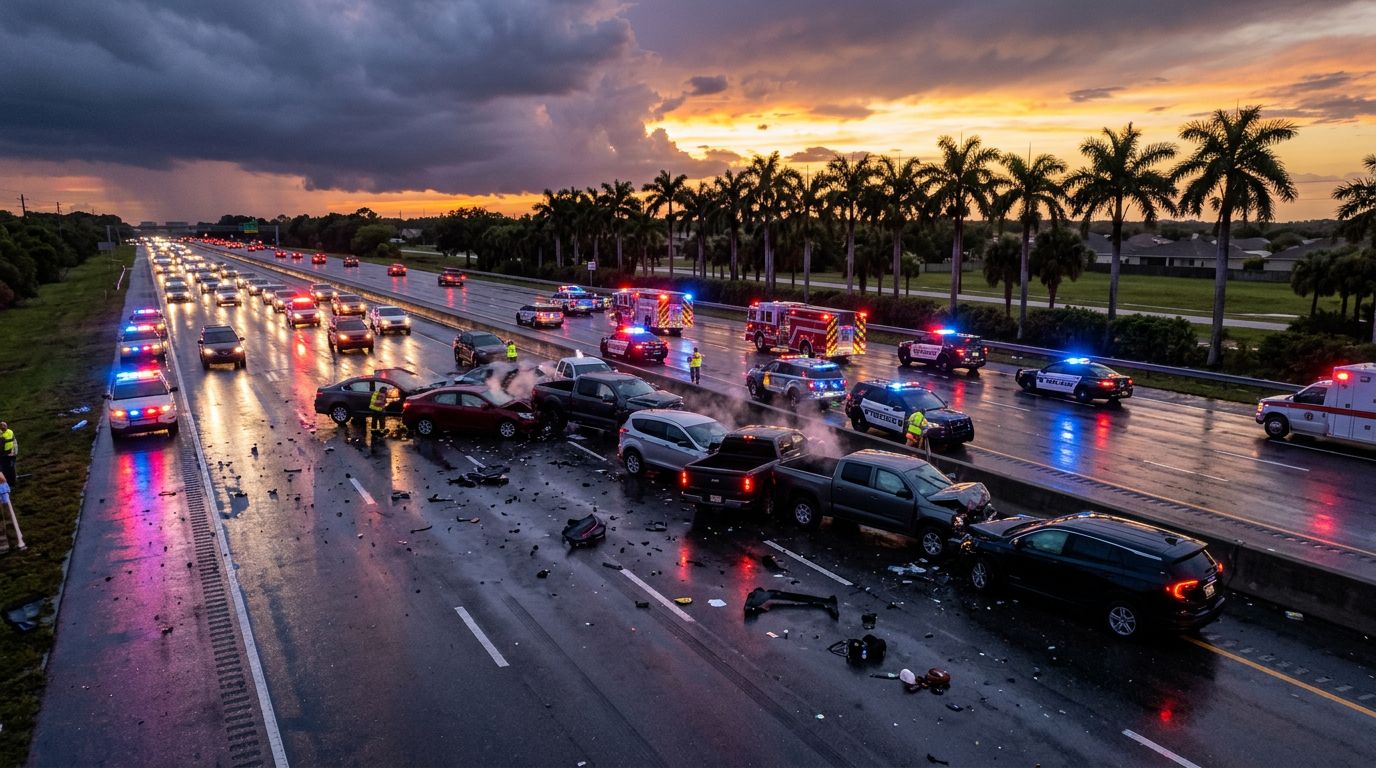
A chain reaction crash can turn one mistake into a stack of claims, each one pointing at a different driver. In a few seconds, the story gets crowded with brake lights, impact points, and conflicting memories.
That is where Florida chain reaction crash claims become hard to sort out. Insurance companies look for the easiest place to move blame, and that can leave injured drivers fighting over who hit first, who followed too closely, and who should pay.
The good news is that fault is not decided by guesswork alone. Photos, witness statements, vehicle damage, and crash reports all matter, and the details often decide the whole case.
Why chain reaction crashes create so much blame
A rear-end collision is one thing. A three-car or four-car pileup is different because each impact changes the next one. The first driver may have braked hard, the second may have been too close, and the third may have been looking elsewhere.
Florida roads add more pressure. Heavy traffic, sudden rain, and stop-and-go highways leave little room for error. On a busy interstate, one wrong move can start a ripple that hits every car behind it.
That is why insurers often fight over the timeline. They want to know which driver caused the first impact and whether later drivers had any chance to stop. In a chain reaction crash, those few seconds matter more than the total number of cars involved.
A crash report may list the vehicles in order, but that does not settle fault by itself. It only gives the first draft of the story. The rest comes from the evidence.
How fault gets shifted in a Florida pileup
Fault often shifts because each insurer looks for a reason to push part of the blame onto someone else. The rear driver may say the lead car stopped suddenly. The middle driver may say they were pushed into the vehicle ahead. The lead driver may say everyone behind was following too closely.
Here is how those arguments usually sound in real claims:
| Vehicle position | Common blame argument | Evidence that can help |
|---|---|---|
| Lead vehicle | Stopped too fast or had broken lights | Photos, traffic video, witness accounts |
| Middle vehicle | Pushed forward by another impact | Damage patterns, crash sequence, event data |
| Rear vehicle | Followed too closely or was distracted | Skid marks, phone records, officer notes |
| Multiple vehicles | Shared fault across several drivers | Reconstruction, scene photos, consistent statements |
The table shows the pattern clearly. Fault in a pileup is rarely simple, and the strongest claim usually comes from the clearest timeline.
Insurers also use the idea of “nearest impact” to shift blame. They may argue that the car with the worst front-end damage caused the crash, or that the last car in line must have started the chain. That sounds neat, but it can be wrong. A car can suffer heavy damage without causing the first collision.
Sometimes the middle car takes the hardest hit and gets blamed from both sides. That driver may have no chance to avoid the crash, yet still end up in the middle of every dispute.
In a chain reaction crash, the order of impacts matters more than the order of the arguments.
Evidence that helps keep fault where it belongs
Strong evidence can stop a fault dispute before it spreads. The best claims usually start with proof from the scene, then build with records that match the damage and the injuries.
Useful evidence often includes:
- Photos of every vehicle: Damage angles can show who hit whom and in what order.
- Scene photos: Skid marks, debris, lane position, and traffic signs can fill in missing details.
- Witness statements: A neutral witness can confirm sudden braking, unsafe merging, or a push from behind.
- Dashcam footage: Video often settles the timeline faster than any written statement.
- Crash reports: Police reports matter, even when they are not the final word.
- Medical records: Early treatment records connect the crash to the injuries.
If you are gathering proof after a wreck, the details need to line up. A claim looks stronger when the photos, the report, and your treatment records all tell the same story. That is why what evidence is needed for a car accident claim matters so much after a multi-car crash.
Also, do not wait too long to preserve proof. Cars get repaired, video gets erased, and witnesses forget. The case can change fast if important evidence disappears.
What insurance companies look for in these claims
Adjusters know that chain reaction crashes create confusion. They use that confusion to test your version of events. If they can find a gap, they may try to reduce the payout.
They often focus on a few pressure points. First, they ask for recorded statements and compare them to the police report. Next, they look at whether you got medical care right away. Then they compare the damage to your car with the injury claim.
Small details can be used against you. A delay in treatment may be called proof that you were not hurt badly. A statement like “I think” can be twisted into uncertainty. Even a simple mistake about lane position can become a reason to question the whole claim.
Prior crashes can also enter the picture. If you had a past injury, the insurer may argue that the new wreck did less harm than you say. That is one more reason to keep your records clean and consistent from the start.
Shared fault in Florida still affects recovery
Florida law now uses a modified comparative negligence rule in many negligence cases. If you are found more than 50% at fault, you may be barred from recovering damages. If your share is below that mark, your compensation can still be reduced.
That makes fault percentages important. A 20% fault finding can take a serious bite out of a settlement. A 40% finding can change the case even more. In a multi-car crash, each insurer may try to move the percentage away from its own driver.
That is why chain reaction cases often turn into negotiations about blame, not just injury. The medical bills may be clear, but the fault share is still up for debate. When that happens, the final number often depends on who has the strongest facts.
One claim can also affect another. If one driver settles early, the remaining insurers may use that settlement to argue about the rest of the fault split. The sequence of claims matters, and so does the language in every release and report.
Why a lawyer helps after a multi-car crash
A chain reaction crash can involve several insurance carriers, several drivers, and several stories. That is a lot to sort out while you are trying to heal. A lawyer can step in, gather records, and keep the blame from drifting onto you.
Legal help matters most when the facts are contested. If the other driver denies fault, or if your insurer says you share blame, the claim can stall fast. An attorney can press for scene evidence, speak with witnesses, and challenge the way fault is being assigned.
That is also when it helps to look at Florida car accident attorneys who handle crash claims in the state every day. If you are still unsure whether legal help makes sense, the discussion in do you need a lawyer for a car accident claim gives a useful starting point.
A good case file does more than list injuries. It shows how the crash happened, who had room to avoid it, and why the blame should stay with the right driver. That can make the difference between a denied claim and a fair result.
Conclusion
A Florida chain reaction crash can look simple at first, then turn into a fight over every second on the road. Once insurers start shifting fault, the evidence becomes the center of the case.
The clearest claims come from quick photo work, solid witness statements, and records that match the damage. When those pieces line up, it gets much harder for blame to bounce from one driver to another.
If the crash involved several cars, the safest move is to treat the scene like evidence from the start. In these cases, fault is often the real battleground, and the facts are what hold it in place.