
Florida Hotel Carpet Fall Claims and Repair Records
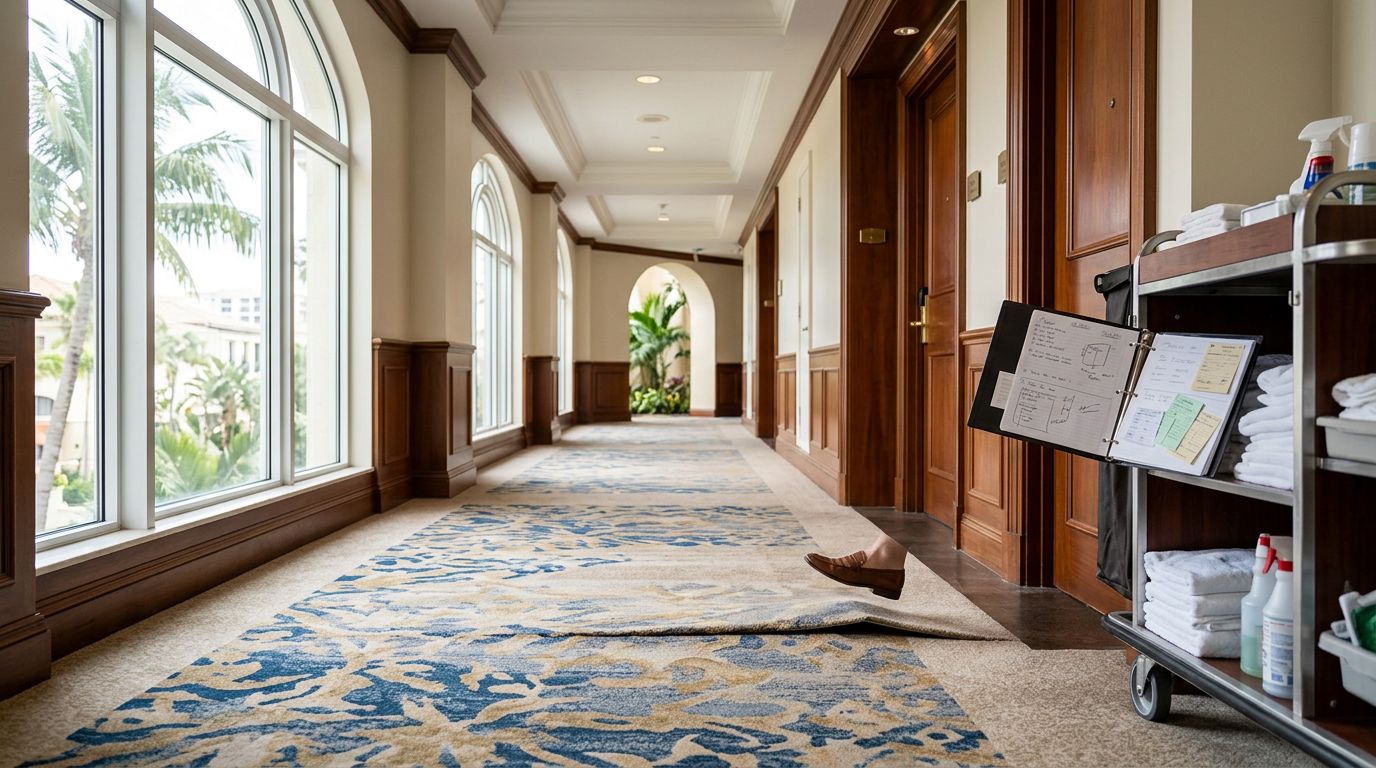
Loose carpet in a hotel hallway can turn a normal stay into a painful case in seconds. When that happens, the injury matters, but the paper trail often matters more.
A Florida hotel carpet fall claim may depend on records the hotel already created, like maintenance notes, repair tickets, and guest complaints. Those files can show when staff first knew about the problem, who saw it, and whether the danger stayed in place long enough to count.
The surface may look like a small defect. In a claim, though, it can become the main proof that the hotel missed a known hazard.
Why loose carpet in hotels leads to serious claims
Hotels get heavy foot traffic all day. Guests roll luggage, carry children, and move through dim hallways and lobby edges without much room to react. A carpet seam that lifts or curls can catch a shoe, twist a knee, or send someone forward fast.
Under understanding duty of care in Florida premises liability, a property owner must use reasonable care to keep guests safe. That duty matters in hotel cases because guests are invited onto the property and expect the common areas to be checked and maintained.
Loose carpet claims often involve more than the carpet itself. Lighting, hallway traffic, missing warning signs, and slow repairs can all matter. A hotel may say the danger was minor, but a trip hazard does not need to look dramatic to cause a serious fall.
A carpet edge that seems harmless can work like a hidden lip on the floor. One misstep is enough.
In these cases, the question is simple. Did the hotel know, or should it have known, that the carpet was loose? If the answer is yes, the repair history becomes central.
Repair records that matter most after a carpet fall
Repair records tell the story behind the hallway. They show whether the hotel treated the loose carpet as a one-time issue or as a repeating problem that staff kept putting off.
A few records often matter more than long witness statements. Dates, timestamps, and notes can do the heavy lifting.
| Record type | What it can show |
|---|---|
| Work order | When the loose carpet was reported and whether repairs were scheduled |
| Housekeeping log | Whether staff saw the problem during routine cleaning |
| Guest complaint | Whether another guest complained before the fall |
| Inspection checklist | Whether the hotel skipped a required walk-through |
| Vendor invoice | Whether outside repairs were delayed or incomplete |
| Incident report | How the hotel described the fall right after it happened |
The best records are the ones that line up. If a work order shows the carpet was reported days before the fall, that helps. If housekeeping logs mention the same hallway twice, that helps too. If the hotel claims the carpet was fine, but the file shows repeated calls for repair, the defense gets weaker.
Repair records also matter because they can come from several places. A hotel may keep one set of notes at the front desk and another in a maintenance system. A management company or outside contractor may hold more documents. When those records are pulled together, the timeline becomes clearer.
The main point is this, repair history can prove the hazard was not a surprise.
How repair records prove notice
In hotel fall cases, notice is the key issue. That means the legal question is not only whether the carpet was loose. It is also whether the hotel knew about it in time to fix it.
That is why proving notice in hotel slip and fall cases often starts with maintenance logs, not just medical bills. The records can show actual notice, which means staff had direct information about the problem. They can also show constructive notice, which means the danger existed long enough that reasonable inspections should have caught it.
Three simple points often matter:
- The first complaint shows when the hotel learned about the hazard.
- The follow-up log shows whether staff acted or ignored it.
- The repair date shows how long the carpet stayed loose.
If those dates stretch out, the hotel has a harder story to tell. A delay of hours can matter. A delay of days can matter more. Repeated complaints make the case stronger because they show the problem was not random.
What if the hotel says no one knew? Then the records become even more important. A dated note in a maintenance file can speak louder than a manager’s memory months later. The file may also show whether the hotel had a routine inspection process and simply missed this area.
A claim built on dates and repair notes is harder to dismiss than one built on guesses.
What to preserve after a hotel carpet fall
The scene changes fast after a fall. Staff may clean the area, move guests around it, or fix the carpet before anyone takes a good photo. That is why early evidence matters.
If you can, keep or request these items:
- Photos of the loose carpet, the hallway, and the lighting
- The shoes and clothes you wore
- Names of witnesses and hotel employees you spoke with
- A copy of the incident report, if the hotel gives you one
- Medical records, discharge papers, and follow-up instructions
- Any text messages or emails from the hotel
- Receipts that show where you stayed and when the fall happened
Video can matter too. Many hotels have surveillance cameras in hallways, entrances, or lobbies. That footage may show your fall, the condition of the carpet, or whether staff passed the area before the incident. The longer you wait, the easier it is for useful video to be overwritten.
You should also write down what you remember while it is fresh. Note the hallway location, the time, the weather if you were walking in from outside, and anything the staff said. Small details can help match the repair records later.
Common hotel defenses and how records answer them
Hotels often try to shift the story away from maintenance. They may argue that the carpet was fine, that the fall happened too fast to prevent, or that the guest was not paying attention.
Under Florida premises liability laws for property owners, responsibility can extend beyond the front desk and into the hands of managers, owners, and maintenance companies that controlled the area. That matters because the defense may try to point blame in several directions.
A few common defenses show up often:
- “No one reported it.” Repair logs and complaint records can answer that.
- “It was a new problem.” Inspection history may show it had been loose for days.
- “Someone else handled maintenance.” Contract files can show who controlled repairs.
- “The guest caused the fall.” Photos, lighting records, and witness statements can show the hazard was the real cause.
A hotel may also claim the carpet issue was small or temporary. Even then, the timeline can hurt that defense. A carpet edge that remained loose through multiple inspections is harder to excuse than one that failed a minute before the fall.
When records are missing, the defense often gets louder. When records are complete, the story changes. That is why the maintenance file is often as important as the injury report.
Conclusion
A loose carpet fall starts with a bad step, but the claim often turns on a timeline. Repair records, complaint logs, and inspection notes can show whether the hotel knew about the hazard and failed to act.
For a Florida hotel injury claim, notice and documentation usually drive the case more than the carpet itself. The more complete the repair record, the clearer the picture becomes.
The fall may happen in seconds. The records tell the rest of the story.