
Florida Restaurant Grease Spill Fall Claims and Cleaning Logs
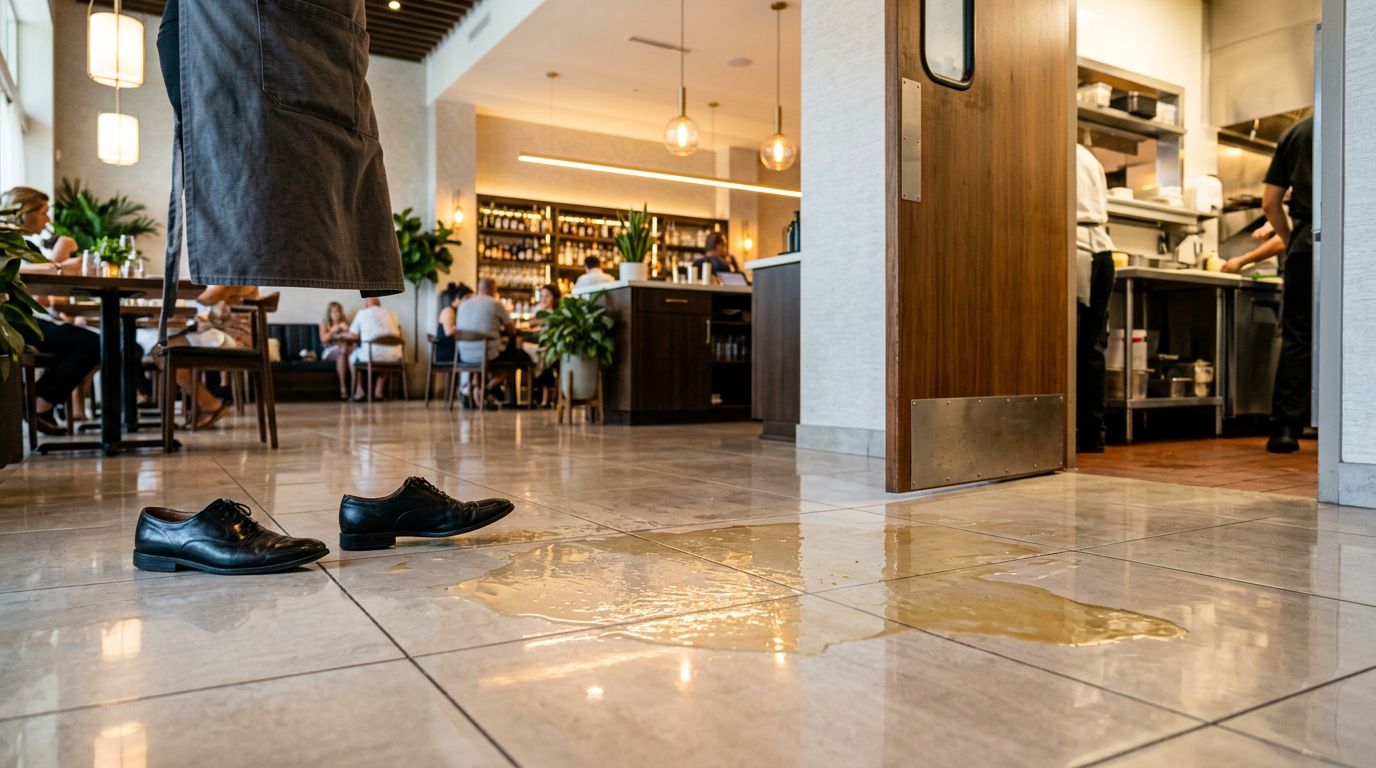
A slick grease spill can turn a normal meal into a serious injury claim in seconds. In Florida, those cases often depend on what the restaurant knew, what it cleaned, and what it wrote down.
A customer who slips on grease may face medical bills, missed work, and pain that lasts for months. The restaurant may say it was a sudden spill or a careless step. The records often tell a more complete story.
That is why Florida restaurant grease spill fall claims often turn on cleaning logs, inspection habits, and scene evidence. The floor matters, but the paperwork can matter just as much.
Why a greasy restaurant floor is so dangerous
Grease is hard to see and even harder to control once it spreads. A small drip from a kitchen, a spilled tray, or residue tracked in from the back of the restaurant can make tile or concrete slick in an instant.
That danger grows when staff members move fast during busy hours. A mat shifts. A server steps through a spot. A customer rounds a corner near the restroom or kitchen entrance. In that moment, the floor can act like ice.
Falls like these often lead to wrist injuries, broken hips, shoulder damage, back pain, or head trauma. Some people walk away thinking they are fine, then wake up sore the next day. Others need immediate care.
Restaurants know grease is a risk. That is why Florida rules require commercial kitchens that send wastewater to the sewer to use a grease trap or interceptor. They also need regular pumping, proper disposal, and written proof that the system was handled the right way.
When those steps get ignored, the spill is no longer just an accident. It can become evidence of poor maintenance.
What Florida law looks at after a restaurant slip and fall
Florida premises liability law asks a simple question: did the restaurant keep the place reasonably safe? If the answer is no, the injured person may have a claim.
In a grease spill case, notice is often the key issue. If staff members saw the spill, they had actual notice. If the grease sat long enough that they should have found it, that can count too. In other words, the restaurant does not need a written warning to be on notice.
That is where cleaning logs come in. A record that shows routine checks may help the defense. A record with missing dates, vague notes, or long gaps can do the opposite. If the logs show late trap pumping, no licensed hauler, or no disposal proof, the restaurant may have a harder time arguing that it handled grease safely.
A clean log does not erase a hazard, but a missing log can raise sharp questions.
The restaurant may also try to shift blame to the customer. Maybe it claims the spill was marked, or the shopper was not watching. Those arguments do not end the case. They just become part of the fight over fault.
Florida law also looks at whether the hazard was hidden. Grease often is. A clear liquid might catch the eye. Grease on a shiny floor can blend in with the surface until someone is already falling.
Cleaning logs that can help or hurt a claim
Cleaning logs are more than housekeeping notes. In a grease spill case, they can show whether the restaurant had a real system or only a loose habit.
A strong record usually shows more than “floor cleaned” or “trap checked.” It should show who handled the work, when it happened, where the waste went, and whether the disposal was lawful.
The basic details matter because they let an attorney compare the restaurant’s story with the actual timeline. If a spill happened after a long gap in cleaning, that gap can be powerful. If the log says the trap was serviced yesterday but the floor still had grease buildup, that raises another question.
Here is what the records should contain:
| Record item | What it should show | Why it matters |
|---|---|---|
| Service date | The date the trap or area was cleaned | Helps show whether maintenance happened on time |
| Hauler name | The licensed company that handled the waste | Confirms the work was done by an approved provider |
| Disposal site | Where the grease was taken | Shows whether the waste was sent to a permitted facility |
| Volume or condition | How much grease was removed, or the trap’s condition | Helps reveal whether the system was overdue |
| Invoice and service manifest | Proof of service and safe disposal | Gives a paper trail that can be checked against the claim |
Records like these should be kept for the full period local rules require, which can run for years. They should also be available for inspection if a county asks for them.
If a restaurant throws away logs, backfills them, or keeps them vague, that can create trouble fast. The same is true if the business relies on untrained staff or uses shortcuts instead of licensed grease haulers. Florida rules require proper handling, not guesswork.
Evidence that strengthens a grease spill injury case
Cleaning logs are only one piece of the case. A strong claim also depends on what you can prove about the fall itself.
Photos are often the first step. A picture of the floor, the spill, the warning signs, or the lack of warning signs can say a lot. So can the shoes you wore, especially if the defense later argues that your footwear caused the fall.
Witnesses matter too. A server, another guest, or even a nearby shopper may remember how the floor looked before anyone cleaned it. Their version of events can back up yours.
Medical records are just as important. A doctor note from the same day, follow-up care, and therapy records help connect the fall to the injury. That paper trail works much like documenting damages for your injury case, because it shows what the injury cost you.
Surveillance video can help, but it can disappear quickly. Many systems overwrite old footage on a short schedule. If the restaurant has video, it should be requested right away.
A few other records can also matter:
- The incident report you filed with the restaurant
- Receipts that show where and when you were there
- Wage records if the injury kept you off work
- Notes about pain, missed sleep, or daily limits after the fall
The more complete the file, the harder it is for the restaurant to shrink the story.
Steps to take after a restaurant grease spill fall
The first few hours after a fall can shape the whole claim. Small choices now can help later.
- Report the fall right away. Tell a manager what happened and ask for a written incident report.
- Take photos before cleanup. Get the floor, the spill, nearby signs, and the area around you.
- Get witness names. If someone saw the fall or the spill, ask for contact information.
- Seek medical care quickly. Even minor pain can turn into a larger problem later.
- Keep your shoes and clothes. They may help show how the fall happened.
- Save every receipt and bill. Medical costs, ride receipts, and missed work records can all matter.
After that, ask for help before the restaurant’s records disappear or its story changes. An attorney can request maintenance logs, trap-cleaning records, invoices, and video before they are lost.
That step matters in Florida restaurant grease spill fall claims because the best proof is often the proof the business keeps for itself. If the logs are thin, missing, or inconsistent, the gap can become part of the case.
Conclusion
A grease spill case is rarely about one wet spot on the floor. It is about what caused the spill, how long it stayed there, and whether the restaurant kept honest records.
When cleaning logs are complete, they can support a defense. When they are missing or sloppy, they can help show negligence. The truth often sits in the paperwork, the photos, and the timeline.
If you were hurt in a restaurant fall, the floor is only half the story. The other half is in the records.