
Florida Restaurant Booth Collapse Claims and Repair Records
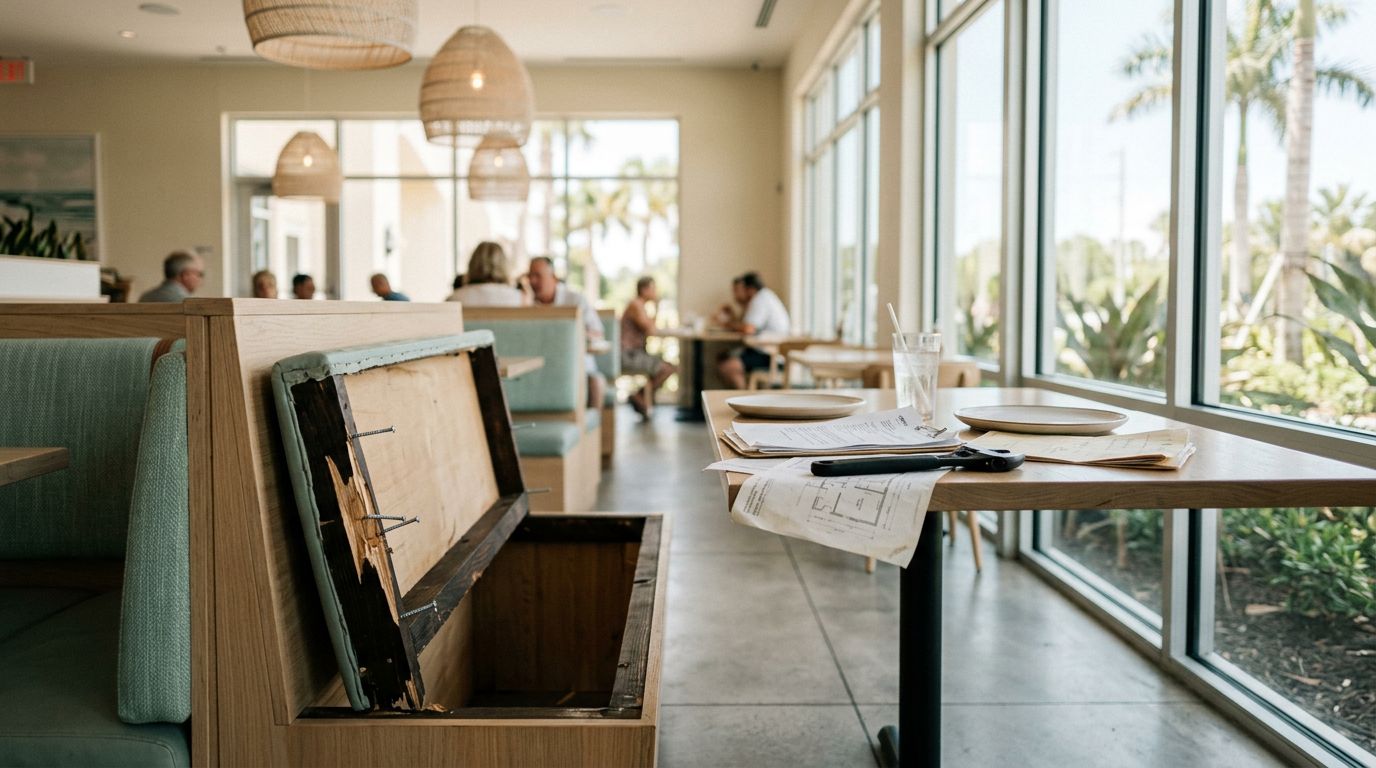
A restaurant booth should hold steady. When it gives way, the result can be painful, embarrassing, and legally serious all at once.
In Florida, restaurant booth collapse claims often turn on a simple question, did the business know the seat was unsafe, or should it have known? The answer is often hidden in repair logs, work orders, employee complaints, and old invoices.
Those records matter because a booth does not usually fail without warning. The damage may have been building for weeks or months. The paper trail can show that pattern, if it still exists.
Why a booth collapse can turn into a premises claim
A restaurant owes customers a safe place to sit, eat, and move around. That includes booths, benches, and other seating that seems ordinary until it fails.
A claim often starts with a broken frame, loose fasteners, worn supports, or a booth that was repaired badly the first time. Sometimes the seat dips or shifts before it collapses. Sometimes a customer feels a wobble, says something to staff, and gets ignored.
In Florida, that kind of problem can matter because restaurants are expected to use reasonable care. If a business knew the booth was unsafe, or should have found the problem during routine checks, it may face liability for the injury that follows.
The injury can happen in an instant. A person may fall backward, hit a table edge, strike the floor, or twist while trying to catch balance. A collapse that looks minor can still lead to a sore back, head injury, neck strain, or a broken tailbone.
The setting matters too. Busy lunch rushes, crowded dining rooms, and family restaurants with heavy daily use can wear down seating faster than people expect. That makes maintenance records even more important.
Repair records can tell the real story
Repair records are often the most useful documents in a booth collapse case. They can show whether the restaurant acted quickly, acted late, or kept patching the same problem over and over.
A strong records file may include maintenance logs, work orders, invoices, inspection notes, and complaints from staff or customers. Together, those papers can reveal whether the booth had a history of problems long before the collapse.
Here is a simple way to think about the most common records:
| Record type | What it may show | Why it matters |
|---|---|---|
| Maintenance log | Dates of inspections and repairs | Helps prove whether the seat was checked on time |
| Work order | The exact problem reported | May show the booth was already loose or damaged |
| Invoice | Parts replaced and labor performed | Can reveal repeated fixes or temporary repairs |
| Employee complaint | Prior warnings from staff | Supports notice that the hazard was known |
| Vendor report | Outside repair findings | May confirm structural wear or bad assembly |
The takeaway is simple. A restaurant with clean, regular repair records may argue that it acted responsibly. A restaurant with repeated notes about the same booth may have a harder time saying the problem came out of nowhere.
A maintenance log is more than paperwork. It can show whether the restaurant knew about the danger before you were hurt.
How repair records help prove notice
Notice is a key part of many Florida injury claims. The question is whether the restaurant knew about the danger, or should have discovered it through regular care.
Repair records help answer that question because they create a timeline. If a booth was repaired two weeks before the collapse for the same loose leg or broken support, that is useful information. If the booth had been marked for replacement but the restaurant kept using it, that can matter too.
Records also help connect the dots between the injury and the condition of the seat. A restaurant might claim the booth failed because a customer used it incorrectly. Yet prior repairs, repeated complaints, or ignored maintenance requests can tell a different story.
Photos and witness statements matter as well. A single picture of a cracked base or splintered frame can support the records. So can a server who heard the booth wobble earlier in the day.
This is where timing becomes important. Restaurants often control the best evidence, including surveillance video and internal reports. If a claim is possible, that evidence should be preserved fast.
Florida cases can also involve more than one responsible party. A landlord, franchise owner, property manager, or outside maintenance company may share responsibility if they controlled the seating or handled repairs. The records often show who actually touched the booth last.
Injuries and losses that may follow a booth collapse
A booth collapse can lead to more than a bruised ego. The fall can strain muscles, jar the spine, or trigger a head injury if the person hits a hard surface.
Common injuries may include:
- Neck and back strain
- Shoulder or wrist injuries from trying to brace the fall
- Head trauma or concussion
- Tailbone pain
- Cuts, bruises, and soft tissue injuries
Medical bills are only part of the loss. Some people miss work, need physical therapy, or deal with pain that lasts far longer than expected. Others need imaging tests or follow-up visits because the first pain seems minor but grows worse over time.
Florida injury claims may seek compensation for medical care, lost income, and pain caused by the incident. If the collapse aggravated a prior condition, that can matter too. The medical records should match the timeline and describe how the accident changed your symptoms.
Do not assume the injury is too small to matter. A fall that seems manageable on day one can become a serious back problem later. That is one reason early treatment helps both your health and your claim.
What to do after the collapse
The hours after the incident can shape the case. Small choices matter because proof disappears fast.
- Get medical care right away, even if you think you can tough it out.
- Report the collapse to the manager and ask for a copy of the incident report.
- Take photos of the booth, the floor, the table, and any visible damage.
- Get names of witnesses and employees who saw the fall or heard complaints before it happened.
- Save your receipt, clothes, and any notes about the pain or symptoms.
- Ask a lawyer to send a preservation letter before video or records are lost.
A clear record of what happened makes it harder for the restaurant to change its story later. It also helps your doctor connect the injury to the event.
Do not rely on memory alone. A lot can blur after a fall, especially if you were in pain or embarrassed. Short notes taken the same day can help fill in the gaps later.
When a Florida lawyer should step in
A booth collapse case can look simple at first. Then the records start telling a different story. That is usually the point when legal help becomes useful.
A Florida personal injury lawyer can ask for maintenance records, review the incident report, and check whether the restaurant had prior warnings. A lawyer can also look for missing video, compare witness statements, and see whether the repair history supports a larger claim.
This is especially important when the restaurant blames the customer, the booth was repaired many times, or the business says the records do not exist. Those are the cases where the paper trail can matter most.
The earlier someone reviews the file, the better. Restaurants control the documents at the start, and that gives them a head start unless the evidence is preserved quickly.
Conclusion
A collapsed booth may look like a freak accident, but the repair history often tells a different story. Loose parts, repeat fixes, ignored complaints, and delayed maintenance can all support a claim.
If you were hurt in a restaurant seating failure, the real question is whether the business had warning signs before the fall. Repair records often answer that question, and they can shape the case from the very start.