
Can You Sue After Signing a Surgical Consent Form?
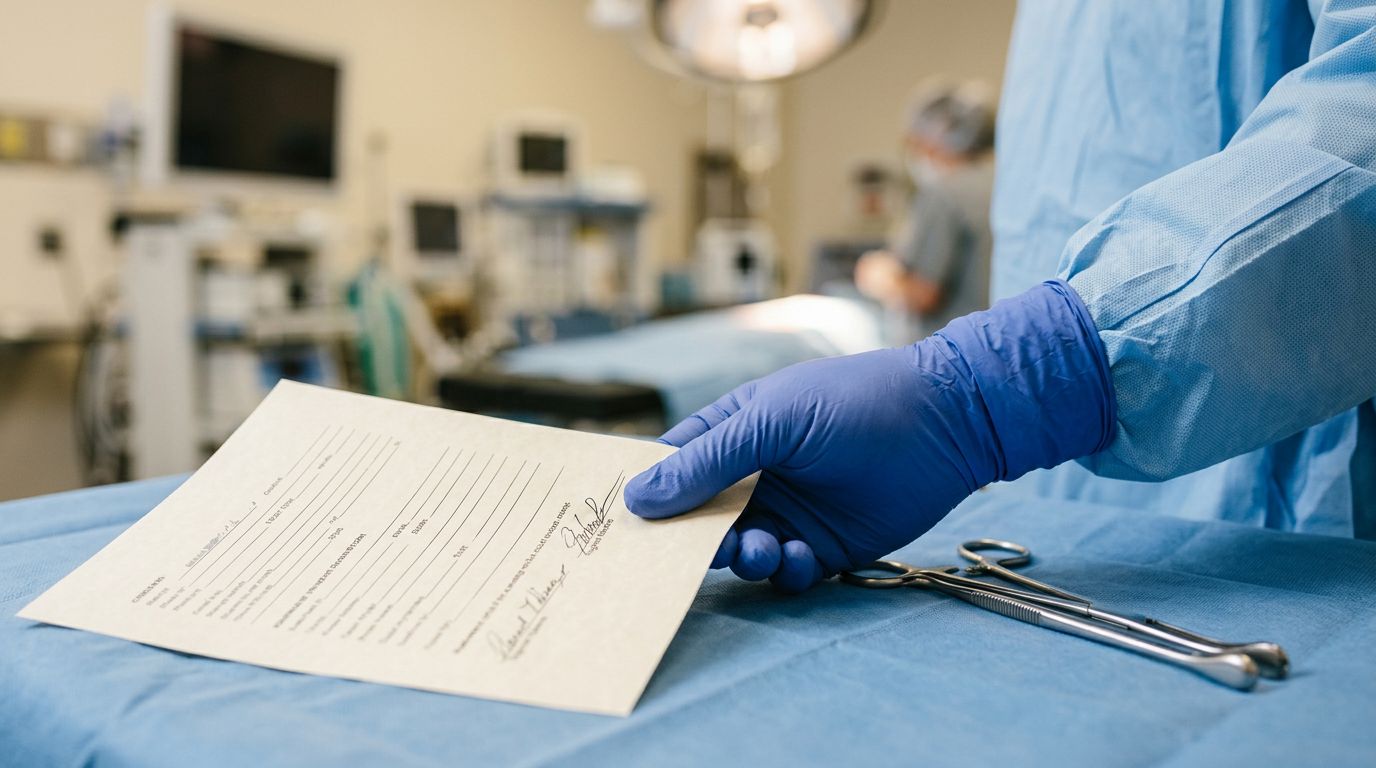
Signing a surgical consent form does not always end your right to sue. In Florida, the paper matters, but so do the warning you got, the way the procedure was performed, and the harm that followed.
Many patients sign because they trust their doctor and want to move forward. If the outcome was far worse than expected, that signature can feel like the final word. It usually is not. The law looks at what you were told, what was done, and whether the care met the standard.
What a surgical consent form really covers
A surgical consent form is part of the medical record. It usually shows that you agreed to a procedure and were told about some of the risks. It may also list alternatives and give the provider permission to proceed.
That still does not give a doctor a free pass. A form cannot erase a missing warning, a rushed explanation, or a careless mistake in the operating room. It is evidence, not immunity.
A signed form can show agreement. It cannot turn a missing warning into a proper one.
Florida patients often focus on the details behind the signature, which is why the legal requirements for informed consent before surgery matter so much. If the discussion was thin, rushed, or incomplete, the form may not tell the full story.
A good consent process should give you enough information to make a real choice. If the doctor left out a serious risk, skipped a better option, or changed the operation in a major way, the signature alone may not protect the provider.
When a signed form still leaves room for a lawsuit
The strongest cases often start with a simple question, did you have enough information to decide? If the answer is no, the consent form may not block a claim.
| Situation | What the form may mean | Why a claim can still exist |
|---|---|---|
| Risks were explained clearly and the surgery matched the plan | The form helps the doctor’s defense | A bad result alone is not proof of negligence |
| A major risk was left out | The form shows a signature, but not a full warning | You may not have given informed consent |
| The surgery changed in a serious way | The original consent may not cover the new plan | New consent may have been needed |
| The operation was done carelessly | The form does not excuse substandard care | Malpractice can exist even with consent |
The details matter because consent is about choice. If you were signing while sedated, in pain, or under pressure, that can weaken the value of the form. The same is true if the discussion happened too fast for you to ask questions.
Language barriers can also matter. A patient who needed an interpreter, but did not get one, may not have understood the risks in any meaningful way. So can a patient who was handed paperwork but never got a clear explanation from the surgeon.
A signed form also does not protect a doctor from what happens during the operation itself. Wrong-site surgery, retained instruments, anesthesia mistakes, poor sterile technique, and botched post-op care are separate problems. Those issues can support a claim even when the patient signed every page in the packet.
The legal questions in Florida informed consent claims often turn on those facts, not on the signature alone. If the warning was incomplete, the discussion was unclear, or the procedure changed in a material way, the form may not do the job the provider thinks it does.
Florida law treats consent and malpractice separately
Consent problems and surgical negligence often overlap, but they are not the same claim. Informed consent asks whether you were given enough information to make a choice. Malpractice asks whether the medical team met the required standard of care during treatment.
A surgeon can explain the risks correctly and still make a serious mistake. A surgeon can also perform the procedure skillfully and still fail to tell you about a major danger that would have changed your decision. Both situations can matter in Florida.
That is why a Florida medical malpractice legal guide is useful when you are sorting out what went wrong. The question is not only whether the surgery had a known risk. It is also whether the provider acted reasonably before, during, and after the operation.
A bad outcome by itself is not enough. Medicine carries risk, and some complications happen even when the care is proper. The difference shows up in the records. A complication may be unfortunate. A preventable error can be the basis for a claim.
Here is a practical way to separate the two ideas:
- If the issue is what you were told before surgery, the focus is informed consent.
- If the issue is how the surgery was performed, the focus is malpractice.
- If both things went wrong, both claims may matter.
A patient can have one claim, both claims, or no claim at all. That depends on the facts, the records, and the harm that followed.
Records that can support your case
After surgery, the paper trail matters more than most people expect. The consent form is only one piece. The pre-op visit notes, anesthesia record, operative report, discharge instructions, and follow-up charting can tell a different story.
Keep the signed form, but do not stop there. Save every page from the hospital packet, every test result, and every bill. If you have photos of wounds, swelling, scars, drains, or other visible problems, keep those too. Write down a timeline while the details are still fresh.
Names matter as well. Record the surgeon, anesthesiologist, nurses, and anyone who spoke with you before or after the procedure. If someone translated for you, write down who it was and what language was used. Those details can matter later.
The goal is simple. You want to preserve what happened before anyone starts editing memories or narrowing the record. A case often turns on small facts, like whether a warning was said out loud, whether an alternative was discussed, or whether the post-op notes match the story you were given.
A lawyer will usually want to compare three things. First, what the surgeon promised or warned about. Second, what the records say happened. Third, what injuries or complications showed up afterward. If those pieces do not fit together, the consent form may be weaker than it looks.
What to do after a bad surgical outcome
If you think something went wrong, act quickly. Medical records can move, memories can fade, and deadlines can matter.
- Get medical care for the complication. Your health comes first, especially if you have infection, severe pain, bleeding, numbness, or breathing problems.
- Ask for copies of all records. Request the consent form, office notes, hospital chart, anesthesia record, and operative report.
- Write down your timeline. Include who explained the procedure, what risks were mentioned, and when your symptoms started.
- Talk with a Florida attorney before signing more paperwork. Settlement releases, statements, and follow-up forms can affect your rights.
That review should focus on both sides of the case. A lawyer needs to know whether the problem was a missing warning, a surgical error, or both. The difference can shape the claim, the evidence, and the next steps.
If you still have questions after the surgery, bring the records together before you rely on the signature alone. The form may look complete, but the details behind it can tell a different story.
Conclusion
A surgical consent form is not the end of the analysis. It shows that you signed, but it does not automatically prove that you gave informed consent or that the surgery was done with proper care.
If your result was worse than expected, look at the warning you received, the procedure that was actually performed, and the records that support the story. A signature matters, but it does not close the file by itself.