
Florida Pulmonary Embolism Misdiagnosis and CT Delays
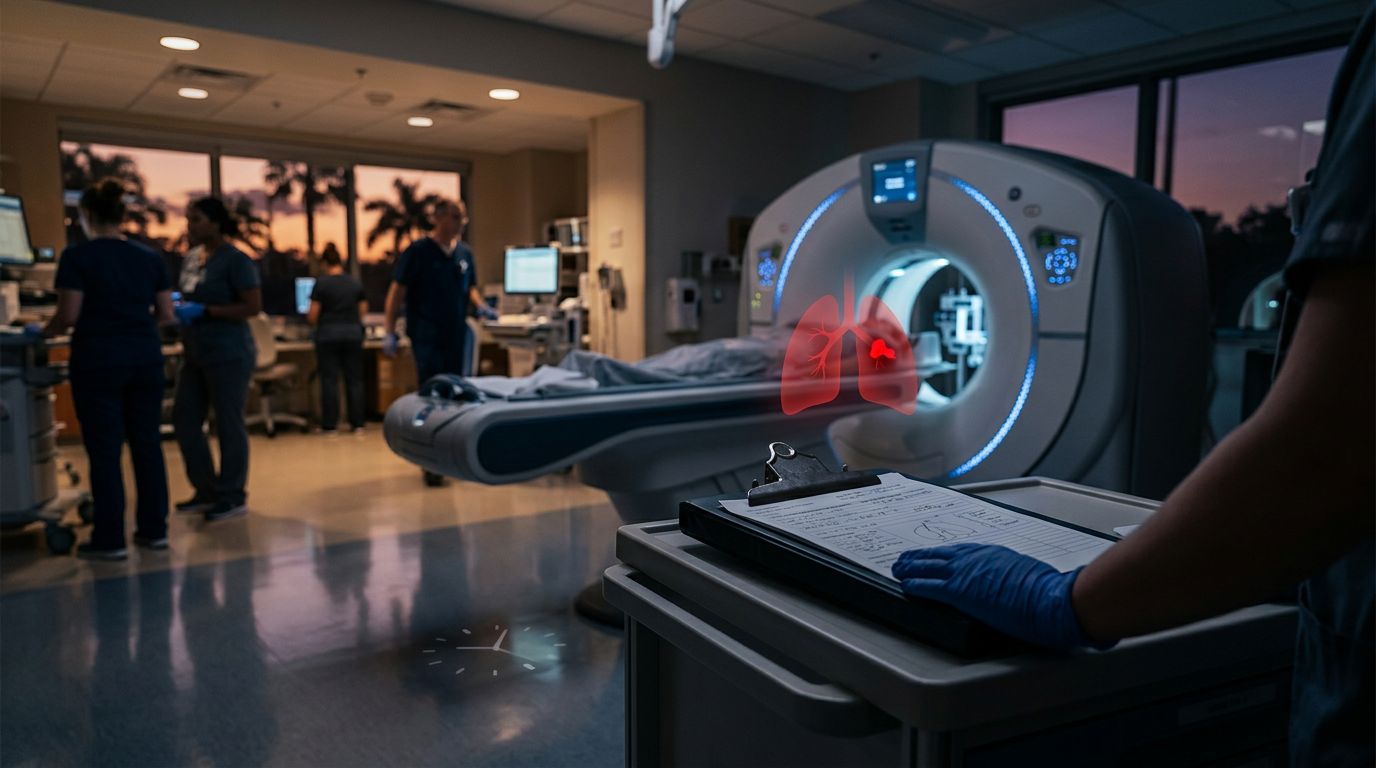
A pulmonary embolism can look ordinary at first. Chest pain, shortness of breath, a fast pulse, and anxiety can blur together in a busy Florida emergency room.
When a doctor misses the clot or the CT angiogram comes too late, the window for treatment can shrink fast. That delay can turn a treatable event into a far more serious one.
For families, the hard part is often showing what should have happened sooner. The medical chart, the imaging timeline, and the discharge notes usually tell that story.
Why pulmonary embolisms get missed in busy ERs
Pulmonary embolism symptoms are easy to confuse with other conditions. Pneumonia, asthma, reflux, panic attacks, and even muscle strain can look similar at first. Because of that overlap, the first provider sometimes reaches for the wrong explanation.
Risk factors matter just as much as symptoms. Recent surgery, long travel, pregnancy, postpartum recovery, cancer, a prior clot, leg swelling, or a recent deep vein thrombosis can all raise concern. When those clues appear in the chart and no stronger workup follows, the case starts to look different.
Common warning signs that should push the workup further
| Warning sign | Why it matters | Common next step |
|---|---|---|
| Sudden shortness of breath or chest pain | A clot can block blood flow in the lungs | Emergency evaluation, often imaging |
| Leg swelling or calf pain with breathing trouble | A clot may have started in the leg | DVT ultrasound and PE workup |
| Fainting, low oxygen, coughing blood, fast heart rate | These can signal a serious clot | Faster escalation and specialist review |
The exact testing path varies, but the record should show that someone treated the warning signs seriously. If it does not, a pulmonary embolism misdiagnosis checklist can help organize the facts that matter.
Why CT angiogram delays matter so much
A CT pulmonary angiogram, often called a CT angiogram or CTA, is one of the main tests used when a pulmonary embolism is suspected. It can confirm a clot, but only after the order is placed, the patient is scanned, and a radiologist reads the images.
Delay can happen in several places. The order may come late. Transport may lag. The scan may sit unread. A report may never reach the treating doctor before discharge. Each gap matters when the clot keeps moving.
Sometimes a provider chooses another path because of kidney problems, pregnancy, a contrast allergy, or unstable vital signs. That can be appropriate. The real question is whether the chart shows a prompt, thoughtful alternative and follow-through, or a loose plan that left the patient waiting.
A CT angiogram delay is more than a scheduling issue when the patient already had enough warning signs to justify faster action.
Time stamps matter because they show when concern started and when action followed. A short delay can be routine. A long delay, especially one followed by discharge before the result returns, can point to a serious breakdown in care.
Records that show the difference between error and delay
A missed pulmonary embolism case usually turns on records, not memory. The chart can reveal whether the provider had enough information to keep looking.
The most useful records often include:
- Triage notes, because they show the first complaints, vital signs, and risk factors.
- Physician notes, because they show what the doctor considered and what was ruled out.
- Imaging orders and radiology logs, because they show when the CT angiogram was requested, performed, and read.
- Discharge instructions, because they show whether the patient was sent home despite unresolved symptoms.
- Follow-up visits or return-to-ER notes, because they show whether symptoms worsened after the first encounter.
If the first clue was leg pain or swelling, Florida DVT misdiagnosis claims may also matter, because a clot that starts in the leg can travel to the lungs.
A later doctor can also help explain whether earlier imaging would have changed treatment. In many cases, that means earlier anticoagulation, hospital admission, closer monitoring, or a transfer to a higher level of care.
How Florida malpractice law looks at a missed PE
Florida medical negligence claims do not rise or fall on a bad outcome alone. The legal question is whether the provider acted like a reasonably careful provider would have acted in the same setting. If the warning signs were there and the response fell short, the case may move forward.
Causation matters just as much. The missed clot or the delayed CT angiogram has to connect to real harm. That harm can include a larger embolism, ICU care, heart strain, lung damage, or death. The chart has to show more than a late diagnosis. It has to show that the delay changed the medical course.
Deadlines and pre-suit notice
Florida also uses filing deadlines and a pre-suit notice process. Those rules can affect whether a claim stays alive, even when the medical facts are strong. In many situations, timing starts with when the injury was discovered, or should have been discovered, and the state also has a statute of repose that can bar older claims.
That is why records should be reviewed early. The Florida medical malpractice legal guide explains the timing rules and the notice step in more detail.
If the medical file shows a missed clot, the next question is not just what happened. It is whether a careful provider would have ordered the scan sooner, read the result sooner, or kept the patient under closer observation.
What to do after a suspected miss
The best next steps are practical and simple. Start with the facts you can preserve now.
- Get medical care right away if symptoms are still present or have returned. A possible pulmonary embolism is not a wait-and-see problem.
- Request the full record from the ER, urgent care, or hospital. Ask for triage notes, physician notes, imaging orders, radiology reports, discharge instructions, and patient portal messages.
- Save a timeline while the details are fresh. Write down when symptoms started, when you went in, what you were told, and when the CT angiogram was ordered or completed.
- Keep all related records together. Pharmacy receipts, oxygen readings, follow-up visits, and return-to-ER records can all help.
- Talk to a Florida medical malpractice lawyer who handles delayed diagnosis cases. The earlier the file gets reviewed, the easier it is to spot missing tests, bad handoffs, and deadline problems.
Do not try to tidy up the story. Gaps, delays, and contradictions often matter more than a polished summary.
Conclusion
A missed pulmonary embolism is often hidden in plain sight. The symptoms can look like something minor, but the record may show red flags that called for faster action.
When the chart shows those warning signs and the CT angiogram came late, the delay may have changed the outcome. That is the point where the medical question becomes a legal one.
A Florida medical malpractice lawyer can review the timeline, the imaging, and the discharge records to decide whether the delay crossed the line into negligence.